AI interview software has moved from experimental curiosity to mainstream hiring tool. Gartner estimates that by 2026, over 75% of enterprise organizations will use some form of AI in their recruitment process. But adoption is one thing — getting real value is another.
This guide covers everything you need to know about using AI interview software effectively: what it is, how to evaluate platforms, how to design interviews that actually work, and how to measure the impact on your hiring outcomes.
What Is AI Interview Software?
AI interview software uses artificial intelligence — typically large language models — to conduct, analyze, or assist with job interviews. The technology spans a wide spectrum:
- Fully automated interviews: An AI conducts the entire interview, asking questions, following up, and generating a structured assessment. This is what platforms like Aural do.
- Interview assistants: AI sits alongside a human interviewer, taking notes, suggesting follow-up questions, or flagging inconsistencies in real time.
- Post-interview analysis: AI processes recordings of human-led interviews to generate transcripts, summaries, and sentiment analysis.
Each approach has trade-offs. Fully automated interviews offer the most consistency and scale but require candidates to interact with AI. Assistive tools preserve the human interaction but offer less standardization. Post-interview analysis adds no friction but doesn't improve the interview itself.
How to Evaluate AI Interview Software
Not all AI interview platforms are created equal. Here are the dimensions that matter most when evaluating your options:
1. Conversation Quality
The most important factor is how natural and effective the AI-led conversation feels. Poor conversation quality leads to frustrated candidates and low-quality data. Look for:
- Adaptive follow-ups that respond to what the candidate actually said, not just generic probes
- Configurable tone and personality — formal for compliance roles, casual for startup culture
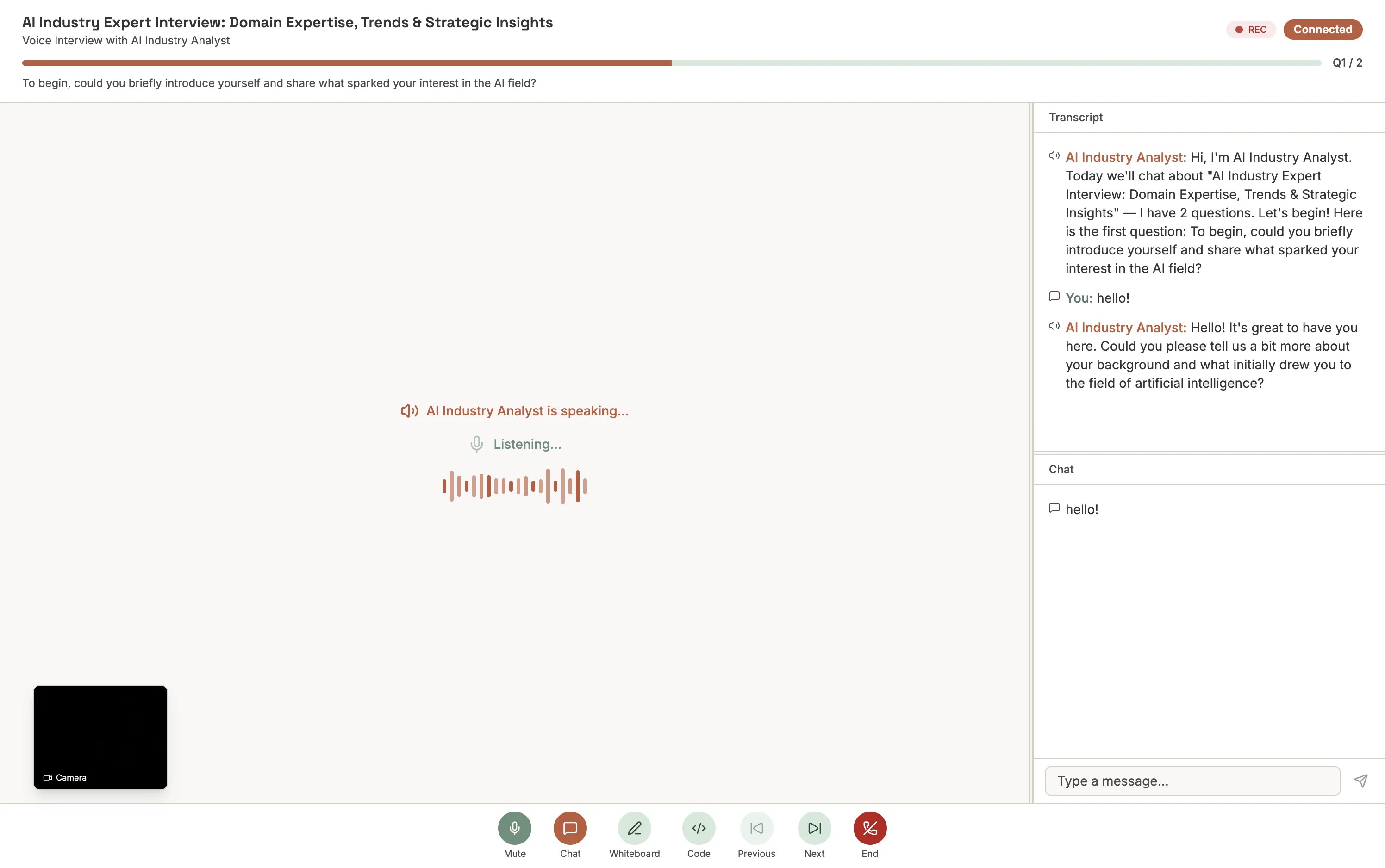
- Natural turn-taking in voice mode without awkward pauses
- Multi-language support for global teams
2. Interview Modes
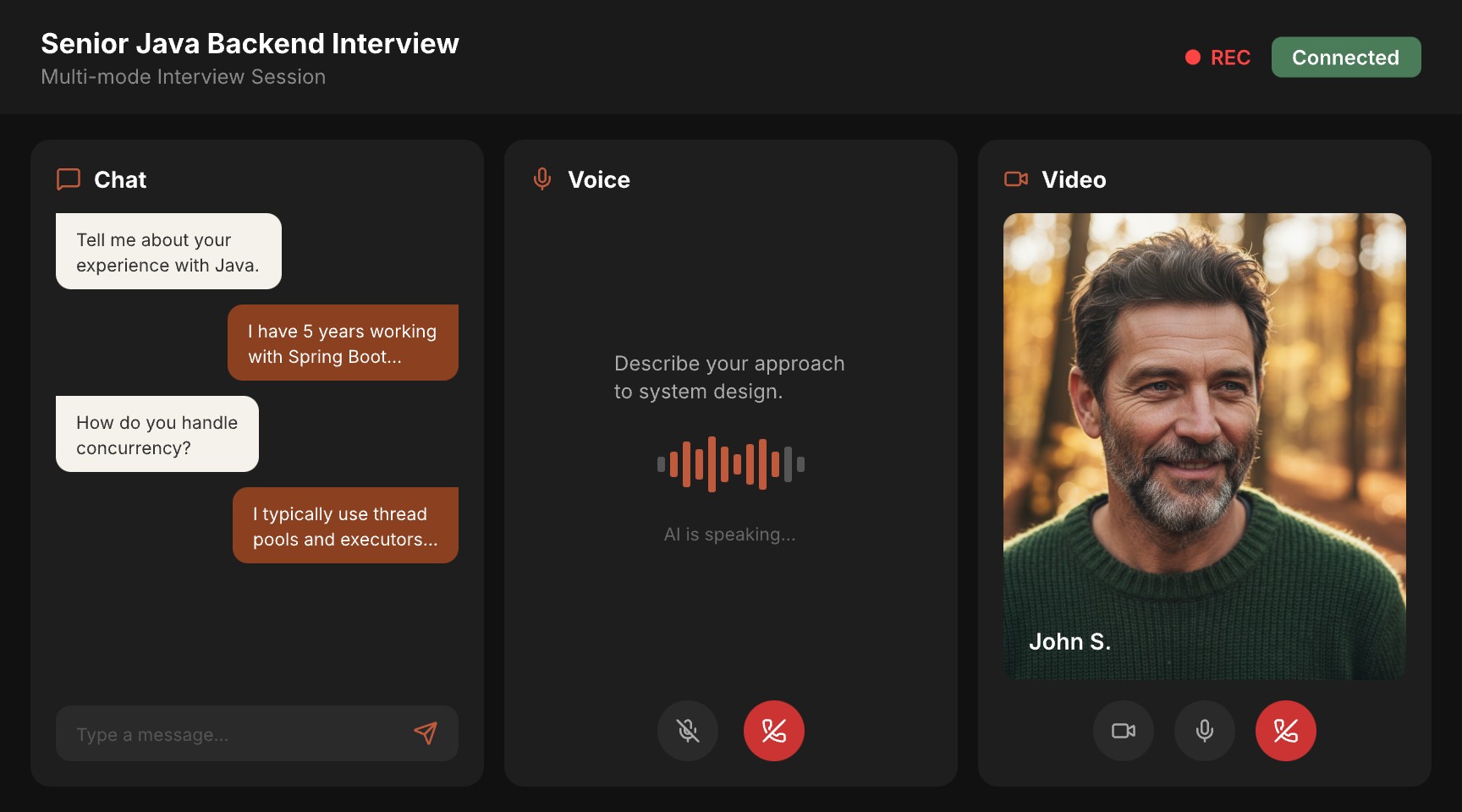
Different roles and candidates call for different formats. The best platforms support multiple modes:
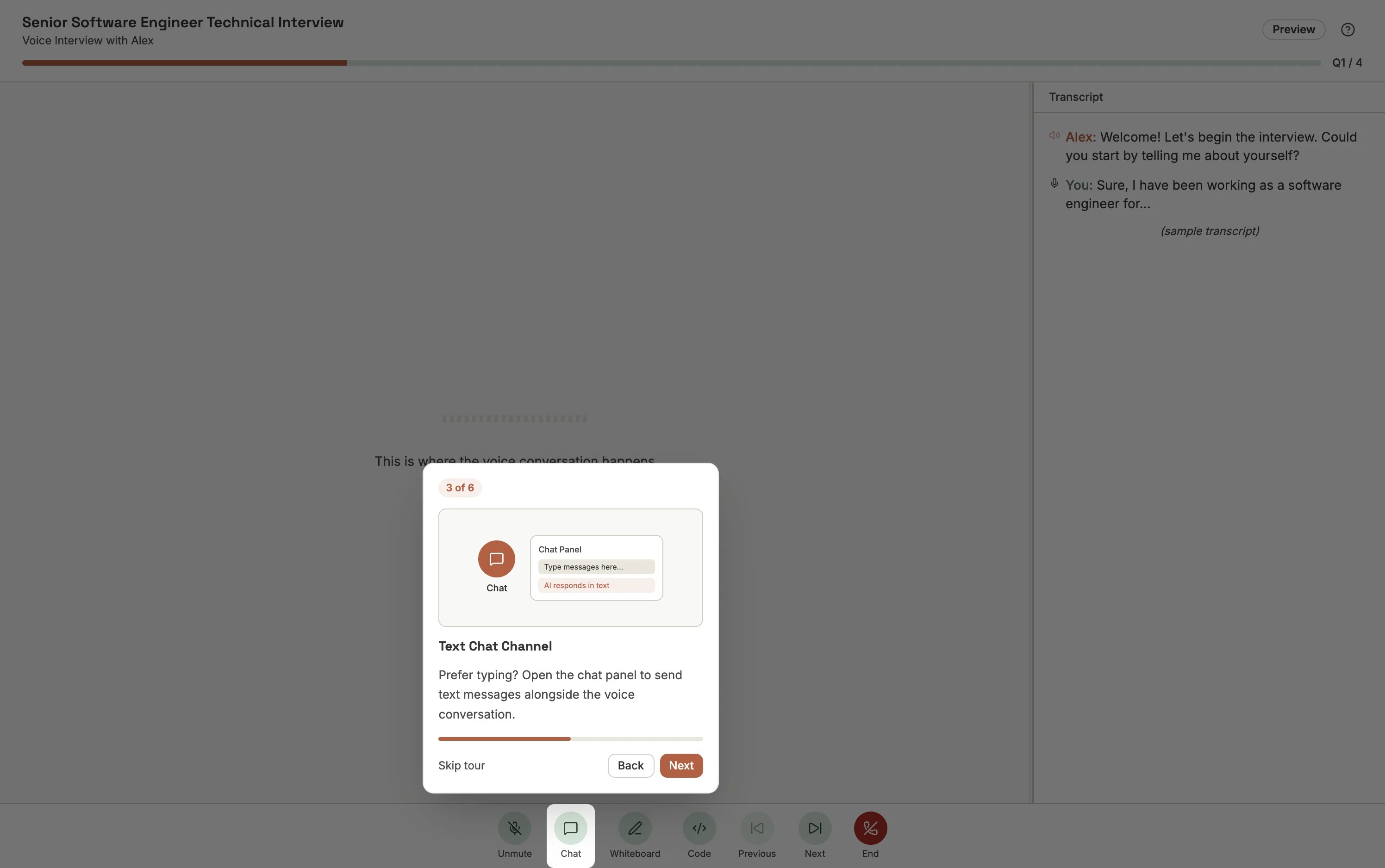
- Chat: Text-based interviews, ideal for async completion and candidates who prefer writing
- Voice: Audio conversations that feel like a phone screen but with AI consistency
- Video: Face-to-face AI interviews for roles where visual communication matters
3. Interview Design Tools
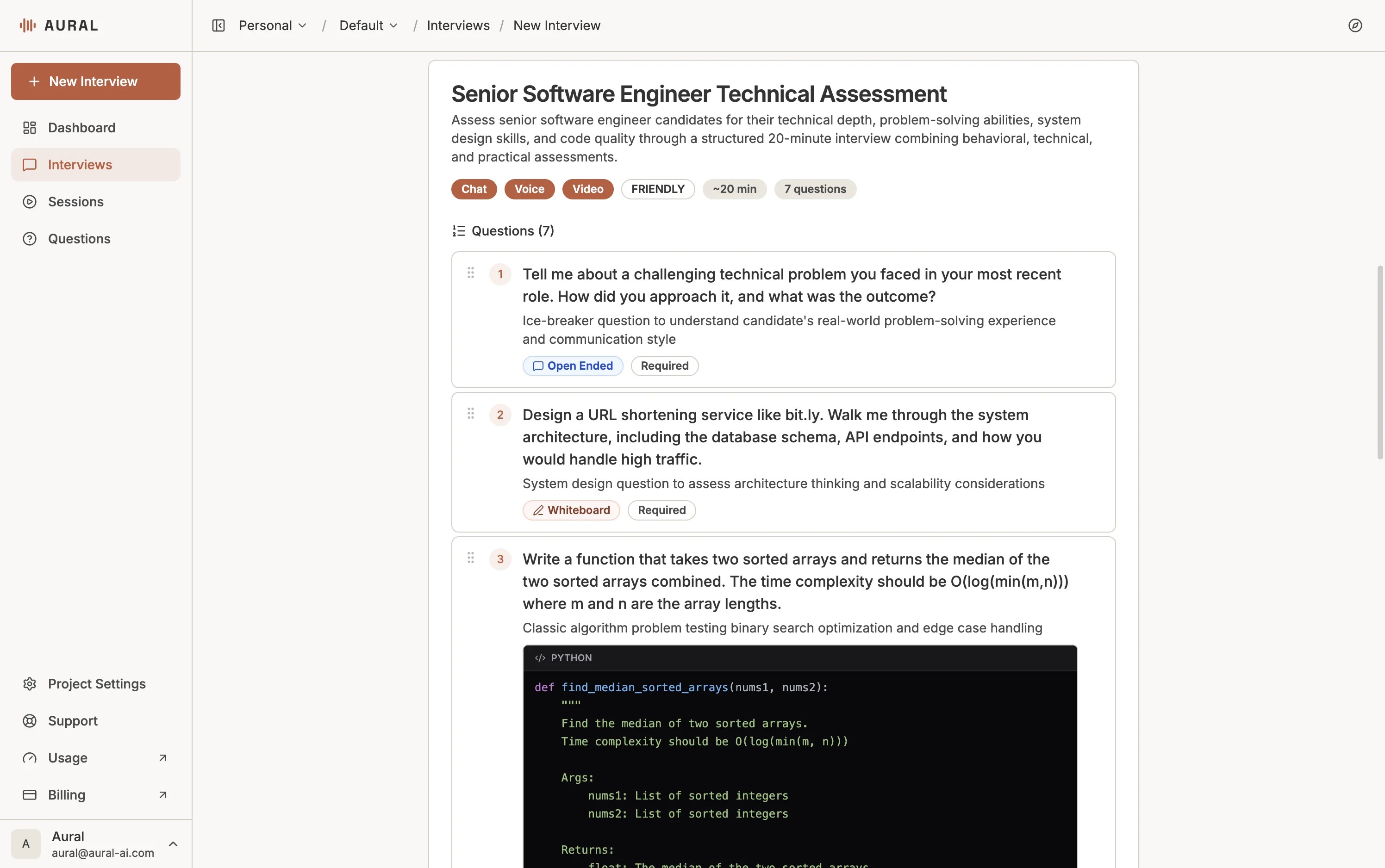
The quality of your AI interview depends entirely on how well it's designed. Strong platforms offer:
- AI-assisted interview generation from a job description or competency framework
- A manual editor for fine-tuning questions and evaluation criteria
- Question libraries and templates for common roles and competencies
- Support for different question types: behavioral, situational, technical, case-based
4. Assessment and Analytics
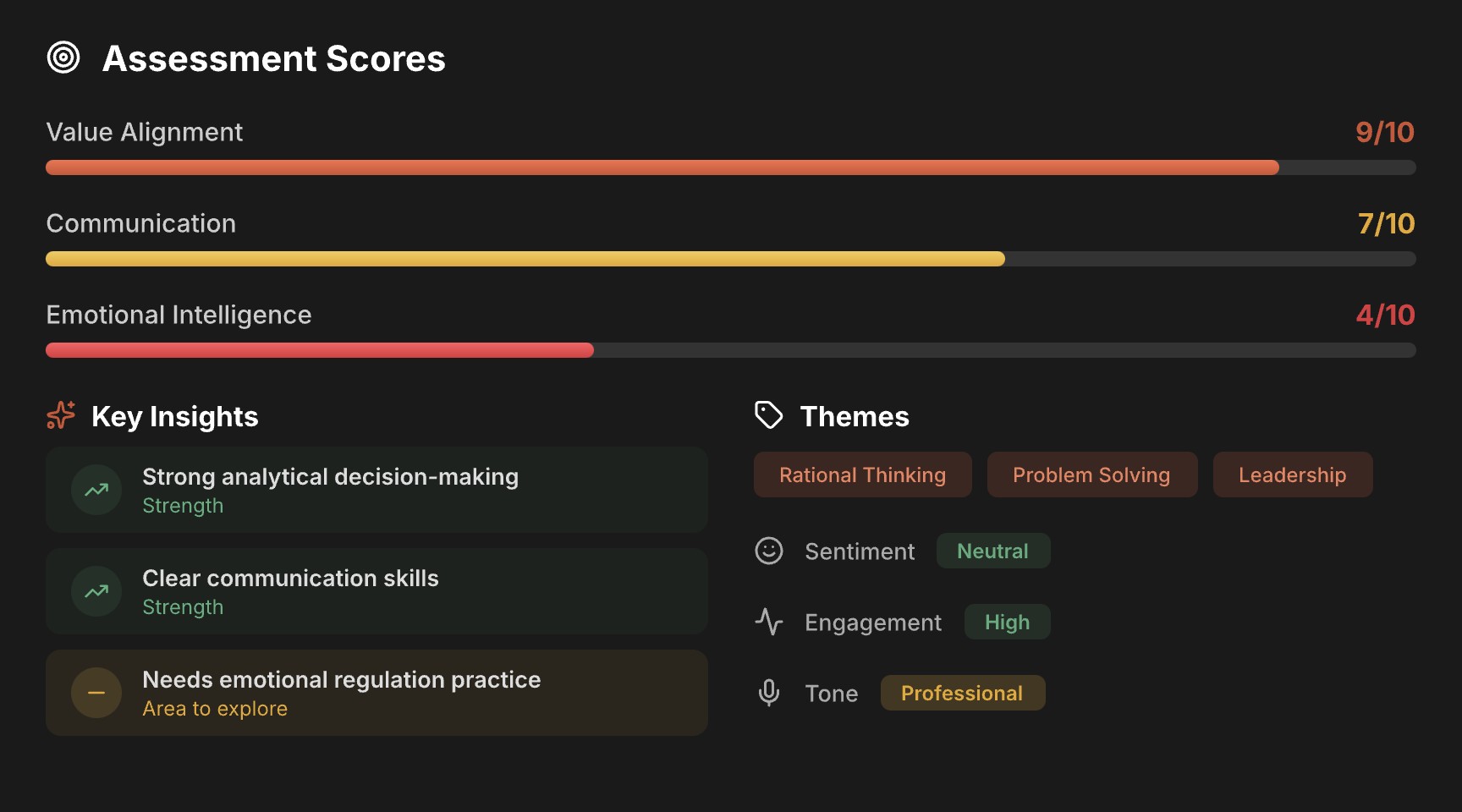
An AI interview is only as valuable as the insights it produces. Look for platforms that offer:
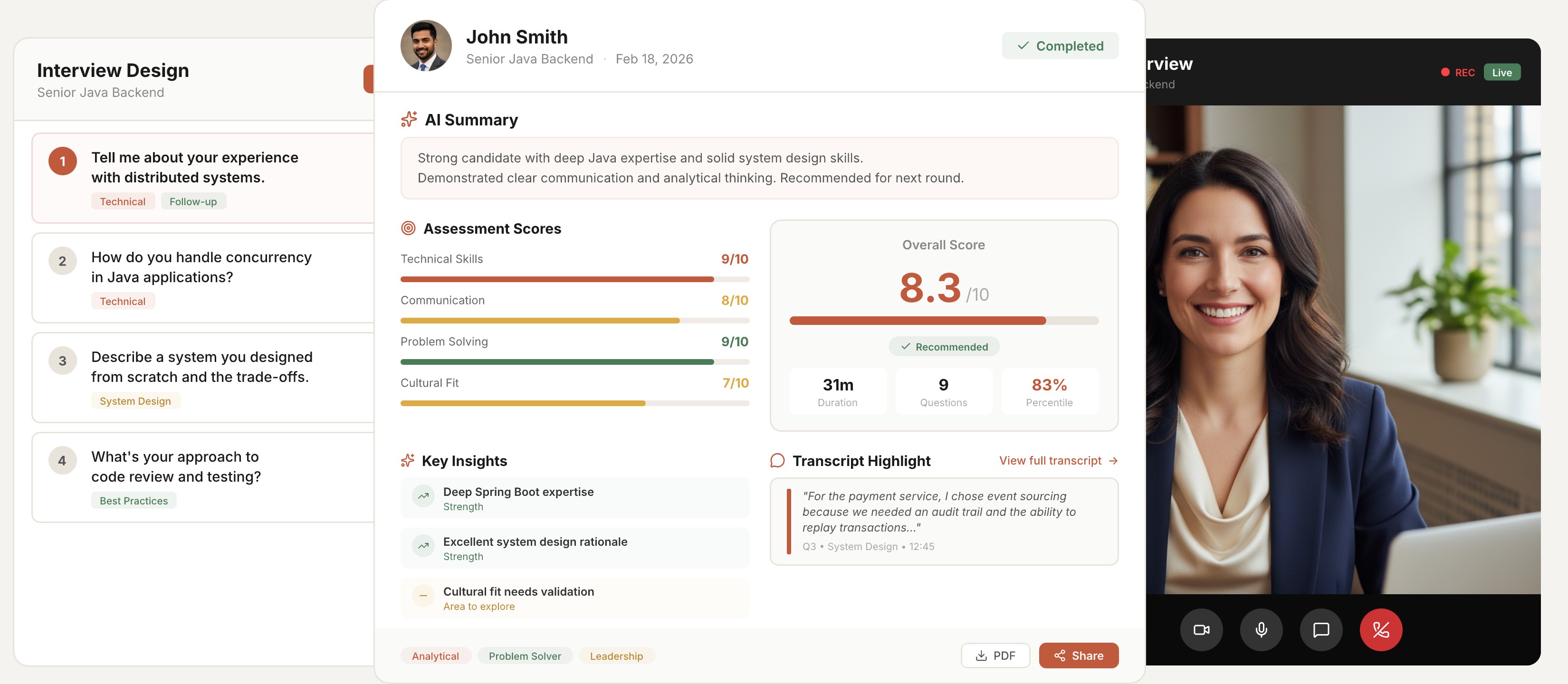
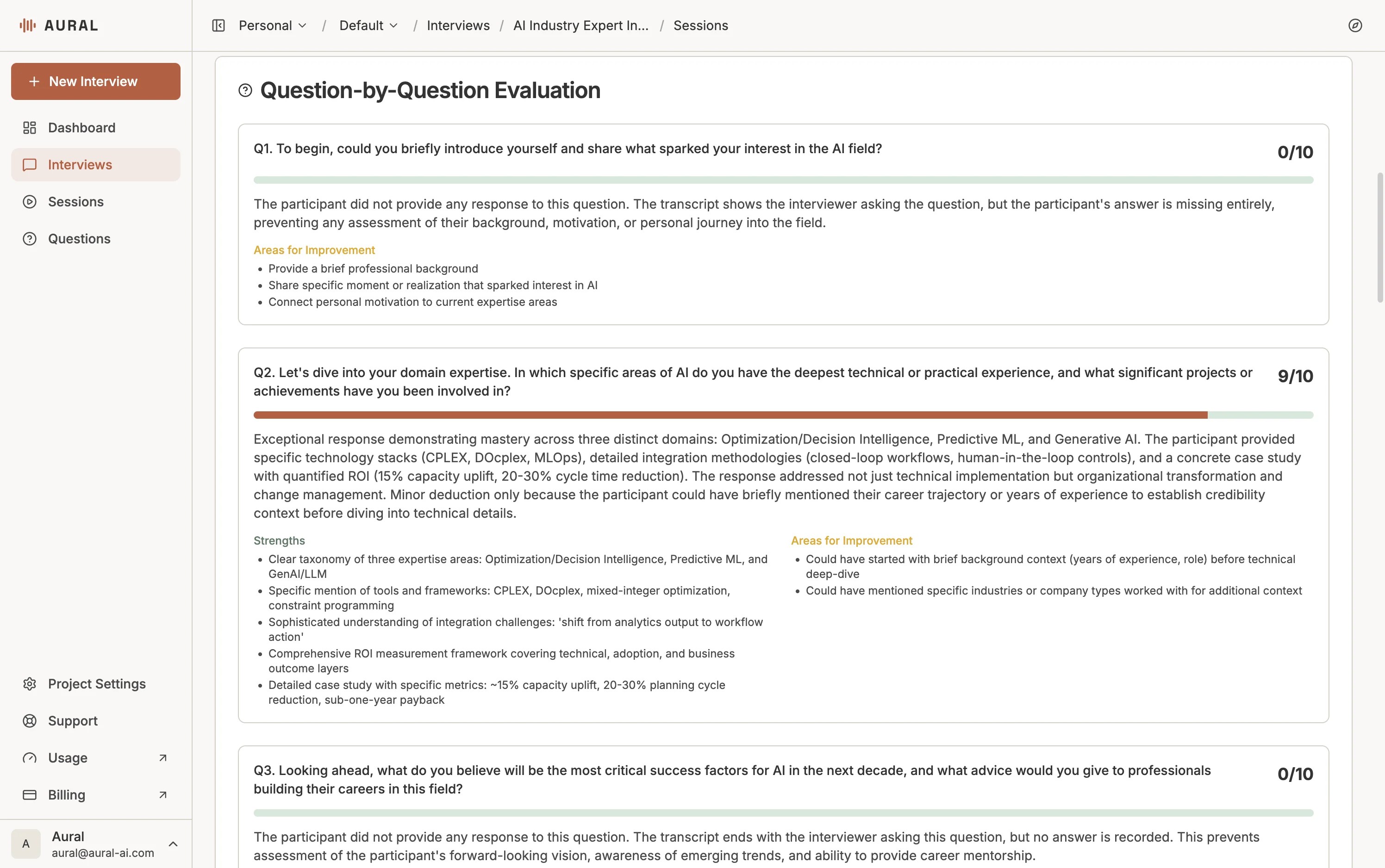
- Automated scoring against defined evaluation criteria
- Full transcripts with searchable text
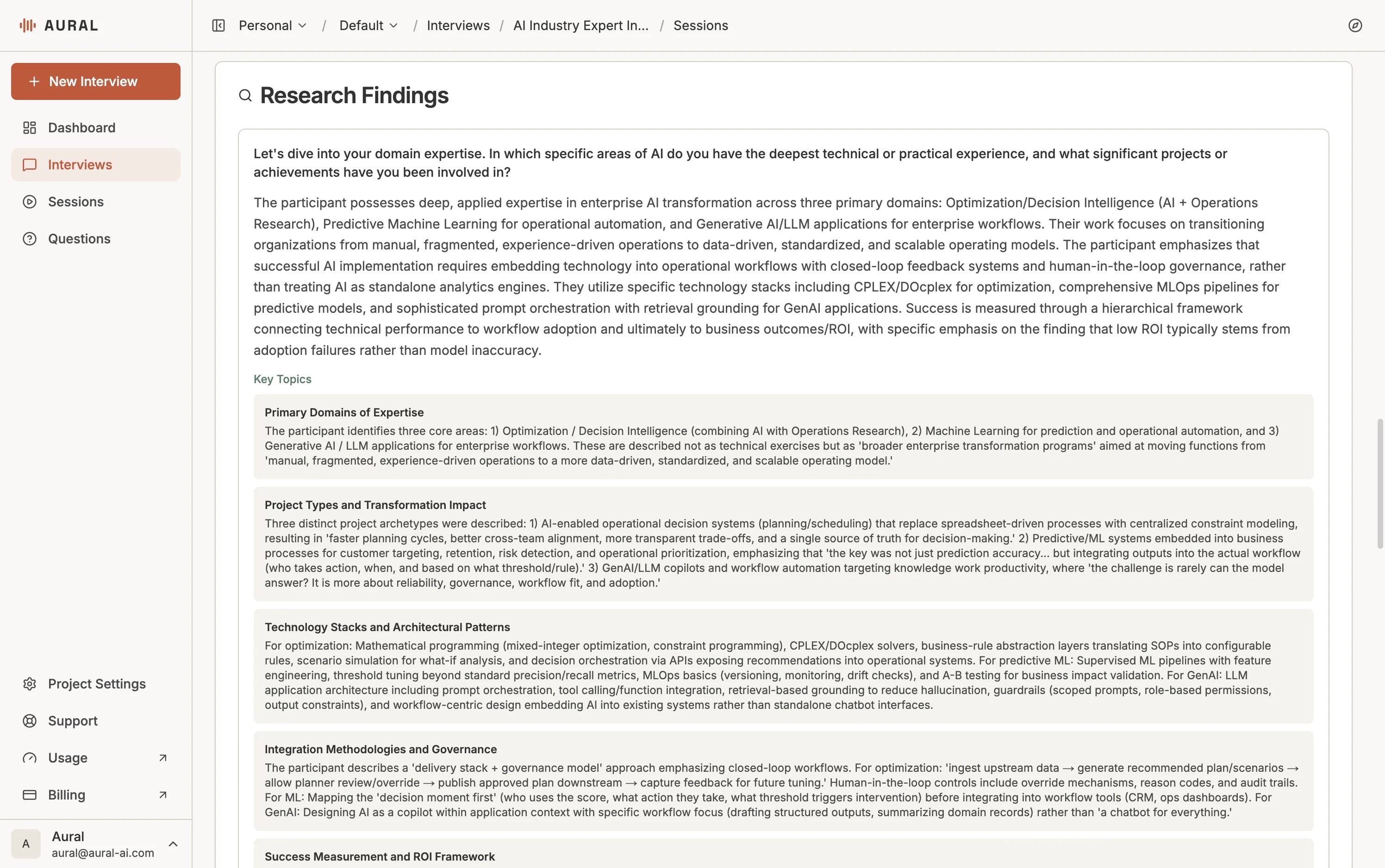
- AI-generated summaries that highlight key strengths and concerns
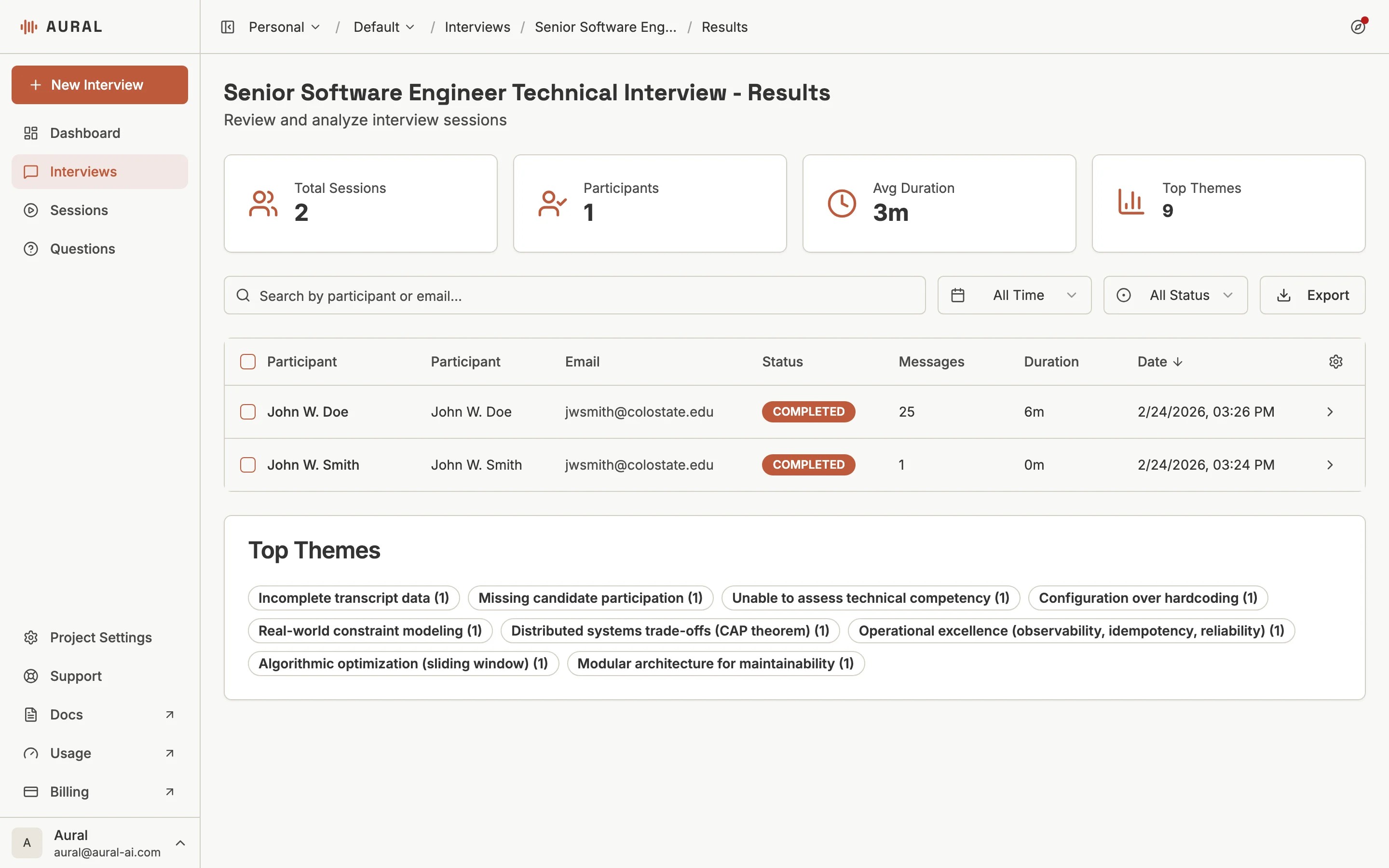
- Aggregate views across candidates for side-by-side comparison
- Export to XLSX, PDF, or integration with your ATS
5. Candidate Experience
Your interview process is a reflection of your employer brand. AI interview software should make the experience better, not worse. Key factors:
- Clean, intuitive interface that works on mobile and desktop
- No app downloads required — candidates should be able to start from a link
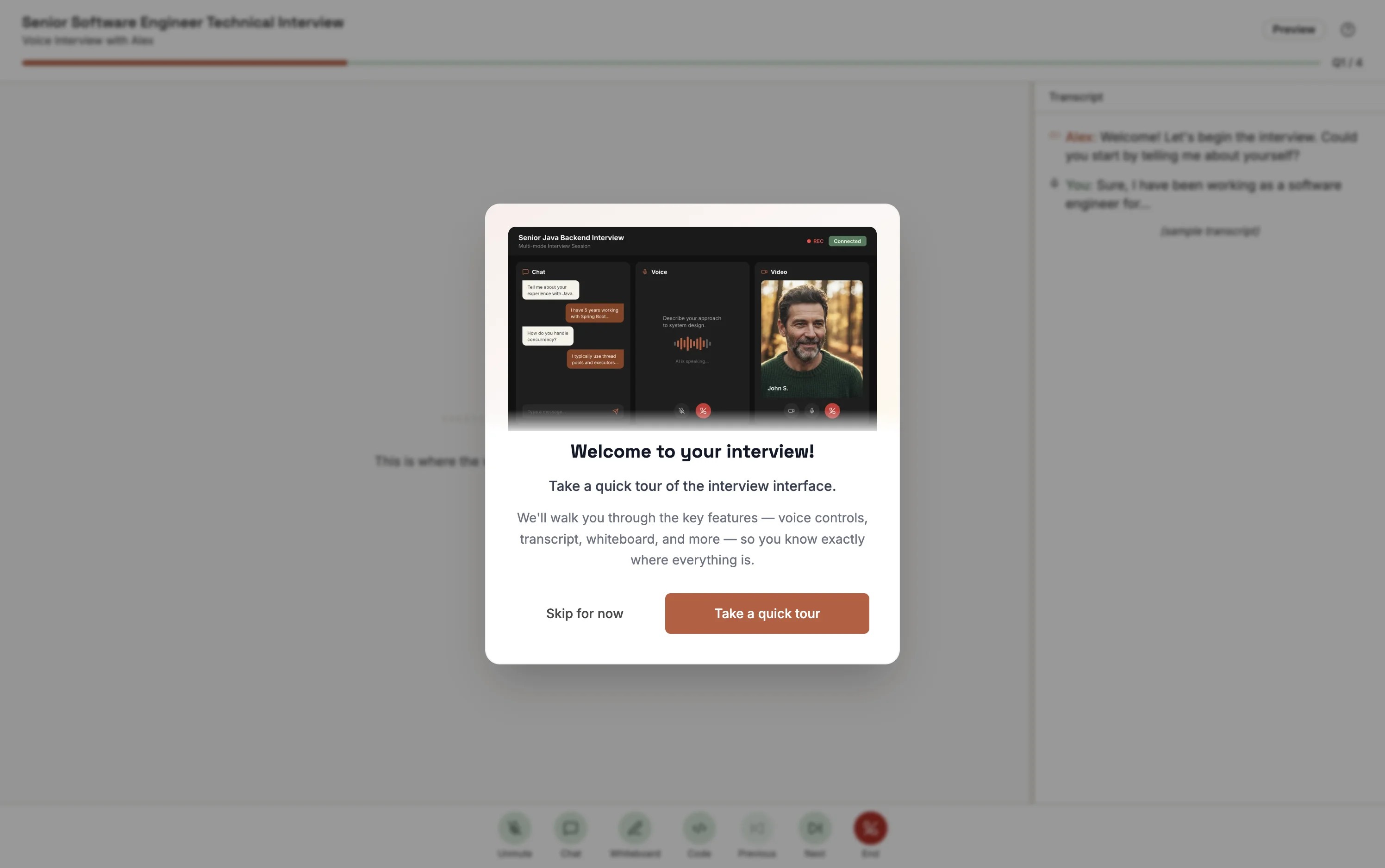
- Clear instructions and a comfortable onboarding flow
- Accessibility for candidates with disabilities
Here's what the candidate journey looks like from start to finish:
6. Integrity and Anti-Cheating
When interviews happen asynchronously and without a human proctor, integrity becomes a real concern — especially for technical assessments and high-stakes roles. The best platforms build anti-cheating directly into the interview experience rather than bolting it on as an afterthought.
Look for features like:
- Mandatory device permissions: Requiring camera, microphone, and screen sharing before the session starts — not as optional steps the candidate can skip.
- Tab-switch and focus-loss tracking: Every time a candidate navigates away from the interview tab, the event is recorded and timestamped.
- External paste blocking: Content copied from outside the interview page is blocked, preventing candidates from pasting answers generated by external tools.
- Multi-monitor detection: Candidates using more than one screen are warned that the setup has been detected.
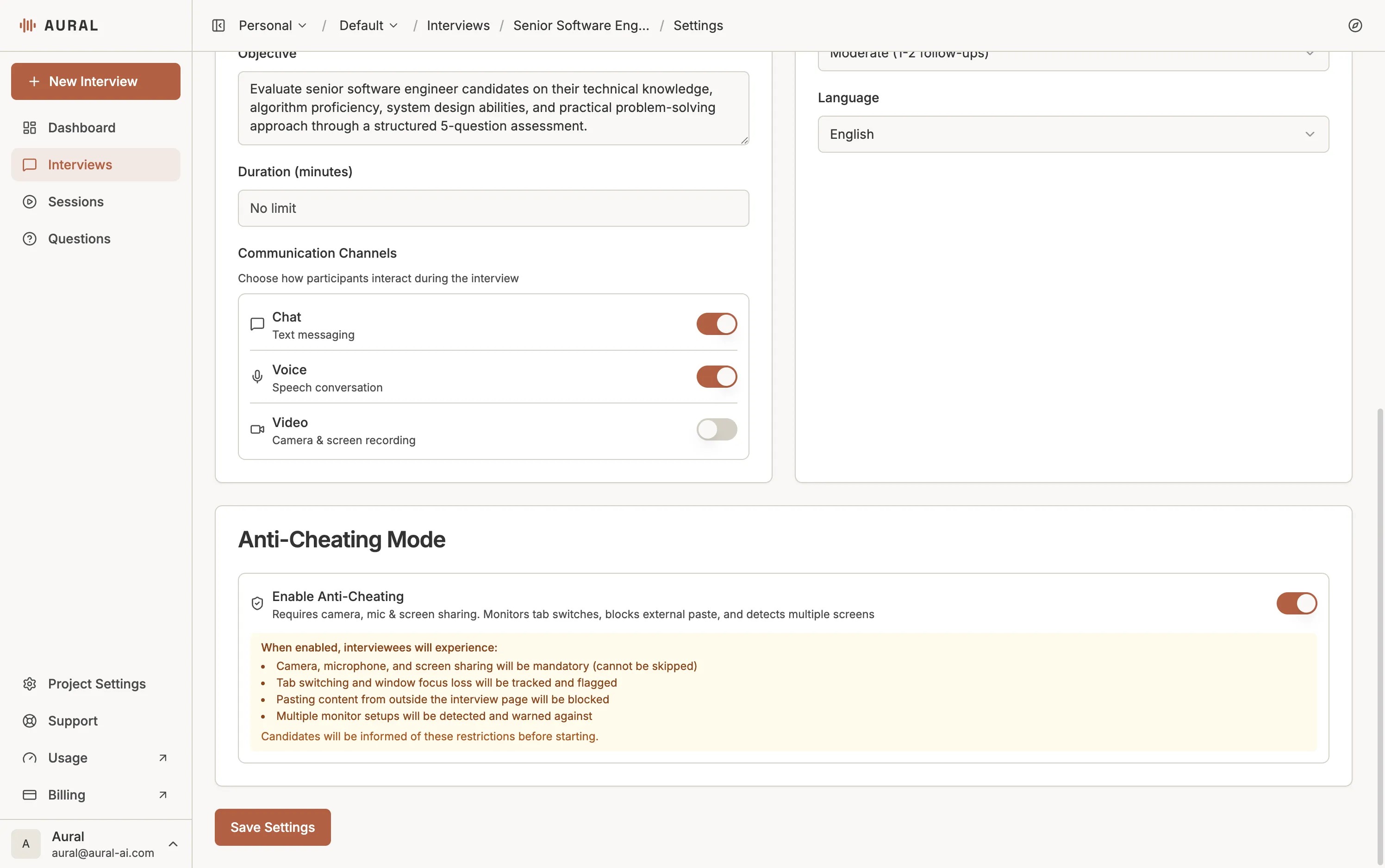
In Aural, anti-cheating mode is a single toggle in the interview settings. Once enabled, all restrictions are enforced automatically for every session. Candidates are informed of the restrictions before the interview begins — transparency is key to maintaining trust while protecting integrity.
After the session, all recorded events appear in an integrity log within the session report. Reviewers can see exactly how many times a candidate left the page, whether external paste was attempted, and whether the departure threshold was exceeded.

Designing Effective AI Interviews
The most common mistake with AI interview software is treating it like a survey tool — loading it up with 20 questions and hoping for the best. Effective AI interviews require the same thoughtfulness as any good interview, plus an understanding of how to leverage the AI's unique capabilities.
Start with Competencies, Not Questions
Before writing a single question, define 3–5 competencies that predict success in the role. For a product manager, that might be “strategic thinking,” “stakeholder management,” and “data-driven decision making.” For a software engineer, it might be “system design,” “code quality,” and “collaboration.”
Each competency should have 1–2 core questions with clear evaluation criteria. In Aural, you can define these criteria directly in the interview editor, and the AI will use them to score responses.
Configure Follow-Up Depth Thoughtfully
One of the biggest advantages of AI interviews over recorded video responses is the ability to follow up. But follow-up depth is a dial, not a switch:
- Light: The AI asks the question and moves on. Good for high-volume screening where you want quick data.
- Moderate: The AI asks one follow-up to clarify or deepen. The sweet spot for most hiring interviews.
- Deep: The AI probes extensively, challenging assumptions and pushing for specifics. Ideal for senior roles or research interviews.
Keep It Focused
Aim for 5–8 core questions with a total interview time of 15–30 minutes. Every question you add dilutes the depth of every other question. A focused interview with deep follow-ups produces far richer data than a broad interview that skims the surface.
Test Before You Launch
Always do a test run before sending to candidates. Complete the interview yourself or have a colleague go through it. Pay attention to:
- How natural the conversation flow feels
- Whether the follow-ups make sense for different types of answers
- Whether the total time is appropriate
- Whether the evaluation criteria produce meaningful differentiation
Ensuring Fairness and Reducing Bias
One of the strongest arguments for AI interview software is bias reduction — but only if implemented thoughtfully. Here's how to get it right:
Standardization Is the Foundation
The single biggest source of interview bias is inconsistency. When different candidates get different questions, different follow-ups, and different evaluation approaches, you're not comparing candidates — you're comparing interview experiences. AI interviews eliminate this variable entirely.
Evaluate Responses, Not Presentations
AI interview software focuses on what candidates say, not how they look while saying it. This naturally reduces bias related to appearance, accent, or communication style — factors that disproportionately affect underrepresented groups in traditional interviews.
Audit Your Criteria
AI is only as fair as the criteria it's given. Review your evaluation rubrics for language that might inadvertently favor certain backgrounds. “Demonstrates leadership” could mean very different things depending on cultural context. Be specific: “Provides a concrete example of influencing a team decision without formal authority.”
Measuring the Impact
Deploying AI interview software isn't a set-and-forget exercise. You need to measure whether it's actually improving your hiring outcomes. Key metrics to track:
- Time-to-hire: How much faster are you moving candidates through the screening stage?
- Screening-to-offer ratio: Are AI-screened candidates more likely to receive and accept offers?
- Candidate satisfaction: What do candidates think of the experience? (Send a brief survey after the interview.)
- Quality of hire: Do candidates screened by AI perform better in their first 6–12 months?
- Diversity metrics: Is your pipeline becoming more diverse compared to the traditional process?
Common Use Cases Beyond Hiring
While hiring is the most common application, AI interview software is increasingly used for other structured conversation needs:
- User research: Conduct discovery interviews with customers or prospects at scale, then analyze themes across all sessions.
- Customer feedback: Replace post-purchase surveys with conversational AI interviews that capture deeper, more nuanced feedback.
- Academic research: Run structured interviews for qualitative studies, with automatic transcription and analysis.
- Interview practice: Give candidates or students a risk-free environment to practice and receive feedback.
Getting Started: A Practical Checklist
Ready to implement AI interview software? Here's a step-by-step checklist:
- Define your use case: Are you screening candidates, conducting research, or gathering feedback?
- Identify 1–2 roles for a pilot: Start with high-volume roles where the impact will be most visible.
- Design your first interview: Define competencies, write questions, set evaluation criteria.
- Test internally: Have your team complete the interview and refine based on their feedback.
- Launch and measure: Send to real candidates, track the metrics above, and iterate.
- Scale: Once you've validated the approach, expand to additional roles and teams.
The Future of AI Interview Software
We're still in the early days. As language models improve, AI interviews will become indistinguishable from human-led conversations. Real-time multimodal analysis (voice tone, facial expression, word choice) will add layers of insight that no human interviewer could capture consistently.
But the fundamentals won't change: the best interviews — AI or human — are structured, fair, and designed with clear evaluation criteria. The technology just makes it possible to deliver that experience at a scale that wasn't previously achievable.
If your organization is still relying entirely on manual screening, the question isn't whether to adopt AI interview software — it's how soon you can start building the data and processes that will define your hiring advantage for years to come.