Direct answer
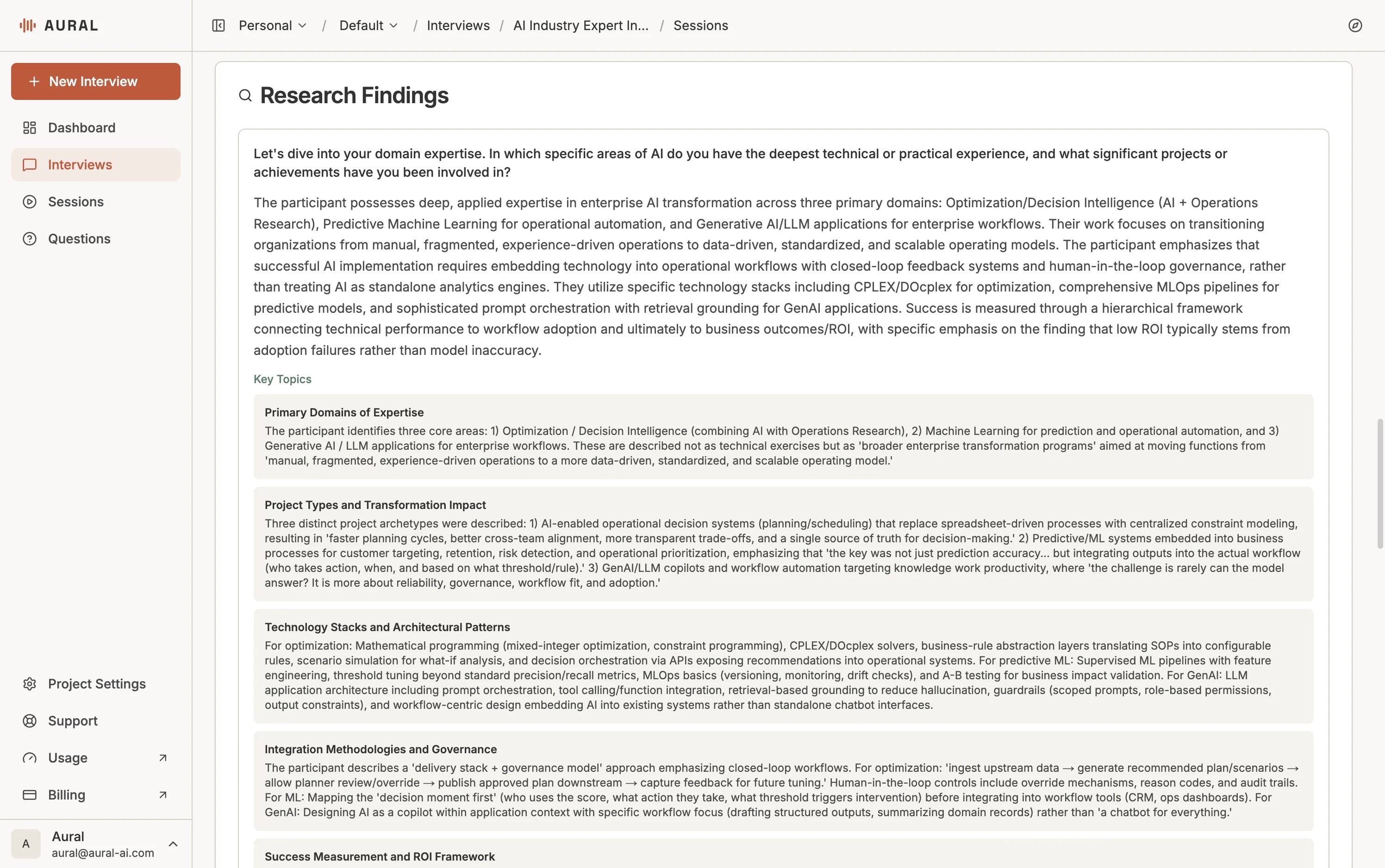
AI interviews can help user research teams collect structured qualitative feedback at scale. The AI asks consistent questions, probes for examples, transcribes responses, and summarizes themes so researchers can focus on study design and interpretation.

User research is rich because it is conversational. The problem is that conversations are expensive to schedule and review. A researcher can run a handful of live interviews in a week, but product teams often need more signal than a small sample can provide.
AI interviews expand the top of the research funnel. They are not a replacement for research judgment, but they can collect consistent stories from more participants, especially when the research question is broad and exploratory.
Best Research Use Cases
- Customer discovery: Understand workflows, pain points, and buying triggers.
- Concept testing: Ask participants to react to a direction, prototype, or message.
- Feedback collection: Collect structured feedback after onboarding, trials, or events.
- Expert interviews: Capture detailed domain knowledge when experts are hard to schedule.
How to Design Better AI Research Interviews
- Start with one clear research objective.
- Ask about recent behavior before asking for opinions.
- Use follow-ups to request examples, tradeoffs, and context.
- Keep the interview short enough that participants finish it.
- Review transcripts before relying on summarized themes.
The Human Researcher Still Matters
AI can collect, structure, and summarize responses. Researchers still own the study design, sampling, interpretation, and product judgment. The best use of AI interviews is to give researchers more raw evidence, not to outsource the final insight.