Hiring teams have more options than ever for how they screen and evaluate candidates. But most still default to the same process they've used for decades: a recruiter picks up the phone, asks some questions, and makes a judgment call.
AI interview platforms offer a fundamentally different approach — one built on consistency, data, and scalability. But “different” doesn't automatically mean “better.” The right choice depends on your context, volume, and goals.
This post breaks down the two approaches across every dimension that matters, with honest trade-offs for each.
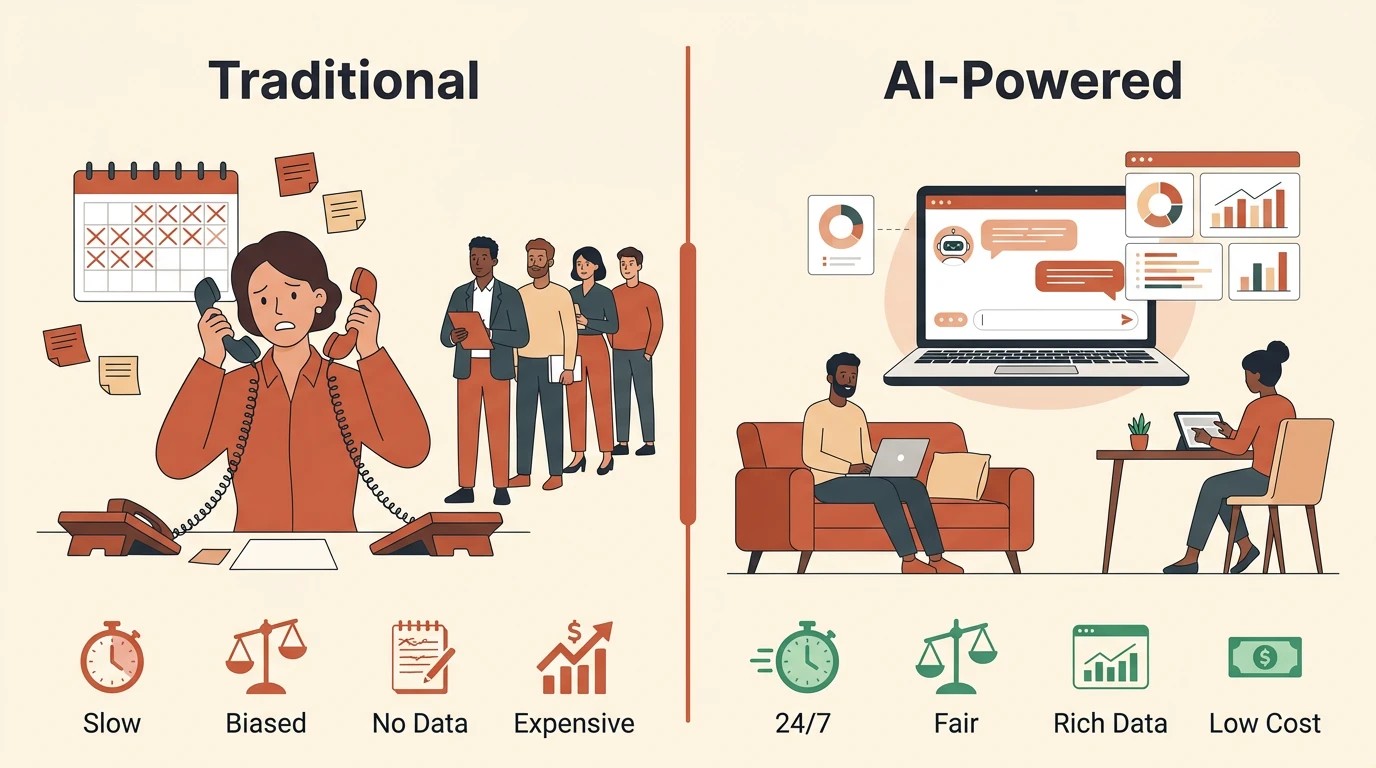
The Comparison at a Glance
| Dimension | Traditional Interviews | AI Interviews (Aural) |
|---|---|---|
| Scheduling | Manual coordination; 3–5 day delay per stage | Candidates self-schedule; available 24/7 |
| Consistency | Varies by interviewer, mood, and time of day | Identical questions, follow-ups, and scoring every time |
| Throughput | 6–8 screens per recruiter per day | Unlimited concurrent sessions |
| Documentation | Handwritten notes; rarely a full transcript | Auto-generated transcripts, scores, and summaries |
| Bias risk | High — influenced by rapport, appearance, accent | Lower — evaluates responses against defined criteria |
| Candidate flexibility | Must match recruiter availability | Complete anytime, from any device |
| Cost per screen | $15–$40 (recruiter time + overhead) | Fraction of the cost at scale |
Scheduling and Speed
The most immediate difference is logistics. In a traditional process, every screen requires a time slot that works for both the recruiter and the candidate. For high-volume roles, this alone can add a week to your timeline.
With AI interviews, the candidate receives a link and completes the interview on their own schedule — evenings, weekends, between meetings. There's no back-and-forth, no calendar juggling, no ghosted appointments.
For roles where you're screening 50–500 candidates, this isn't a minor convenience — it's the difference between a two-week screening cycle and a two-day one.
Consistency and Structure
Ask any I/O psychologist: the single biggest predictor of interview quality is structure. When every candidate answers the same questions, evaluated against the same criteria, you can actually compare them.
Traditional interviews struggle here. Even well-trained interviewers drift. They ask different follow-ups, spend more time on candidates they “click” with, and unconsciously adjust their standards over the course of a long hiring day.
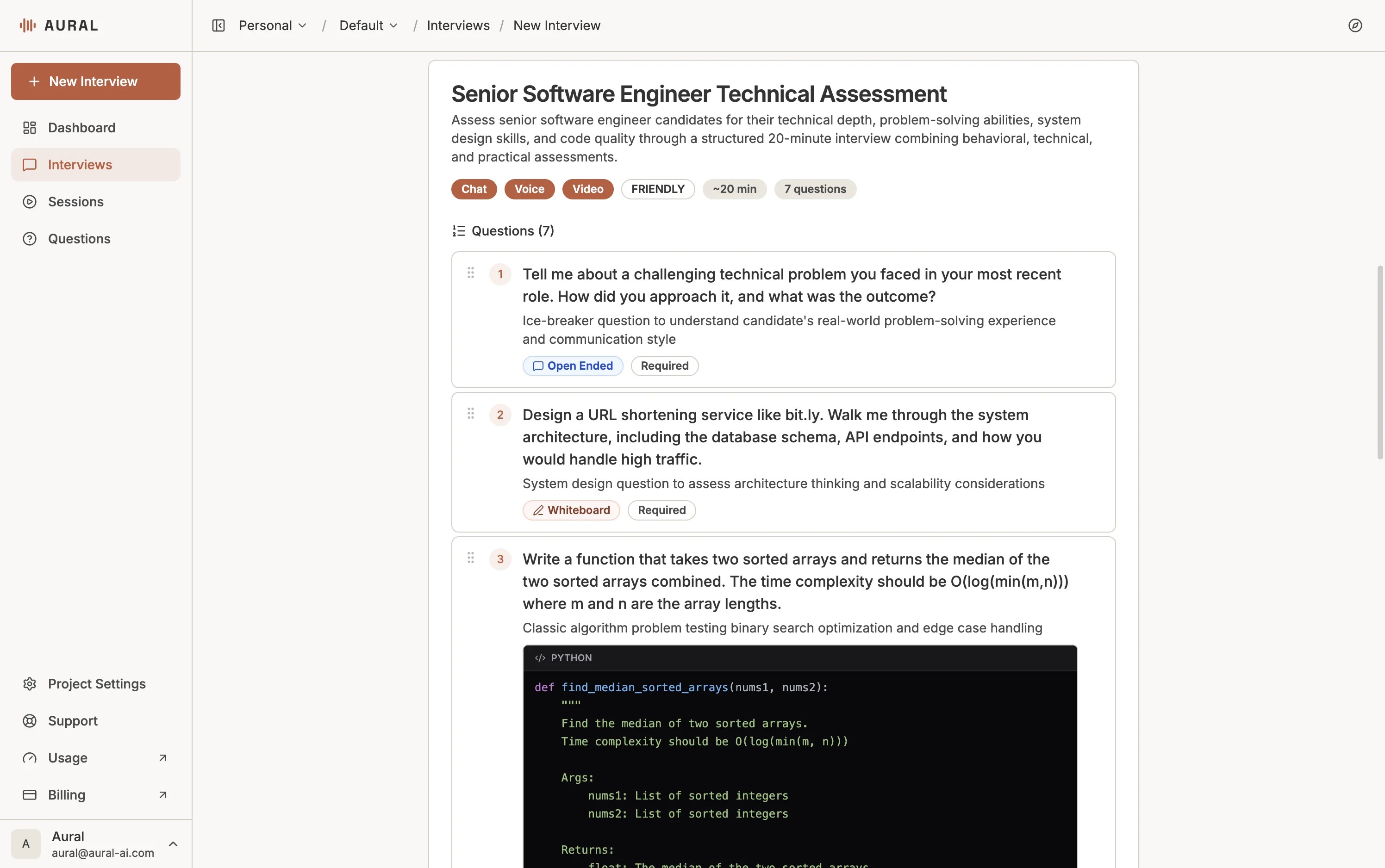
AI interviews eliminate interviewer drift entirely. The AI asks every candidate the same core questions, follows the same follow-up logic, and evaluates responses against the same rubric. Candidate #1 and candidate #200 get an identical experience.
Conversation Quality
This is where skeptics push back — and fairly. A skilled human interviewer brings empathy, intuition, and the ability to read the room. Can an AI really match that?
The honest answer: not entirely, but closer than most people expect. Modern AI interviewers (built on large language models) conduct adaptive conversations — they listen to responses, ask relevant follow-ups, and adjust their approach based on what the candidate says. They don't just read questions off a list.
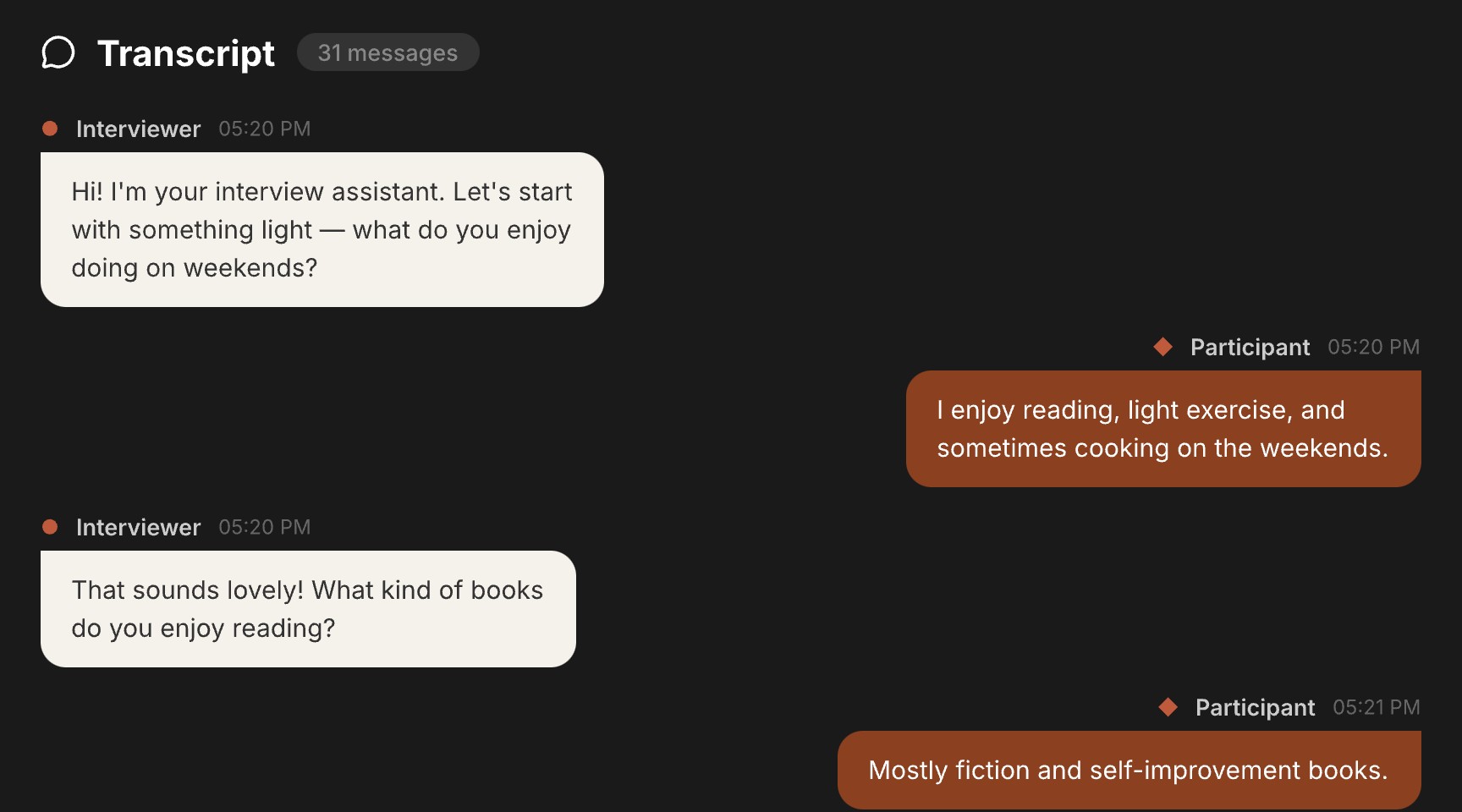
The trade-off is real, though. AI interviews are best for structured screening stages where consistency matters more than rapport. For final rounds, culture-fit assessments, or executive hiring, a human interviewer is still the right choice. The two approaches are complementary, not competing.
Bias and Fairness
Decades of research show that unstructured interviews are riddled with bias. Interviewers favor candidates who look like them, share their alma mater, or simply make good small talk. These biases are largely unconscious, which makes them harder to eliminate through training alone.
AI interviews reduce (but don't eliminate) bias in two ways:
- Standardization: Every candidate gets the same experience. There's no variation in warmth, patience, or question selection based on who the candidate is.
- Criteria-based evaluation: The AI scores responses against predefined rubrics, not gut feelings. It doesn't know (or care about) the candidate's name, appearance, or background.
That said, AI systems can inherit bias from their training data or evaluation criteria. The key is to audit your rubrics carefully and ensure they measure job-relevant competencies, not proxies for demographic characteristics.
Documentation and Decision-Making
After a traditional phone screen, you typically have one thing: the interviewer's notes. Maybe a paragraph, maybe a few bullet points, maybe a thumbs-up emoji in Slack. This makes it nearly impossible to revisit decisions, compare candidates objectively, or identify patterns across your hiring pipeline.
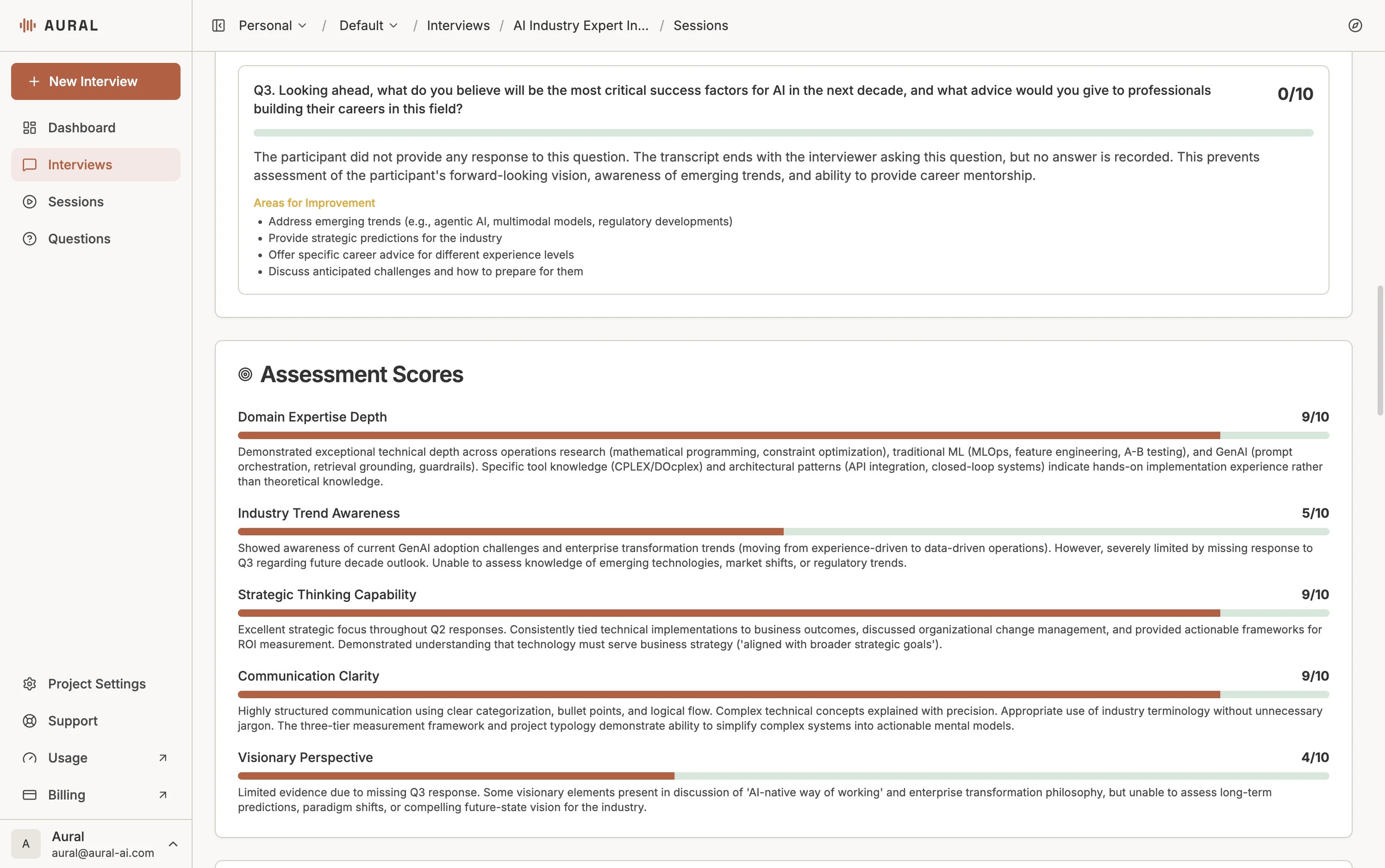
AI interviews generate a complete record automatically: full transcripts, per-question scoring, competency-level assessments, and AI-generated summaries. Every data point is preserved and searchable.
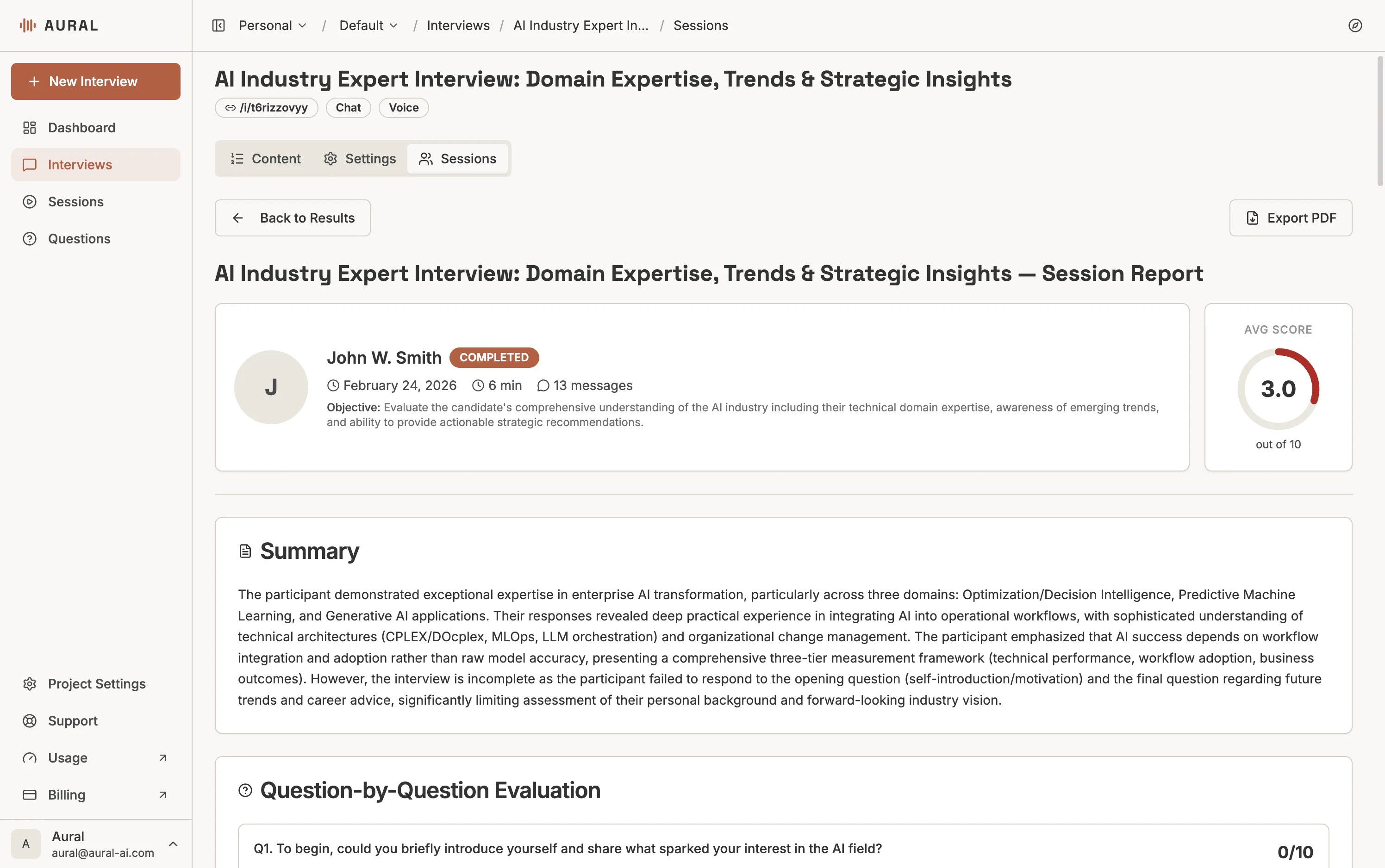
This changes the decision-making dynamic. Instead of asking “What did the recruiter think?” you can ask “How did this candidate score on system design compared to the other five finalists?” The conversation shifts from opinions to evidence.
Cost and Scalability
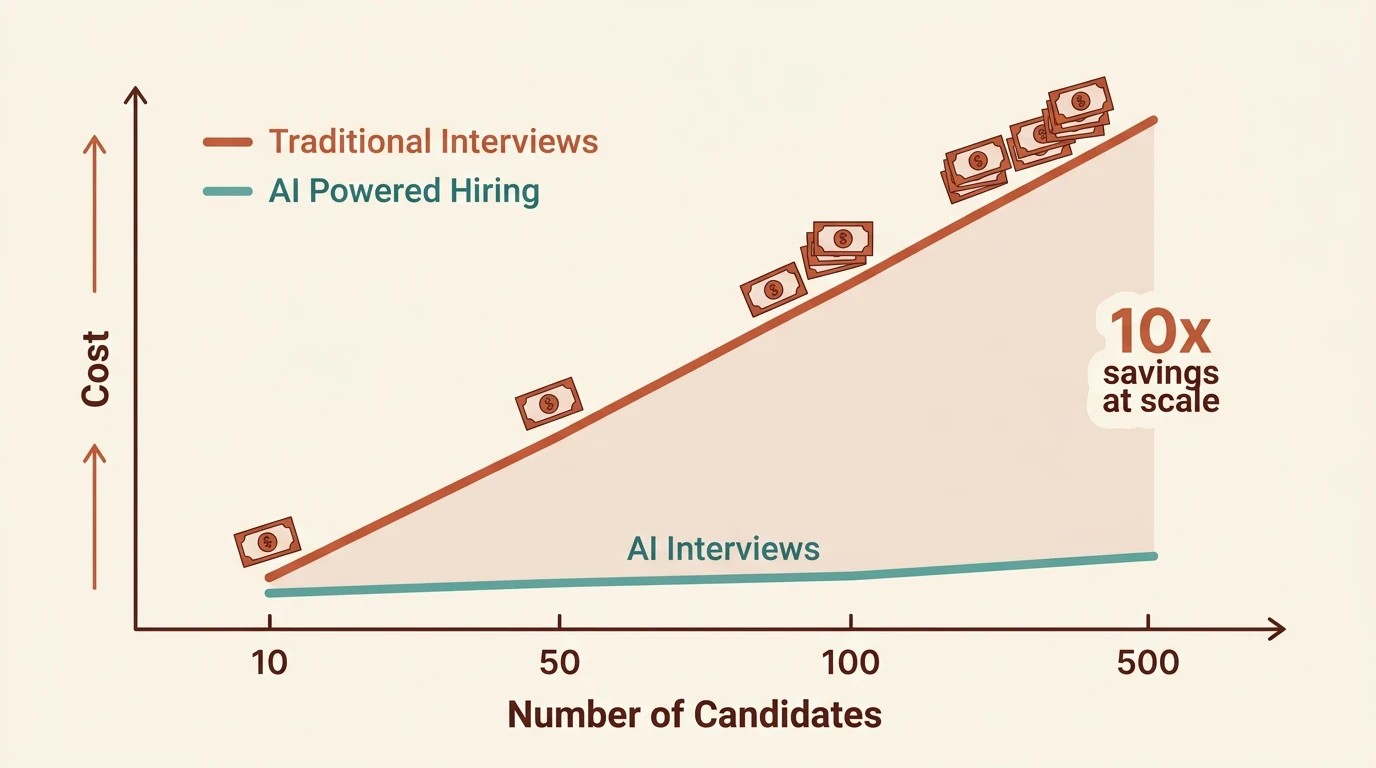
A recruiter conducting phone screens costs $25–$50 per hour (fully loaded). At 30 minutes per screen plus scheduling overhead, each screen costs $15–$40. For 200 candidates, that's $3,000–$8,000 — just for the initial screening stage.
AI interviews scale differently. The marginal cost of each additional interview is near zero. Whether you're screening 20 candidates or 2,000, the platform cost stays flat. This makes AI interviews particularly compelling for:
- High-volume roles (retail, customer support, sales)
- Seasonal hiring surges
- Companies scaling rapidly across multiple geographies
- Organizations with limited recruiting headcount
Candidate Experience
Candidate experience is often cited as a concern with AI interviews. Will candidates feel dehumanized? Will they take it less seriously?
The data tells a more nuanced story. Candidates consistently appreciate three things about AI interviews: scheduling flexibility (no more taking calls in parking lots), reduced performance anxiety (many candidates are more candid with AI than with humans), and transparency (they know exactly what to expect).
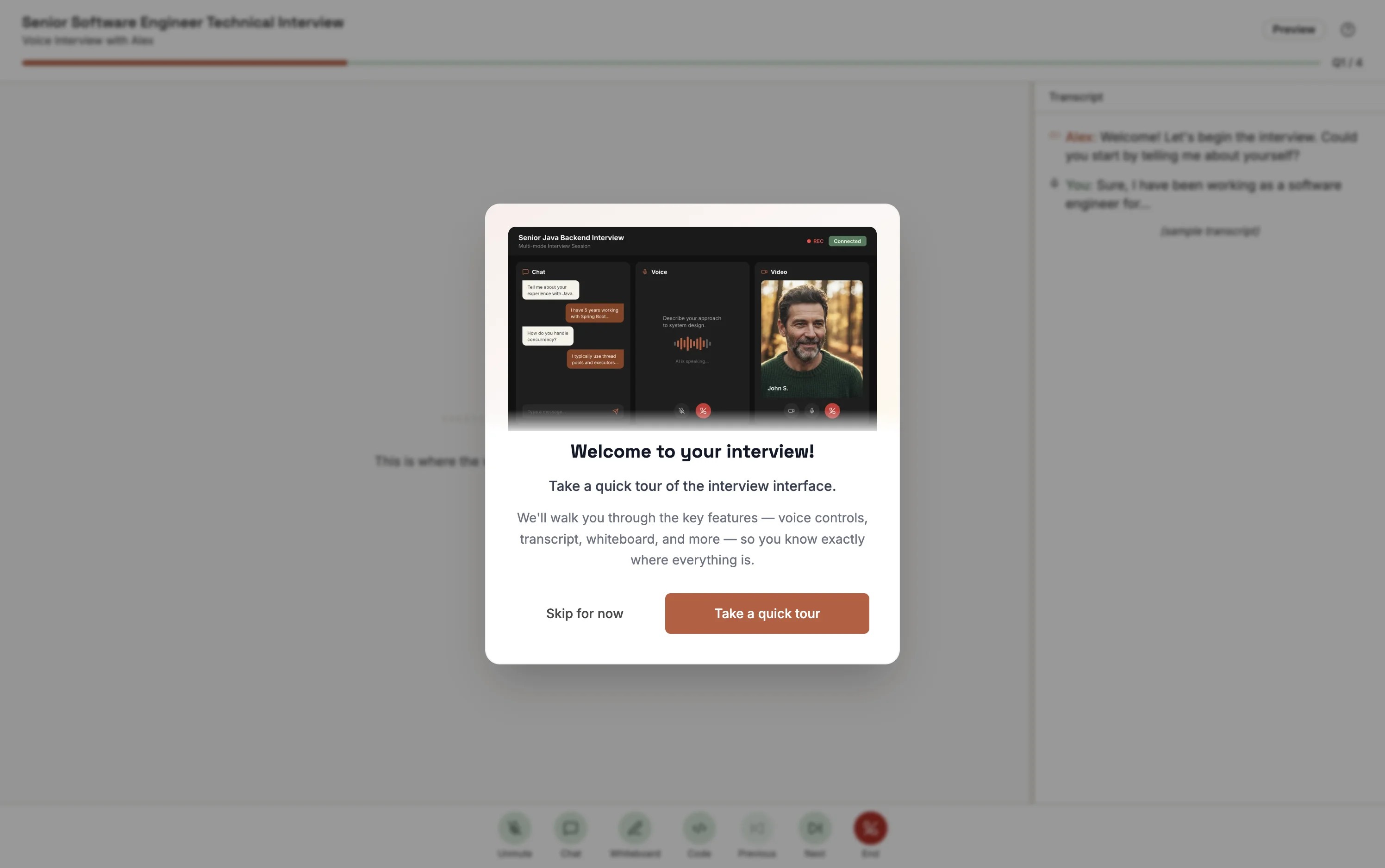
The key is execution. A well-designed AI interview with clear instructions, a clean interface, and natural conversation feels professional and respectful. A poorly designed one feels like filling out a form. Platform choice matters.
Integrity and Trust
One common objection: “If no one is watching, how do you know candidates aren't cheating?” It's a fair question, especially for technical assessments.
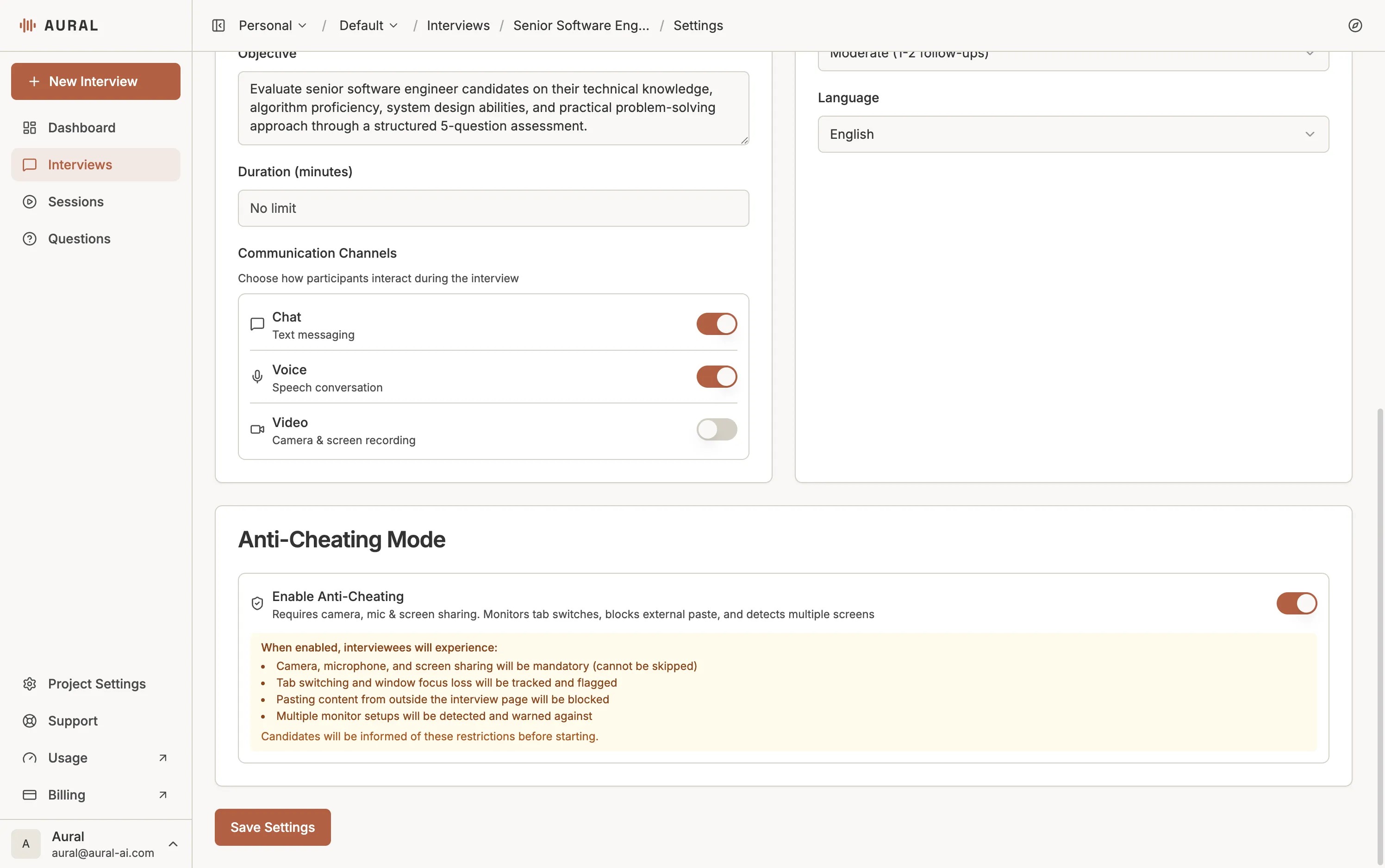
Modern AI interview platforms address this with built-in integrity monitoring: tab-switch tracking, external paste blocking, multi-monitor detection, and mandatory device permissions. These features work transparently — candidates know the rules upfront, and reviewers can see the full integrity log after the session.
When to Use Which
The honest recommendation: use both. AI interviews and traditional interviews serve different purposes, and the best hiring processes combine them.
- Use AI interviews for: Initial screening, technical assessments, high-volume roles, structured competency evaluations, and any stage where consistency and scale matter most.
- Use traditional interviews for: Final rounds, culture-fit conversations, executive hiring, relationship-building, and any stage where human judgment and rapport are essential.
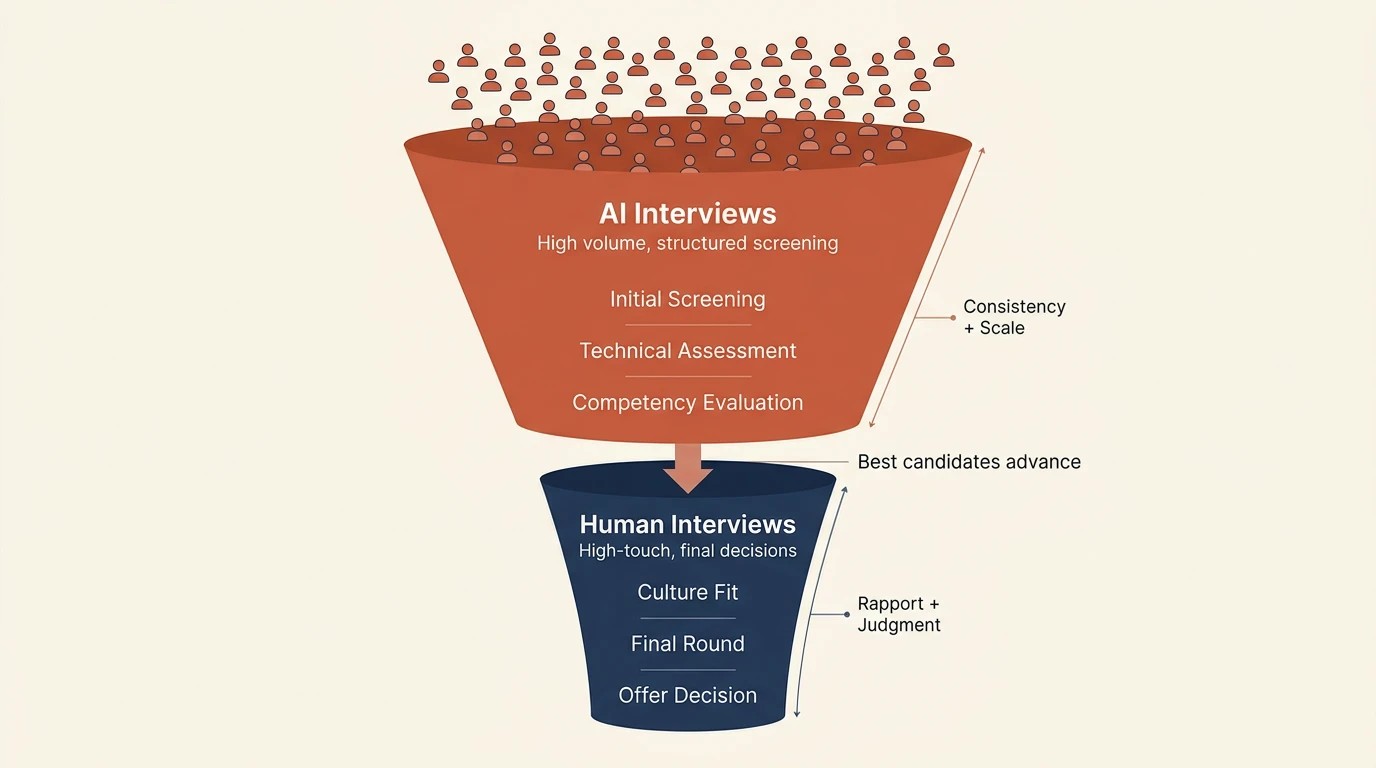
The goal isn't to replace human interviewers — it's to free them from the repetitive, high-volume stages so they can focus on the conversations where they add the most value.
The Bottom Line
Traditional interviews have served us for decades, but they weren't designed for the scale, speed, and fairness demands of modern hiring. AI interviews don't solve every problem, but they solve the ones that matter most at the screening stage: consistency, speed, documentation, and scalability.
The best hiring teams aren't choosing one over the other. They're building a process where each approach handles the stage it's best suited for — and the result is a faster, fairer, and more data-driven pipeline from first touch to final offer.