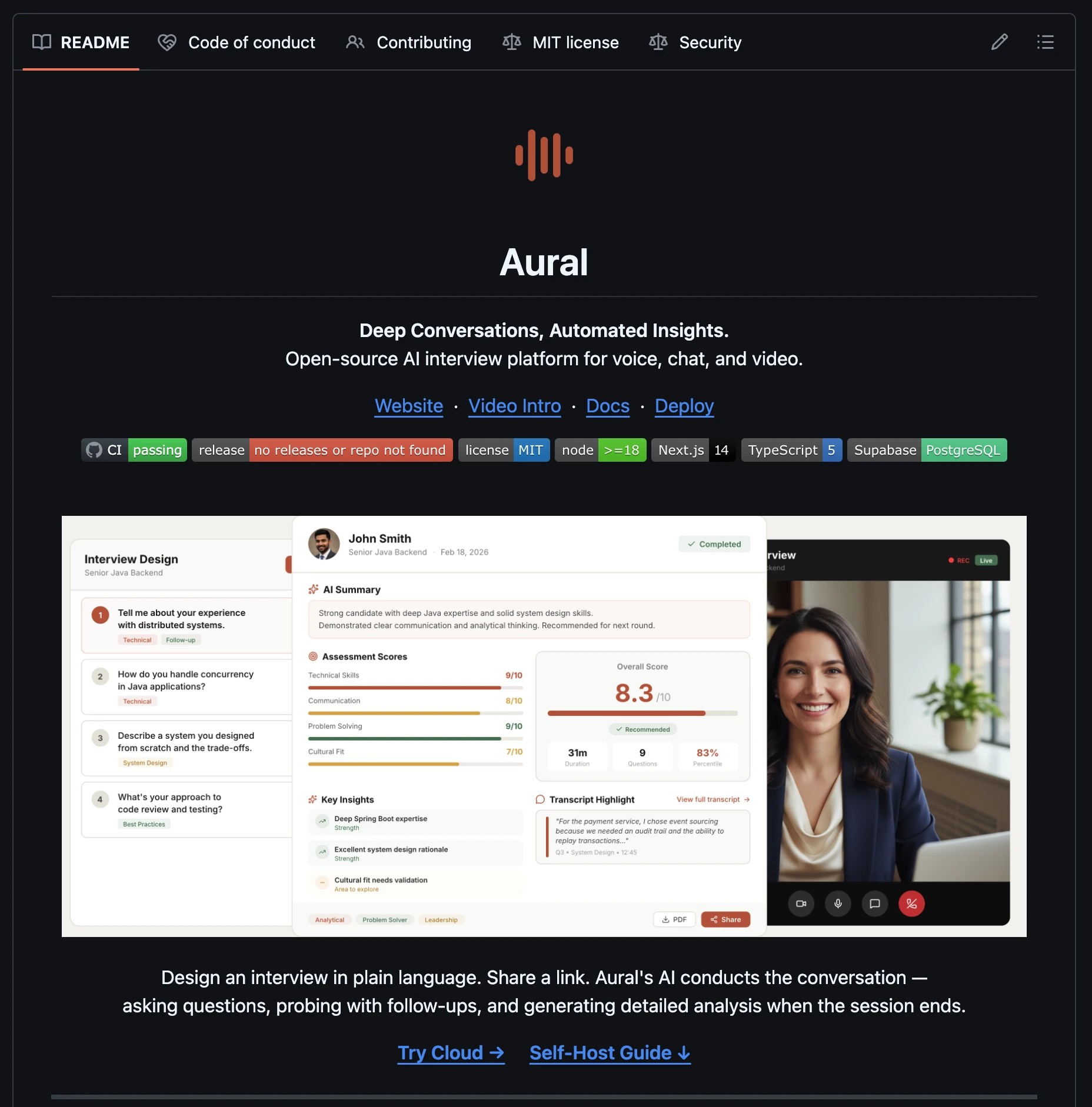
Today we're making Aural open source. The full platform — the AI interview engine, the analytics layer, the candidate experience, all of it — is now available on GitHub under the MIT license.
This isn't a stripped-down “community edition.” It's the same codebase that powers our hosted platform — the one used by hiring teams, researchers, and educators every day. You can clone it, deploy it on your own infrastructure, and own your data completely.
Why Open Source
We built Aural because interviews are broken. Scheduling bottlenecks, inconsistent evaluations, poor documentation, and gut-feel decisions affect every team — from two-person startups to global enterprises. An AI-powered interview platform solves these problems, but only if people can actually access it.
Pricing barriers shouldn't decide who gets good hiring tools. Open-sourcing Aural means any team, anywhere, can deploy a production-grade AI interview platform without a vendor contract or recurring seat fee. Universities can use it for research. Nonprofits can use it for volunteer screening. Startups can self-host from day one and never worry about outgrowing a free tier.
There's a more practical reason too: trust. When your interview platform processes sensitive candidate data — transcripts, scores, personal information — you should be able to see exactly what the software does with it. Open source makes the entire system auditable. No black boxes.
What's Included
Everything. The open-source release includes the complete Aural platform:
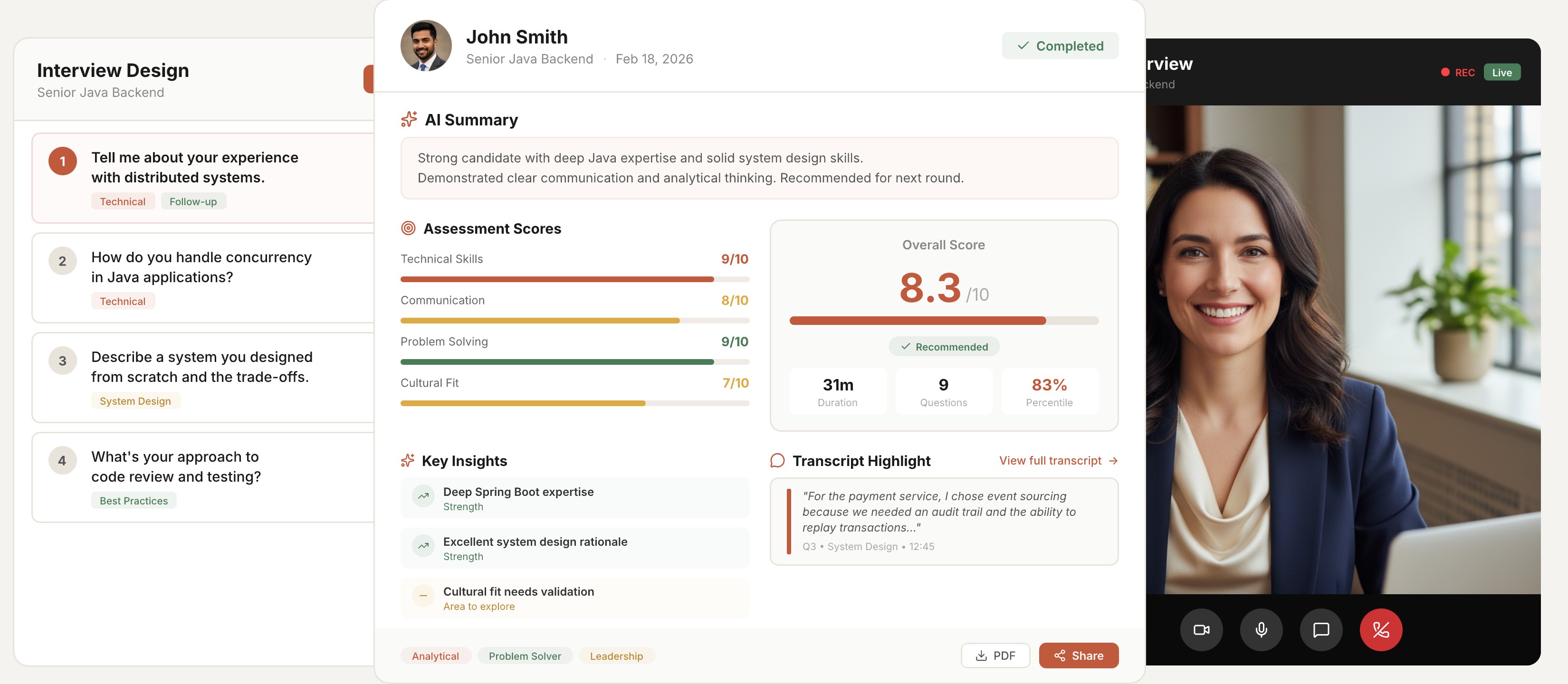
- AI interview engine — adaptive conversations across chat, voice, and video with intelligent follow-ups
- Interview designer — describe what you need in plain language and the AI generates a complete interview structure, or build manually with the editor
- Automated assessment — per-competency scores, AI-generated summaries, theme detection, and engagement metrics
- Candidate management — bulk imports via CSV or resume, session tracking, and shareable interview links
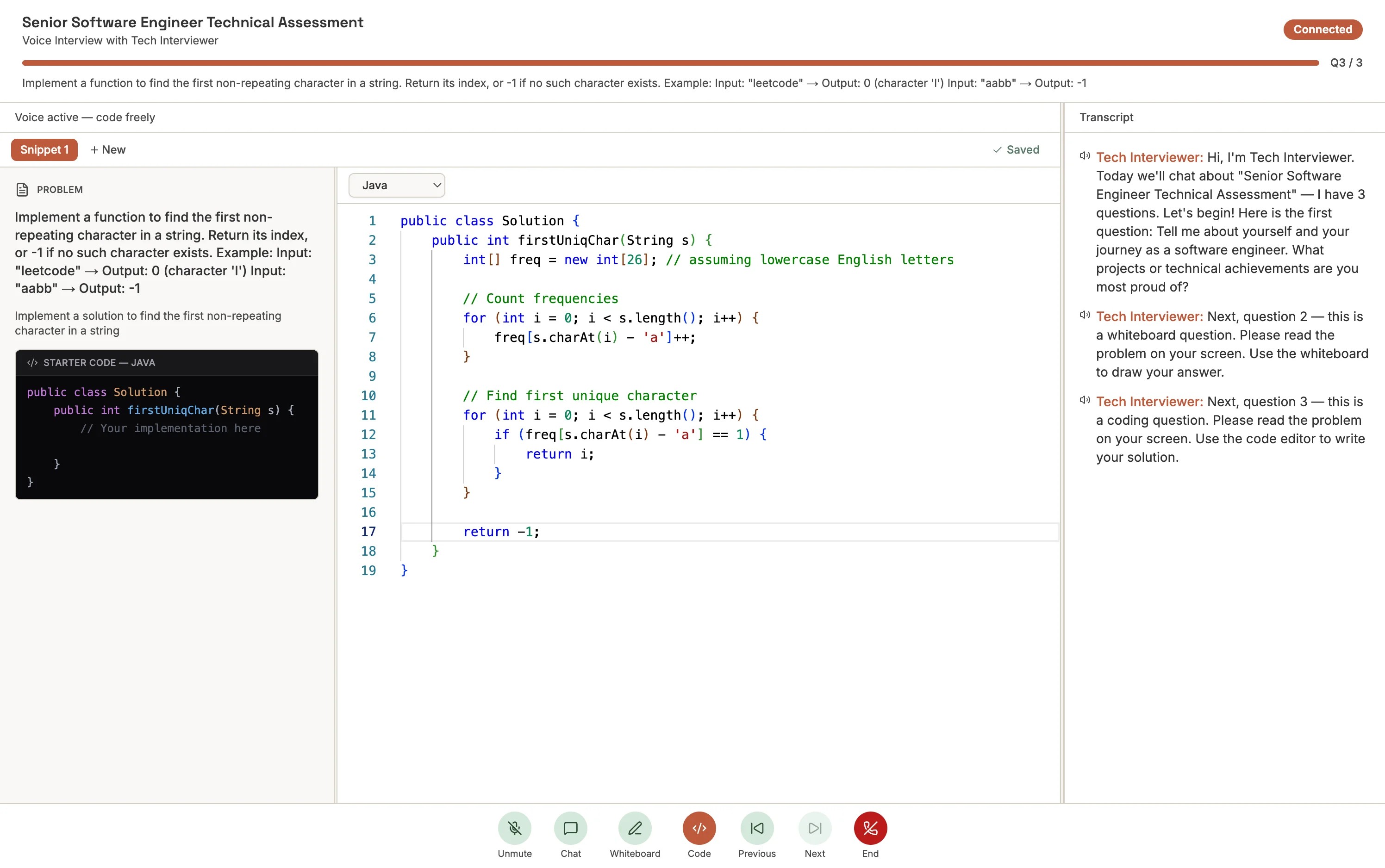
- Coding interviews — built-in Monaco code editor and Excalidraw whiteboard for technical assessments
- Anti-cheating mode — tab tracking, paste blocking, multi-monitor detection, and integrity logging
- Multi-language support — 30+ languages out of the box
- Team collaboration — organizations, projects, and role-based access
The Tech Stack
Aural is built on a modern, well-documented stack that most full-stack developers will feel at home with:
- Next.js 14 (App Router) for the frontend and server-side rendering
- TypeScript end-to-end — full type safety from database to UI
- Supabase for PostgreSQL database, authentication, storage, and real-time subscriptions
- tRPC for type-safe API calls between client and server
- Tailwind CSS with shadcn/ui and Radix primitives for the component library
- Monaco Editor for the live code editor and Excalidraw for the whiteboard
We chose these tools because they're battle-tested, well-supported, and have large communities. If you've built a Next.js app before, you can read and extend Aural's codebase on day one.
Self-Hosting in 5 Minutes
Getting Aural running on your own infrastructure is straightforward. The repository includes a complete setup guide, but here's the short version:
- Clone the repository:
git clone https://github.com/1146345502/aural-oss.git - Copy
.env.exampleto.env.localand fill in your Supabase credentials, AI provider keys, and any other configuration - Install dependencies:
npm install - Run the development server:
npm run dev
For production deployments, the README covers Docker, Vercel, and bare-metal setups. The Supabase backend can run as a hosted instance or fully self-hosted with Supabase's open-source Docker configuration.
Open Source vs. Hosted: Choose What Works
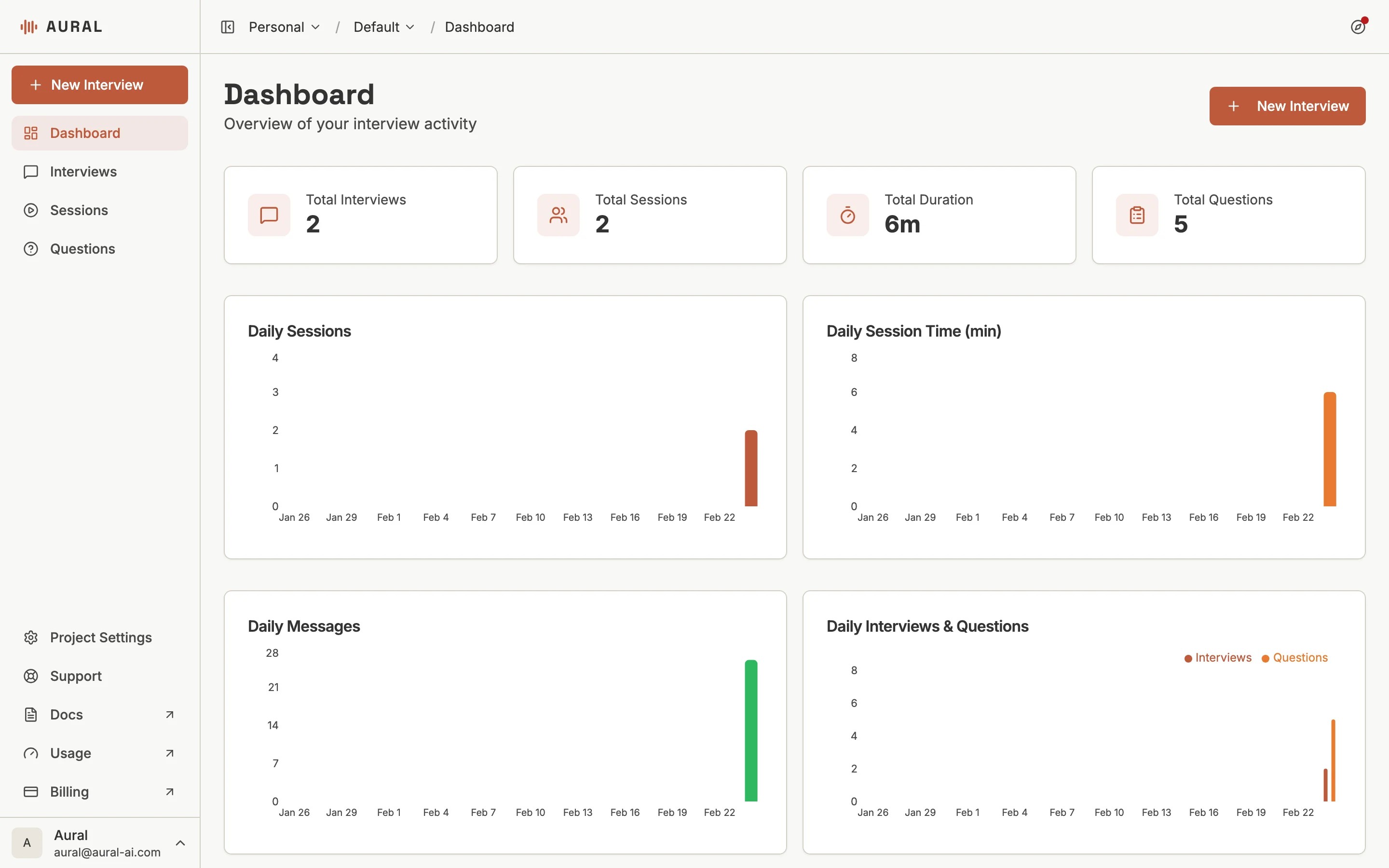
Open-sourcing Aural doesn't mean we're shutting down the hosted platform. Both options will continue to exist, and the codebase is shared:
- Self-host if you need full data sovereignty, want to customize the platform, or prefer not to depend on a third-party service. You manage infrastructure, updates, and scaling.
- Use the hosted platform if you want to be live in minutes without managing servers, databases, or deployments. We handle infrastructure, updates, backups, and uptime.
Many teams start with the hosted platform to validate the use case, then move to self-hosting as their requirements mature. Others self-host from day one because data residency requirements demand it. Both paths are fully supported.
Contributing
We want Aural to be shaped by the people who use it. The repository is set up for contributions from day one:
- Issues for bug reports, feature requests, and discussion
- Pull requests welcome — we review and merge actively
- Documentation improvements are as valued as code changes
Whether you're fixing a typo, adding a new AI provider integration, or building an entirely new feature, we want to hear from you. The contributing guide in the repository covers the development workflow, code standards, and how to get your first PR merged.
What This Means for the Community
AI interview tools have historically been locked behind enterprise contracts. Open-sourcing Aural changes that equation. A solo founder can now run the same caliber of AI interviews as a Fortune 500 company — on their own terms, with their own data.
We believe the best hiring tools should be accessible to everyone, not just teams with five-figure software budgets. Open source is how we get there.
Check out the repository on GitHub, star it if you find it useful, and let us know what you build with it. We're just getting started.