Direct answer
Choose Interviewer.AI when your team wants asynchronous video interviews built around predefined questions and later review. Choose Aural when you need multi-channel AI interviews where the AI can ask follow-ups, handle chat, voice, video, coding, and whiteboard sessions, and produce structured evidence afterward.
Source check
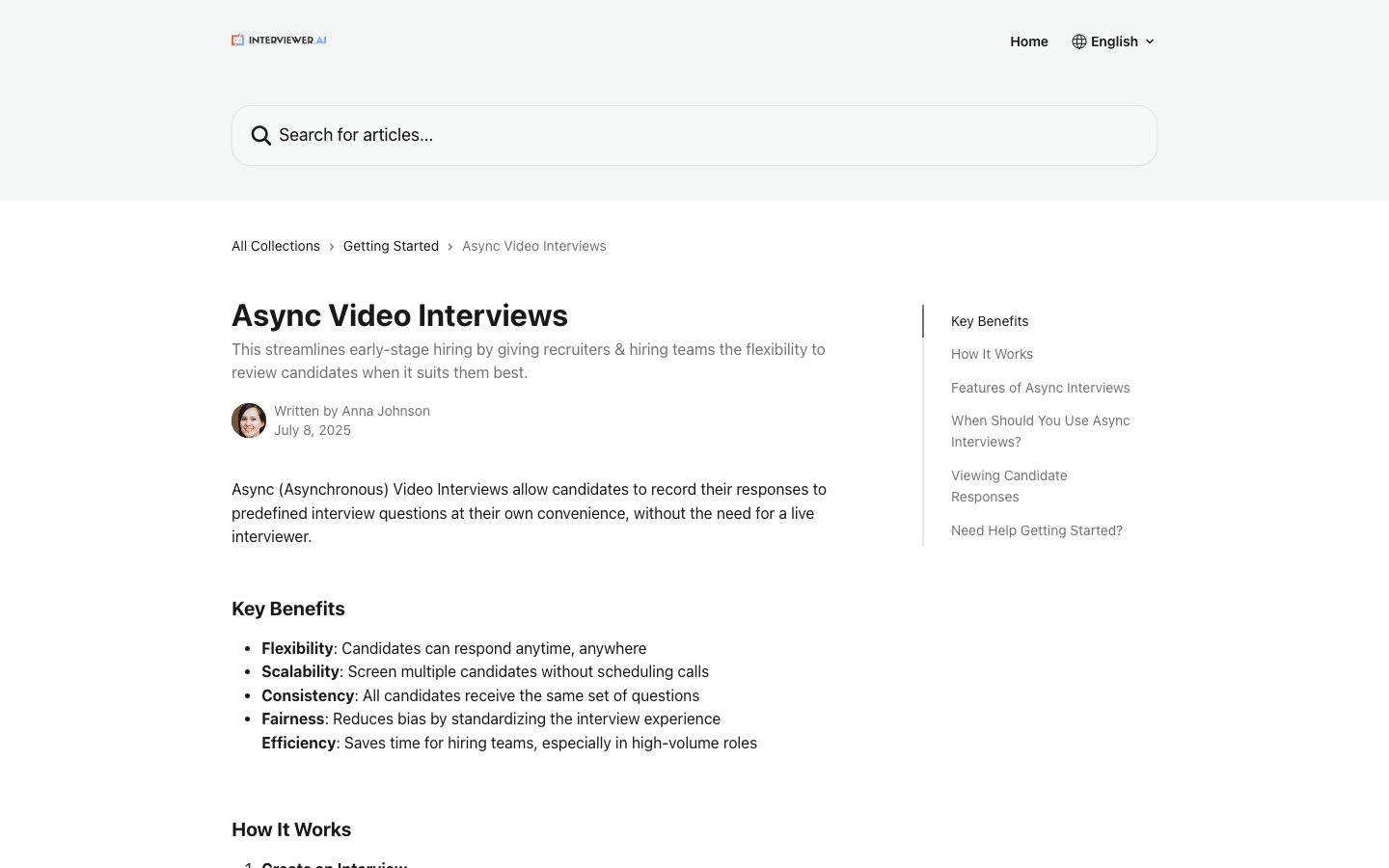
We checked Interviewer.AI's public help article on async video interviews on May 17, 2026. The article describes candidates recording responses to predefined interview questions without a live interviewer, and lists flexibility, scalability, consistency, fairness, and efficiency as benefits. See the official article at help.interviewer.ai.
Interviewer.AI and Aural overlap around the idea that early-stage interviews should be easier to scale. The main difference is the interview format. Async video systems standardize the questions and collect responses for later review. Aural runs a live AI conversation that can adapt to the participant's answer.
Quick Positioning
| Question | Interviewer.AI | Aural |
|---|---|---|
| Primary job | Async video interviews with predefined questions. | Adaptive AI-led interviews across multiple channels. |
| Candidate interaction | Record responses at a convenient time. | Respond in a conversational session with AI follow-ups. |
| Best fit | Standardized early screening and response review. | Screening, research, practice, technical, and API-driven interview workflows. |
| Depth | Consistency from predefined prompts. | Consistency plus adaptive probing and structured analysis. |
Where Interviewer.AI Is Strong
Interviewer.AI is a natural fit when a team wants a standardized async video process: every candidate gets the same prompt set, records at their own convenience, and reviewers can compare responses later. That model can reduce scheduling work and keep early-stage screening consistent.
Where Aural Is Different
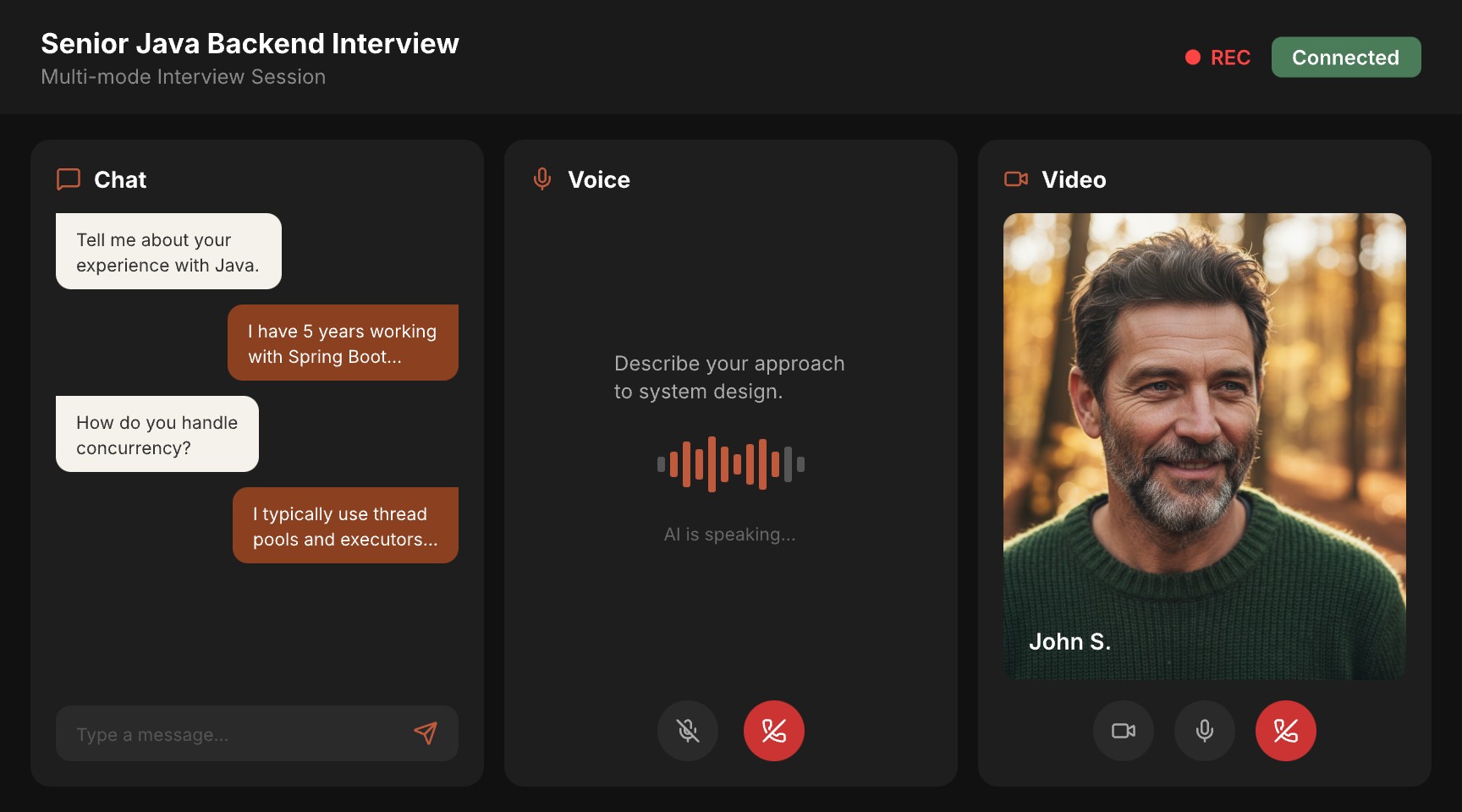
Aural adds two things that matter when responses need more depth: adaptive conversation and multi-channel workflows. The AI can ask follow-up questions, and the team can choose chat, voice, video, coding, or whiteboard depending on the role or research goal.
Feature-by-Feature Comparison
| Capability | Interviewer.AI | Aural |
|---|---|---|
| Async video | Core workflow. | Supported as AI-led video interviews. |
| Predefined questions | Core structure for async interviews. | Supported, with optional AI-generated templates. |
| Adaptive follow-ups | Not the core model described in the async help article. | Core workflow with configurable follow-up depth. |
| Technical tasks | Evaluate current product support during demo. | Coding editor and whiteboard tasks are built in. |
| Automation | Check current API and integration options. | Public REST API, OpenAPI, llms.txt, and result retrieval. |
When to Choose Interviewer.AI
- You want candidates to record answers to predefined video questions.
- Your review process is built around watching and comparing responses.
- You value consistency more than in-session probing.
- You do not need coding, whiteboard, or API-heavy workflows.
When to Choose Aural
- You want the AI to conduct a conversation, not only collect responses.
- You need follow-up questions tailored to each answer.
- You need chat, voice, video, coding, and whiteboard interview modes.
- You want structured transcripts, scores, insights, and developer access.
For a deeper explanation of the category, read What Is an AI Interview Platform?.