Direct answer
Choose myInterview/Radancy when you are evaluating candidate screening and scheduling inside a broader talent acquisition platform. Choose Aural when you need a focused AI interview system that conducts adaptive interviews across multiple channels and returns transcripts, scores, reports, exports, and API results.
Source check
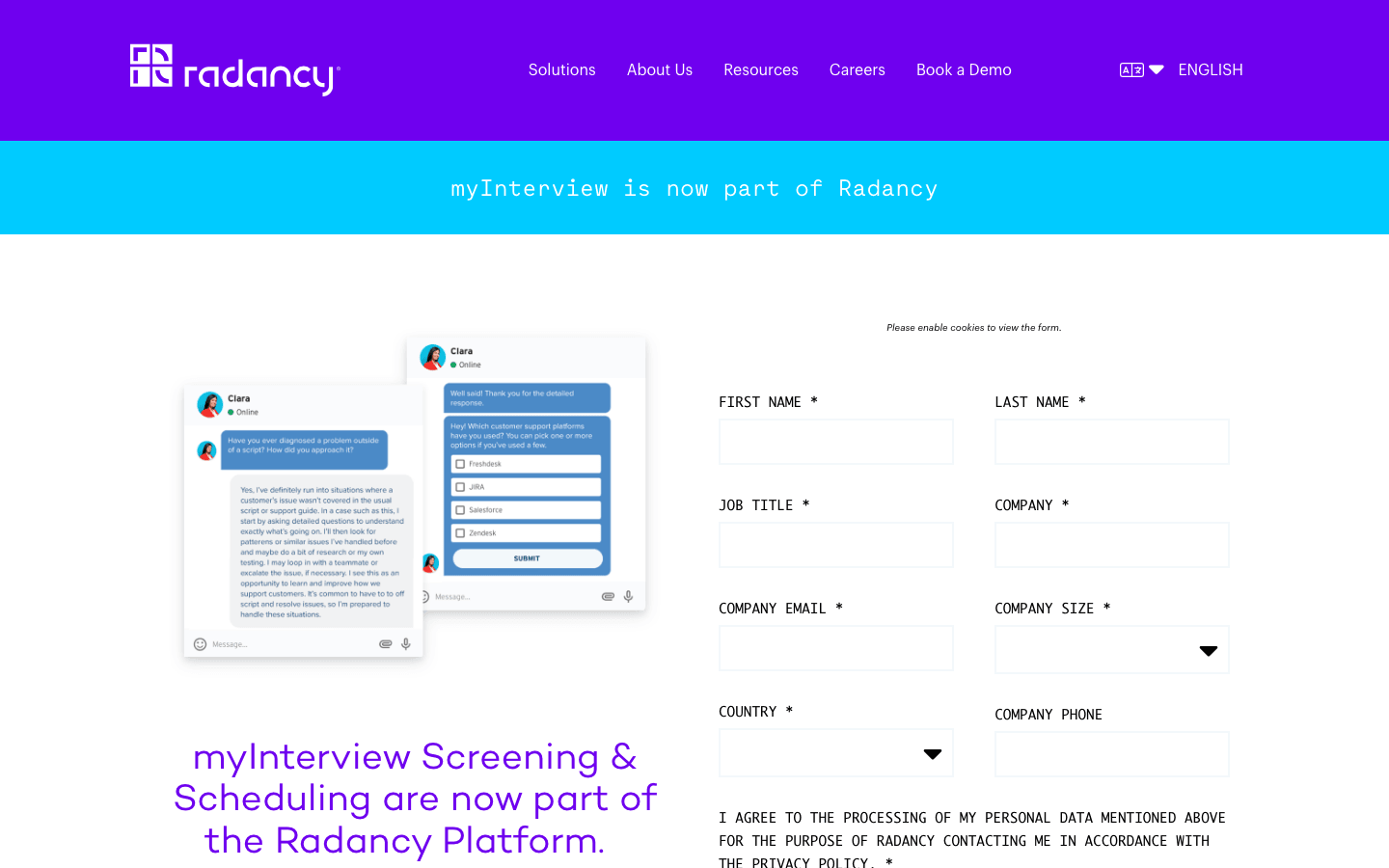
We checked Radancy's public myInterview page on May 17, 2026. The page states that myInterview screening and scheduling are now part of the Radancy platform. See the official page at radancy.com/en/myinterview.
myInterview is no longer just a standalone point solution in the way many buyers remember it. The official public page now routes the product into Radancy, which makes the comparison less about "two video interview tools" and more about product philosophy: a broader talent platform versus a focused AI interview engine.
Quick Positioning
| Question | myInterview / Radancy | Aural |
|---|---|---|
| Primary job | Screening and scheduling as part of a broader Radancy platform. | AI-led interviews with structured transcript-backed outputs. |
| Best-fit buyer | Talent acquisition teams already evaluating Radancy. | Teams that need fast interview creation, AI follow-ups, APIs, or self-hosting. |
| Workflow depth | Evaluate screening and scheduling capabilities in Radancy demo. | Create, publish, conduct, analyze, and retrieve interview results. |
| Control model | Broader platform procurement and configuration. | Self-serve SaaS, public API, OpenAPI, and open-source deployment path. |
Where myInterview / Radancy Is Strong
Radancy can be a better fit when the interview workflow is only one part of a larger talent acquisition transformation. If your team is already evaluating Radancy for career sites, recruitment marketing, scheduling, CRM, or broader hiring infrastructure, it makes sense to evaluate myInterview inside that larger buying motion.
Where Aural Is Different
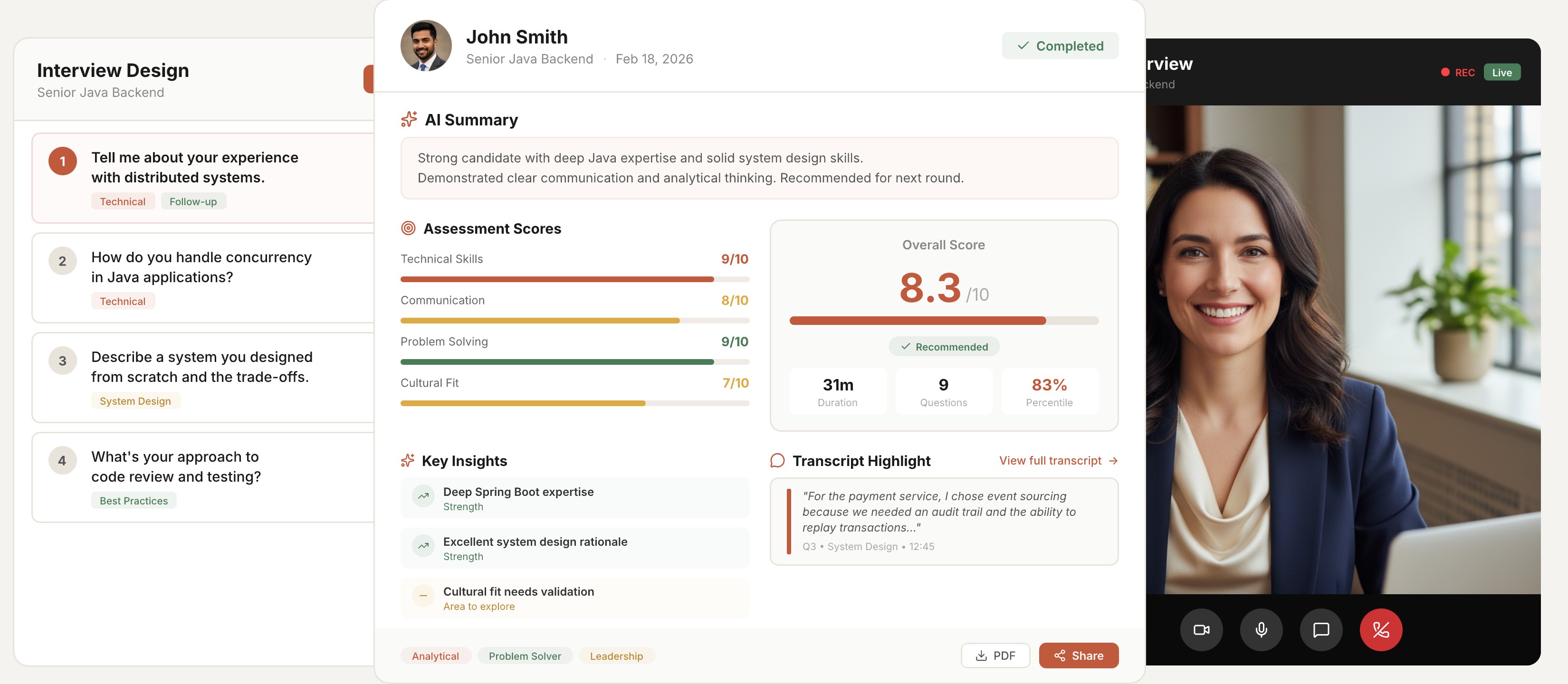
Aural is purpose-built for interviews. It helps teams create an interview from a prompt, run the session through AI, ask follow-up questions, capture evidence, and generate reports. The workflow is useful for hiring teams, but also for user research, customer discovery, academic interviews, mock practice, and technical assessment.
Feature-by-Feature Comparison
| Capability | myInterview / Radancy | Aural |
|---|---|---|
| Screening | Screening is part of the Radancy platform positioning. | AI conducts screening conversations and produces results. |
| Scheduling | Scheduling is part of the Radancy/myInterview page positioning. | Designed primarily for asynchronous AI interview links. |
| Adaptive interviews | Verify current AI interview depth in Radancy demo. | Core workflow with configurable follow-up depth and tone. |
| Evidence outputs | Evaluate the available reports and data exports during demo. | Transcript, summary, competency scores, themes, and session reports. |
| Developer surface | Check Radancy integration and API options during procurement. | REST API, OpenAPI, llms.txt, and open-source/self-host options. |
When to Choose myInterview / Radancy
- You are already buying into the Radancy platform.
- You need screening and scheduling as part of a broader TA stack.
- You want a vendor conversation around enterprise recruitment infrastructure.
- Your interview needs are secondary to the wider recruiting platform.
When to Choose Aural
- You need a focused AI interview product rather than a broad TA suite.
- You want AI to ask adaptive follow-up questions.
- You need technical, research, practice, or customer discovery interviews.
- You want public API access, OpenAPI docs, and self-hosting flexibility.
For the API angle, read AI Interview API: Automating Interviews from Your Own Workflow.