Direct answer
Choose Paradox when your main problem is conversational recruiting automation: candidate engagement, scheduling, recruiter admin, and high-volume hiring workflows. Choose Aural when your main problem is the interview itself: AI-led conversations, adaptive follow-ups, technical tasks, transcripts, scores, reports, exports, and APIs.
Source check
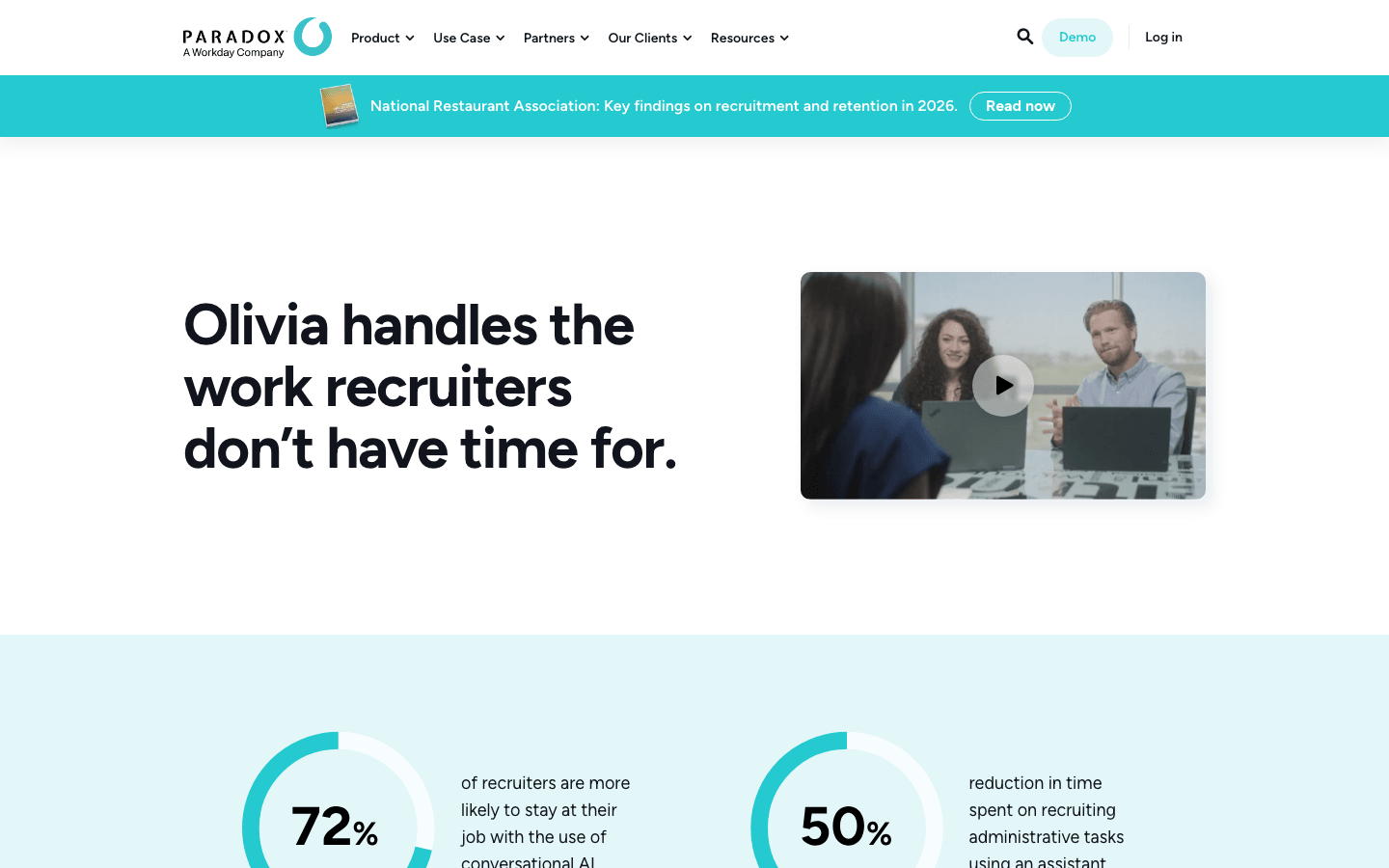
We checked Paradox's public recruiter solution page on May 17, 2026. The page positions Olivia around handling work recruiters do not have time for, with a focus on recruiter productivity and conversational AI. See the official page at paradox.ai/solutions/recruiters.
Paradox and Aural are both AI products for talent teams, but they are not solving the same center problem. Paradox is strongest around the workflow surrounding hiring: candidate engagement, automation, and recruiter productivity. Aural is strongest inside the interview: asking questions, probing answers, and generating structured evidence from the conversation.
Quick Positioning
| Question | Paradox | Aural |
|---|---|---|
| Primary job | Conversational recruiting automation and recruiter productivity. | AI-led interviewing and structured interview analysis. |
| Candidate interaction | Conversational assistant around recruiting workflows. | Interview session across chat, voice, video, coding, or whiteboard. |
| Best fit | High-volume recruiting operations and scheduling/admin automation. | High-volume screening, user research, practice, and technical interviews. |
| Output | Recruiting workflow completion and automation outcomes. | Transcript, scores, summary, themes, insights, and session report. |
Where Paradox Is Strong
Paradox is a strong fit when recruiters are overloaded by admin: answering candidate questions, coordinating next steps, scheduling, and keeping applicants moving through a high-volume process. If the pain is recruiter capacity across the whole funnel, conversational recruiting automation may be the right category.
Where Aural Is Different
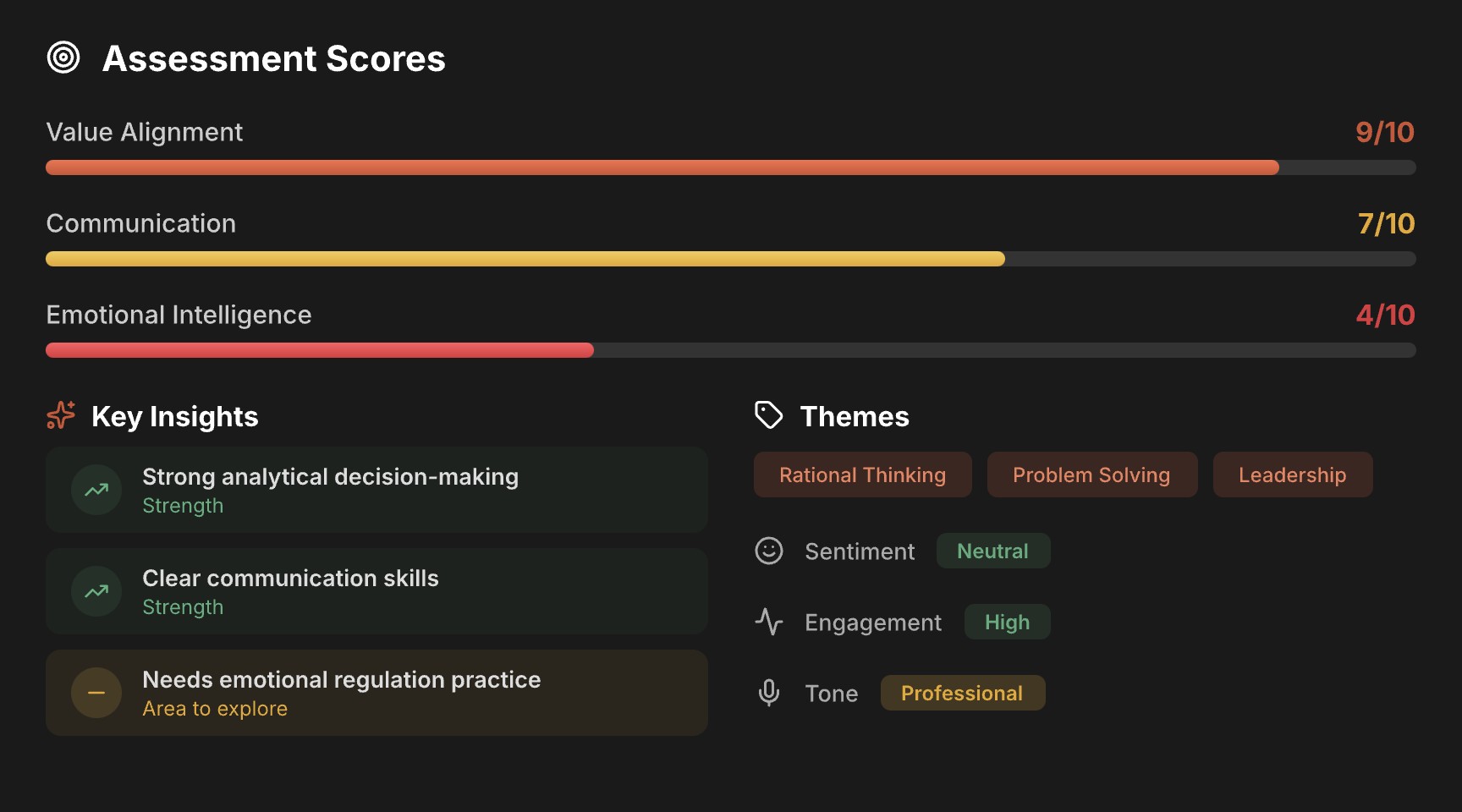
Aural is not trying to be the recruiting assistant for every funnel task. It focuses on the interview conversation and the evidence that comes out of it. That makes Aural a better fit when the team needs to replace screening calls, conduct research interviews, evaluate technical work, or automate interview creation and result retrieval.
Feature-by-Feature Comparison
| Capability | Paradox | Aural |
|---|---|---|
| Candidate engagement | Core product area. | Focused on interview sessions and participant experience. |
| Scheduling and admin | Core recruiting automation workflow. | Designed mainly around asynchronous interview links. |
| AI interviews | Evaluate interview depth and scoring fit during demo. | Core product: AI asks questions and follow-ups. |
| Technical workflows | Not the center of the recruiter solution page. | Coding editor, whiteboard tasks, and technical follow-ups. |
| Developer control | Verify integration/API scope during procurement. | Public REST API, OpenAPI, llms.txt, and self-hosting path. |
When to Choose Paradox
- Your bottleneck is recruiter admin, scheduling, and candidate engagement.
- You need conversational automation across a high-volume hiring funnel.
- You are buying a broader talent workflow solution, not only interviews.
- You want Olivia-centered recruiting automation in an enterprise motion.
When to Choose Aural
- Your bottleneck is the interview itself.
- You need adaptive follow-ups, transcripts, scores, and evidence-backed summaries.
- You need technical interviews with coding or whiteboard tasks.
- You want an open-source, API-friendly interview platform.
For high-volume screening strategy, read High-Volume Candidate Screening Tools.