Direct answer
Choose Sapia.ai when your team wants a chat-based AI interview platform focused on structured hiring at scale. Choose Aural when you need adaptive interviews across chat, voice, video, coding, and whiteboard workflows, plus transcripts, scores, reports, exports, open-source transparency, and a public API.
Source check
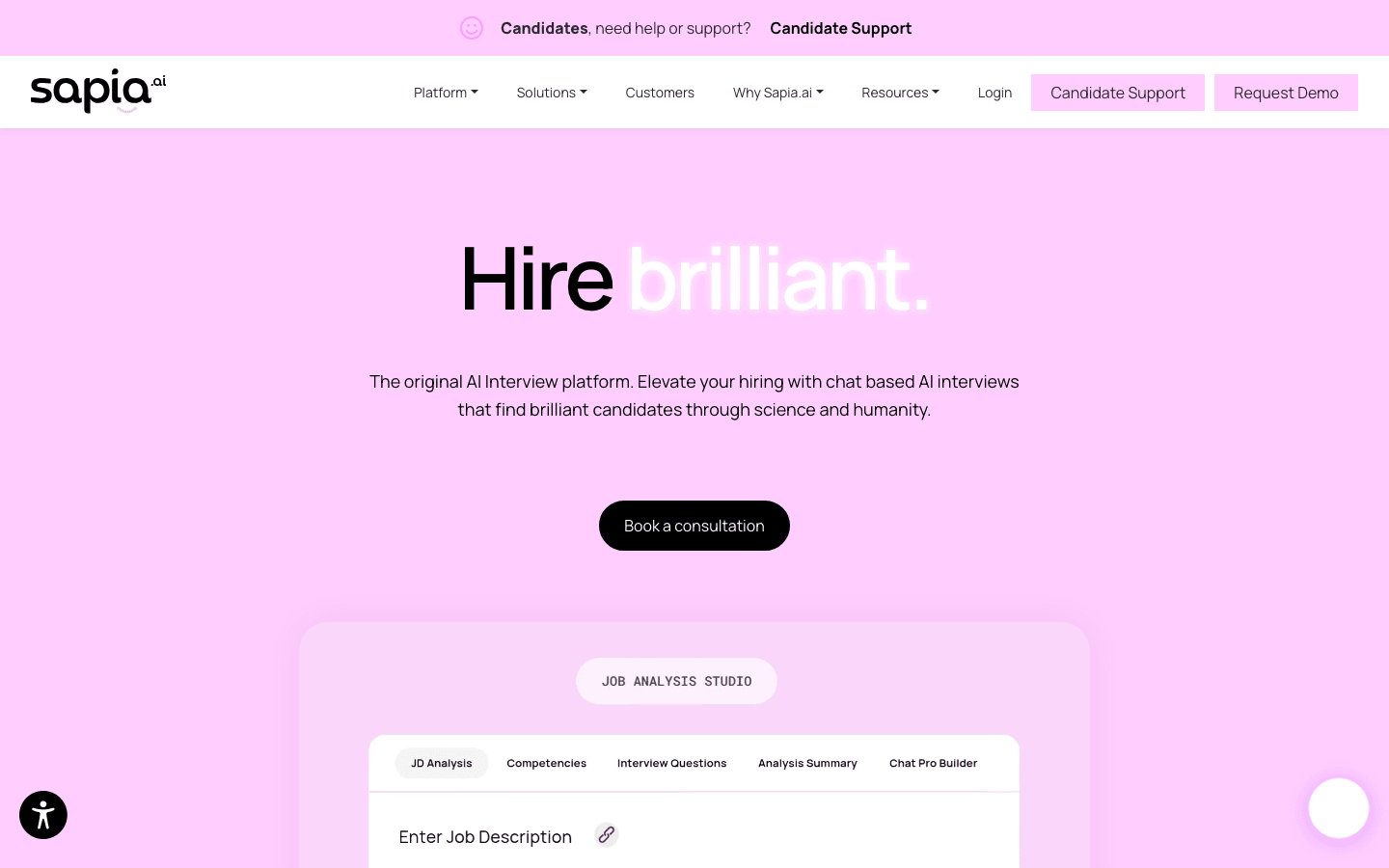
We checked Sapia.ai's public site on May 17, 2026. The page describes Sapia.ai as an AI Interview Platform and says it elevates hiring with chat-based AI interviews. See the official page at sapia.ai.
Sapia.ai is one of the closest direct competitors to Aural because it is explicitly positioned around AI interviews, not just video recording or recruiting automation. The key difference is channel and workflow breadth. Sapia.ai emphasizes chat-based AI interviews. Aural is built for teams that want the same structured interview engine across chat, voice, video, coding, and whiteboard sessions.
Quick Positioning
| Question | Sapia.ai | Aural |
|---|---|---|
| Primary workflow | Chat-based AI interviews for hiring. | Adaptive AI-led interviews across chat, voice, video, coding, and whiteboard. |
| Best-fit team | Hiring teams that prefer structured text-first AI interviews. | Teams that need multi-channel interviews, technical assessment, research, or API automation. |
| Review output | Evaluate current scorecards, reports, and explainability during demo. | Transcript, summary, competency scores, themes, session reports, and exports. |
| Developer control | Verify API and integration depth during evaluation. | Public REST API, OpenAPI, llms.txt, and open-source/self-host options. |
Where Sapia.ai Is Strong
Sapia.ai is a strong fit when the team wants to standardize early interviews through a text-first process. Chat interviews can be easier to complete across devices, reduce scheduling friction, and create consistent written evidence for recruiters to review.
Where Aural Is Different
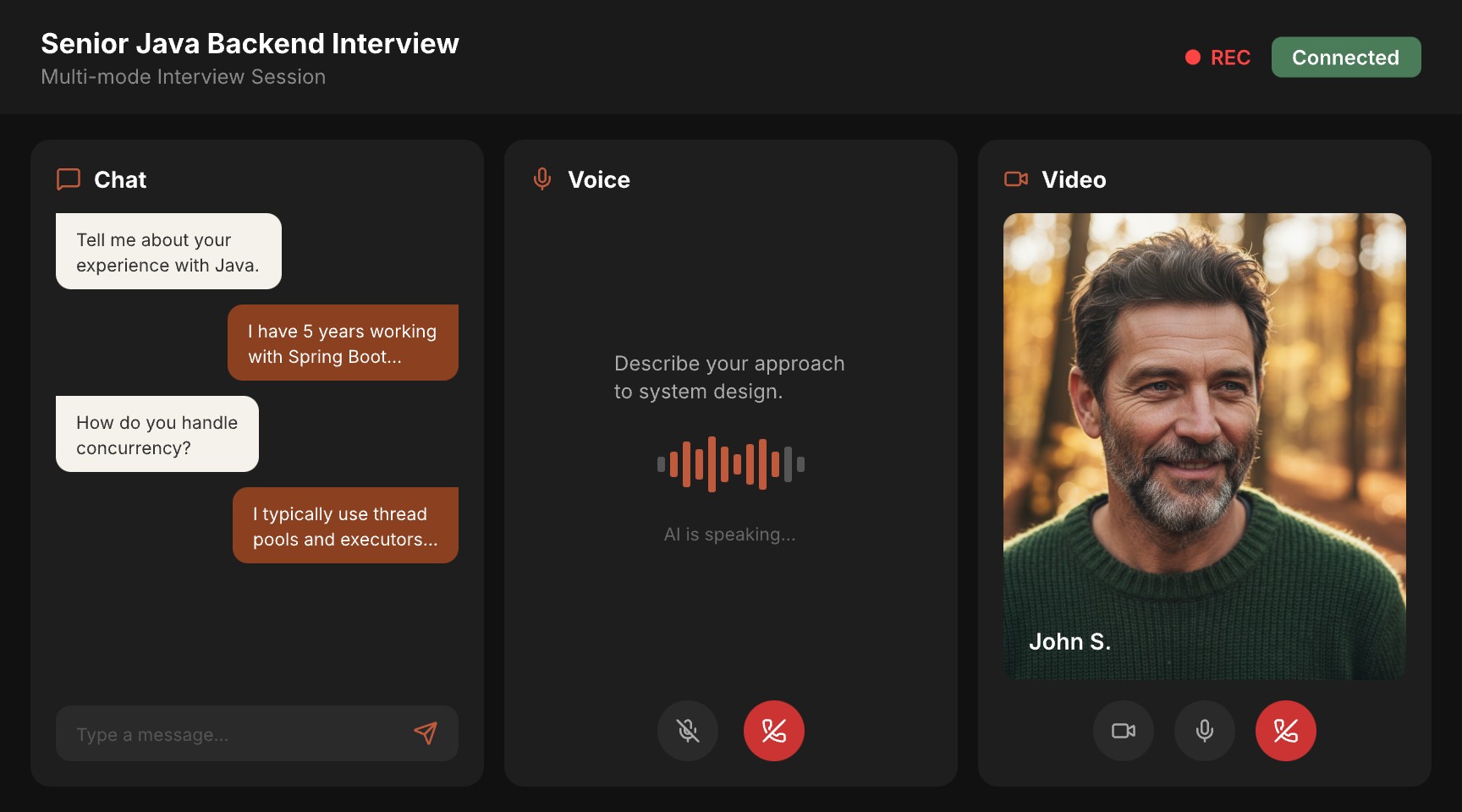
Aural keeps chat as one option, but it does not make chat the whole product. Voice is useful for communication-heavy roles. Video is useful when presence and expression matter. Coding and whiteboard tasks are useful for technical roles. Aural lets the team choose the modality that fits the evidence they need.
Feature-by-Feature Comparison
| Capability | Sapia.ai | Aural |
|---|---|---|
| Chat interviews | Core public positioning. | Supported with adaptive follow-ups and structured outputs. |
| Voice and video interviews | Verify current support and workflow depth during demo. | Core interview channels. |
| Technical assessment | Check current technical workflow support. | Built-in coding editor, whiteboard tasks, and technical follow-ups. |
| Custom workflows | Evaluate configuration and integration options. | Hosted SaaS, self-hosting, REST API, OpenAPI, and agent-readable docs. |
| Use cases beyond hiring | Hiring-focused public positioning. | Hiring, research, customer discovery, practice, academic interviews, and technical screening. |
When to Choose Sapia.ai
- You want a text-first AI interview workflow.
- Your hiring process benefits from written candidate responses.
- You want an AI interview vendor focused heavily on hiring operations.
- You do not need coding, whiteboard, or open-source deployment paths.
When to Choose Aural
- You need chat, voice, video, coding, and whiteboard modes.
- You want adaptive follow-ups based on each participant's answer.
- You need transcripts, reports, exports, and API-accessible results.
- You want open-source transparency or a self-hosted AI interview platform.
For the broader category guide, read What Is an AI Interview Platform?.