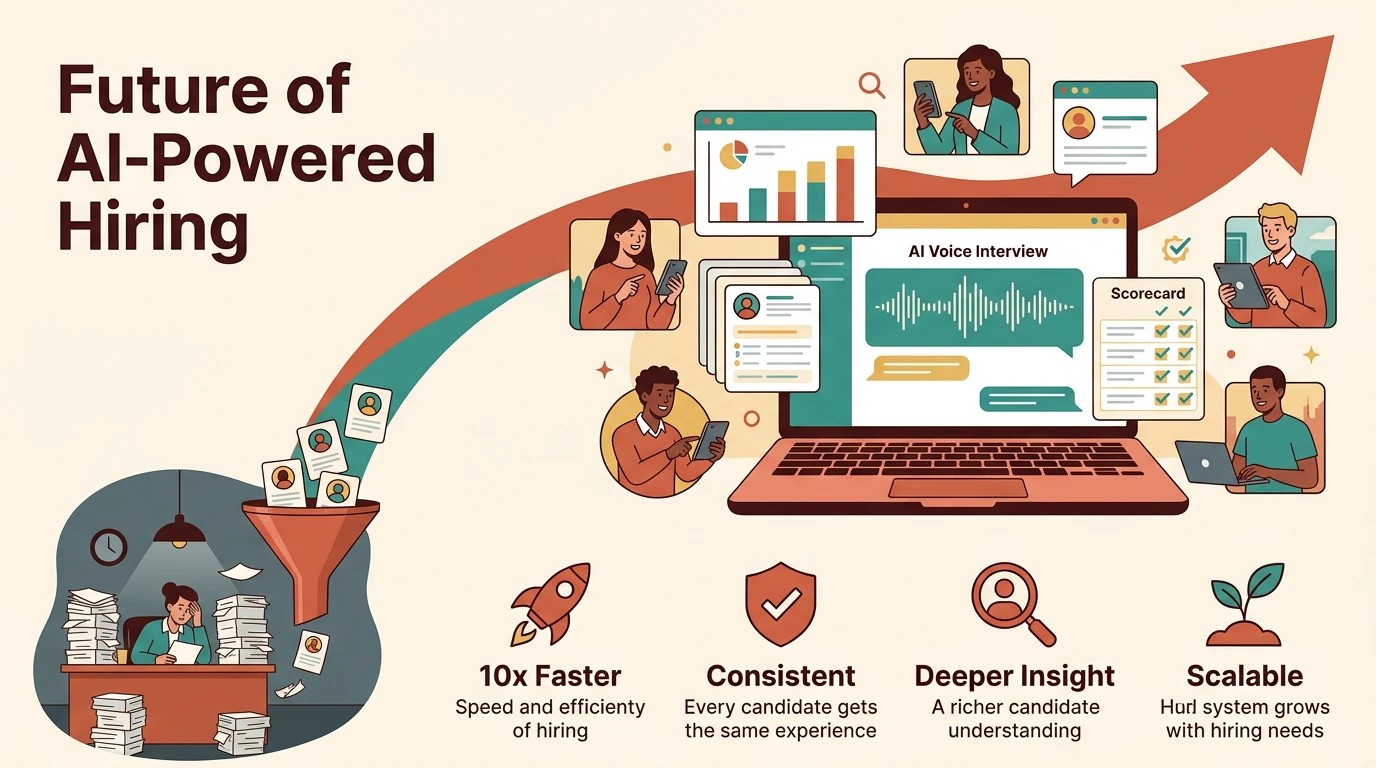
I've conducted over 300 interviews in the last two years. Phone screens, panel interviews, case studies, technical deep-dives — across consulting, tech, and startup hiring. After the first hundred, a pattern became impossible to ignore: the interview process is fundamentally broken, and the people running it know it.
This is the story of why I started building Aural, what I saw that convinced me AI could do this differently, and what we've learned along the way.
Why I Started Building
The frustration didn't come all at once. It accumulated across hundreds of conversations — on both sides of the table — until the problems were too obvious to keep ignoring.
Interviewer time is the biggest bottleneck. Every screen takes 30–45 minutes of a senior person's day. Multiply that by dozens of candidates per role, and hiring becomes a second full-time job. I watched brilliant colleagues spend half their week in back-to-back interviews instead of doing the work they were actually hired for.
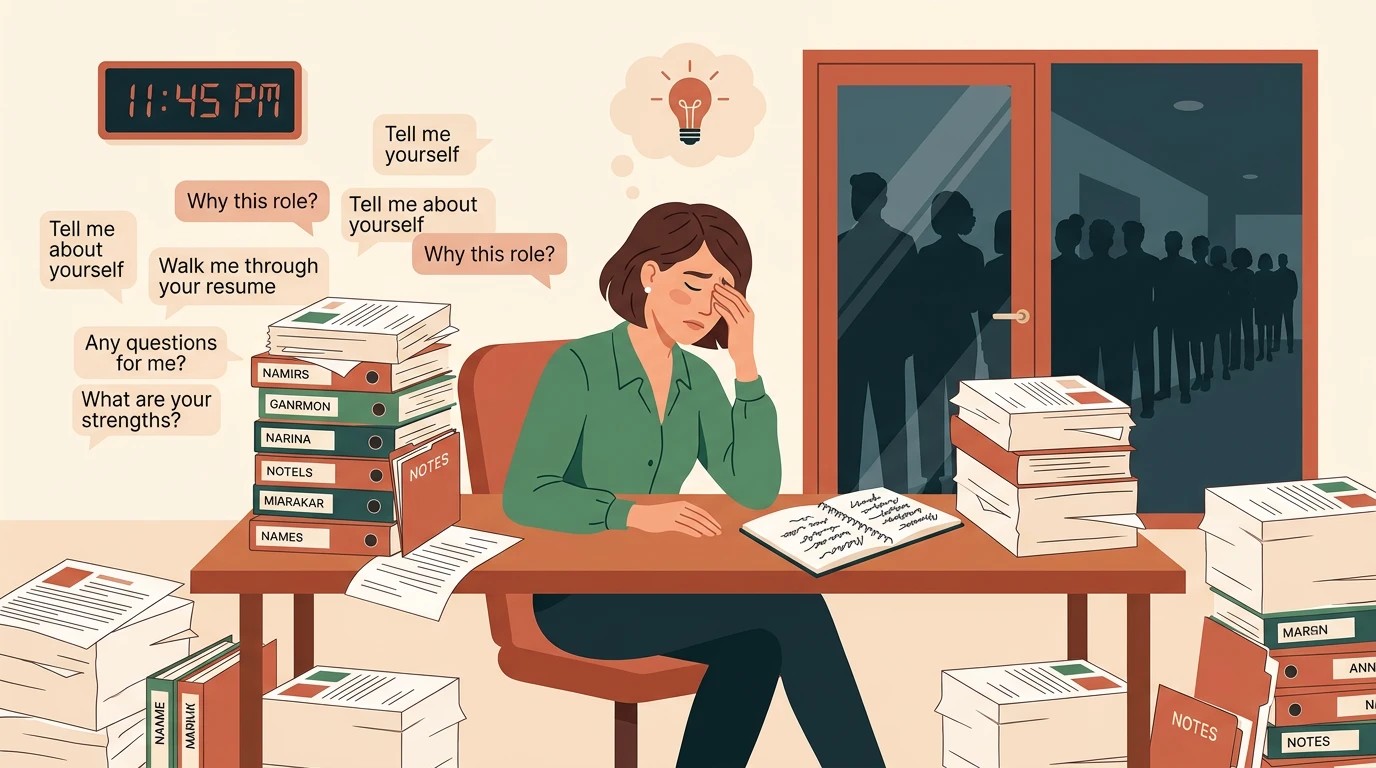
The same questions, over and over again. Both sides feel it. As an interviewer, I asked “Tell me about yourself” and “Walk me through your experience” hundreds of times. As a candidate earlier in my career, I answered the same questions in the same order for every company. The repetition is mind-numbing, and it doesn't have to be this way.
Poor interview summaries. After every round, I'd read my colleagues' write-ups and think: this doesn't capture what actually happened. My own notes weren't much better. A 40-minute conversation reduced to three bullet points and a vague “strong hire” recommendation. When it came time to compare candidates, we were working with fragments.
Hiring decisions based on feelings. The final call almost always came down to “I liked them” or “They didn't click.” Not structured data. Not competency scores. Gut feelings dressed up as professional judgment. I saw strong candidates rejected because the interviewer was tired at 4 PM, and weaker candidates advanced because they were charming at 10 AM.
My Path to This Problem
My background is an unusual mix that made this problem feel personal from every angle.
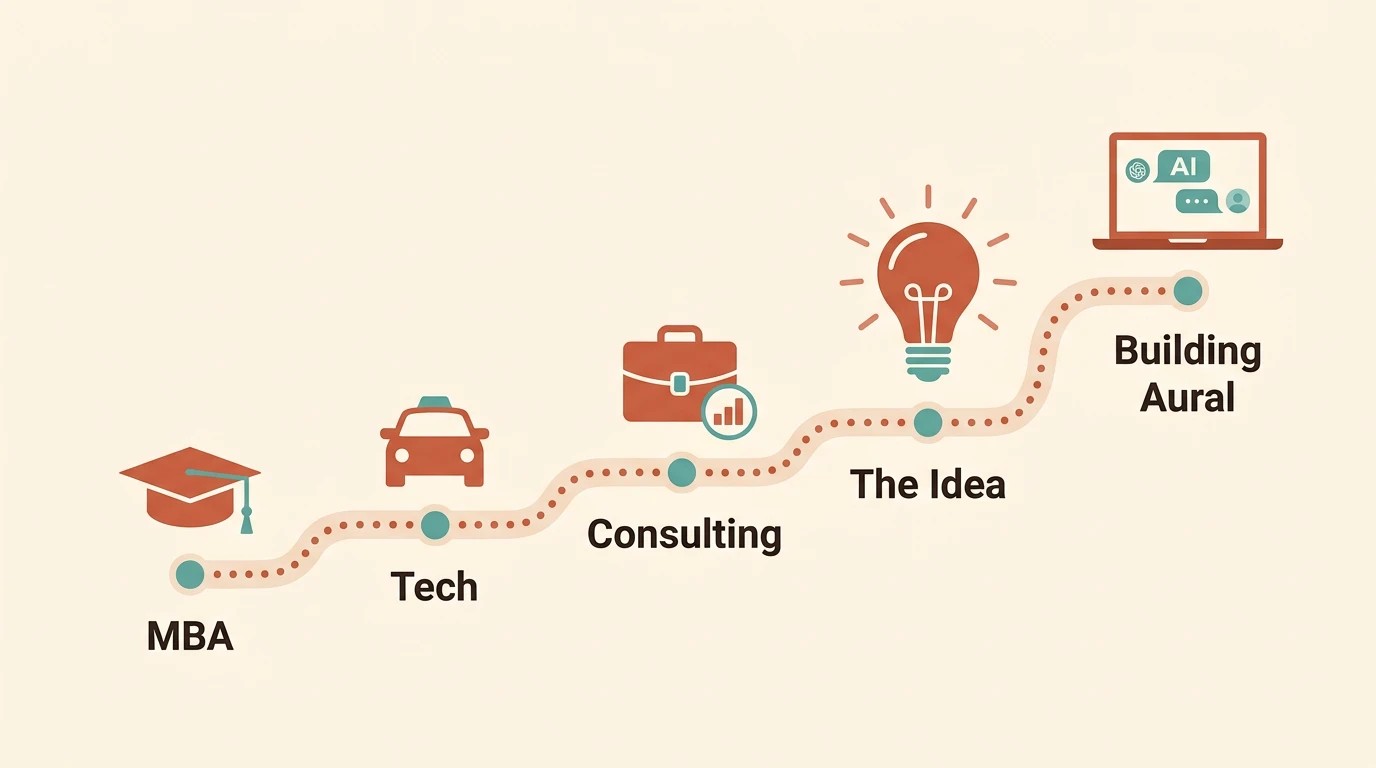
I spent years at McKinsey as an Associate Partner, leading AI transformation projects across battery, electronics, and retail industries. That work gave me a front-row seat to how large organizations struggle with hiring at scale — and how much value gets destroyed by inconsistent, slow processes.
Before consulting, I was a community operations lead at Uber in San Francisco, where I built ML systems that drove significant operational savings. That experience taught me what it looks like when machine learning is applied well to messy, human-intensive processes — and how much efficiency is hiding in plain sight.
I earned my MBA at Georgetown (McDonough Scholar, top 10% of class), which gave me the business lens to think about hiring not just as a process problem but as a strategic one. And through all of it — the consulting engagements, the tech roles, the business school recruiting — I was conducting and sitting through interviews constantly.
The intersection of AI engineering, business strategy, and hundreds of firsthand interviews made the problem impossible to walk away from. I knew what the solution needed to look like because I'd lived the pain from every side.
The Problem at Scale
The issues I experienced personally aren't unique — they're universal. Every hiring team I've worked with, from startups to Fortune 500s, has the same complaints. The difference is scale.
A startup hiring its first five engineers can run a tight process. A company screening 200 candidates for 15 roles across three time zones? The structure falls apart. Different interviewers ask different questions. Notes are inconsistent. Good candidates slip through because the fourth interviewer of the day was tired. And by the time you compare scorecards, you're comparing apples to oranges.
I kept asking myself: what if the interview itself could be the system? Not a recording to review later, not a survey to fill out, but an actual structured conversation that runs the same way every time — and produces structured data instead of scribbled notes?
The Early Experiments
I started building in late 2025, right as large language models were getting good enough to hold genuinely natural conversations. The first prototype was rough — a voice interface that could ask questions from a script and record responses. It felt like talking to a somewhat patient robot.
The breakthrough came when we shifted from scripted Q&A to adaptive conversation. Instead of rigidly following a question list, the AI learned to listen to responses and ask relevant follow-ups. If a candidate mentioned an interesting project, the AI would dig deeper. If an answer was vague, it would probe for specifics. This was the moment it stopped feeling like a survey and started feeling like an interview.
What We Built
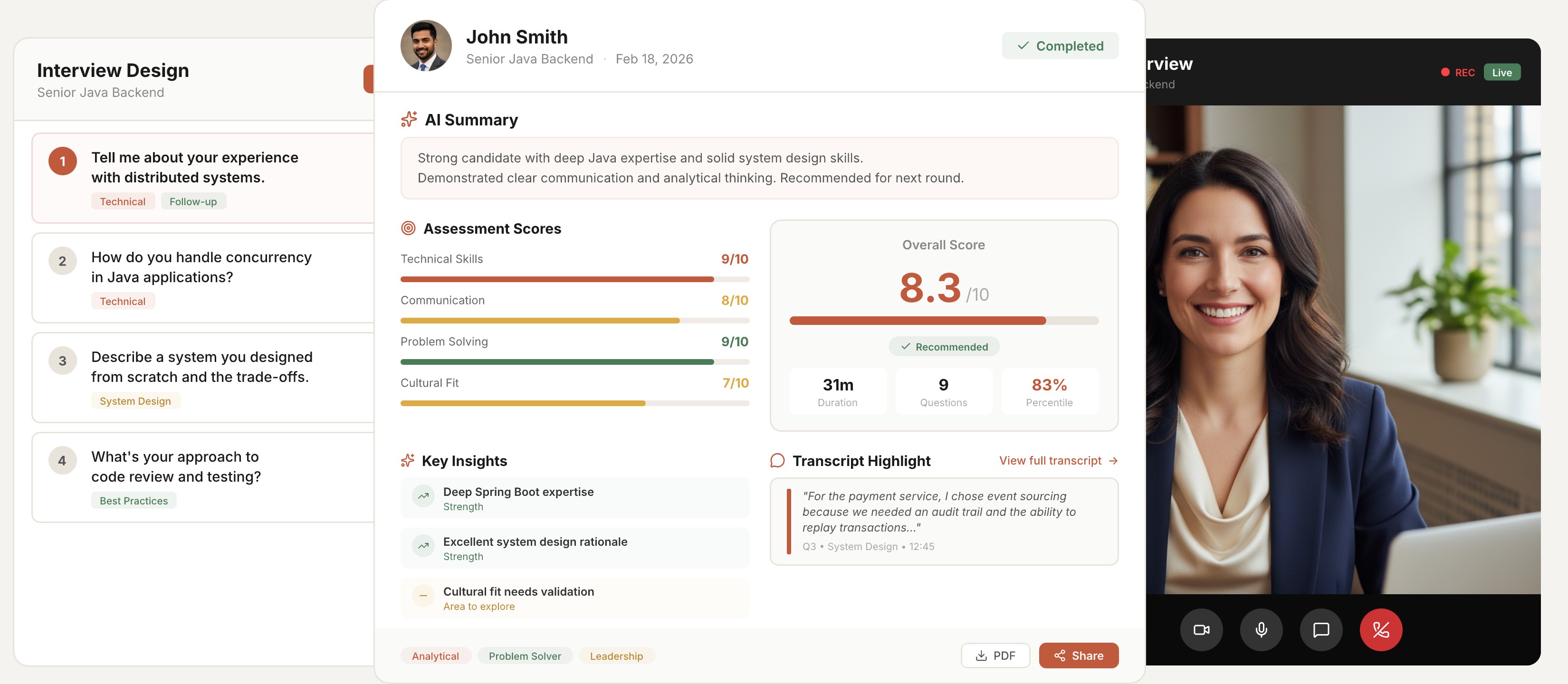
Aural is the platform I wish I'd had when I was hiring. At its core, it's simple: you design an interview, share a link, and the AI handles the rest — conducting structured conversations across voice, chat, and video, then generating transcripts, scores, and insights automatically.
But the simplicity hides a lot of deliberate choices we made along the way.
Multi-Channel from Day One
Early in development, we debated whether to focus exclusively on voice. Voice interviews felt like the most natural analog to phone screens. But we kept hearing from teams that different roles and candidates needed different formats.
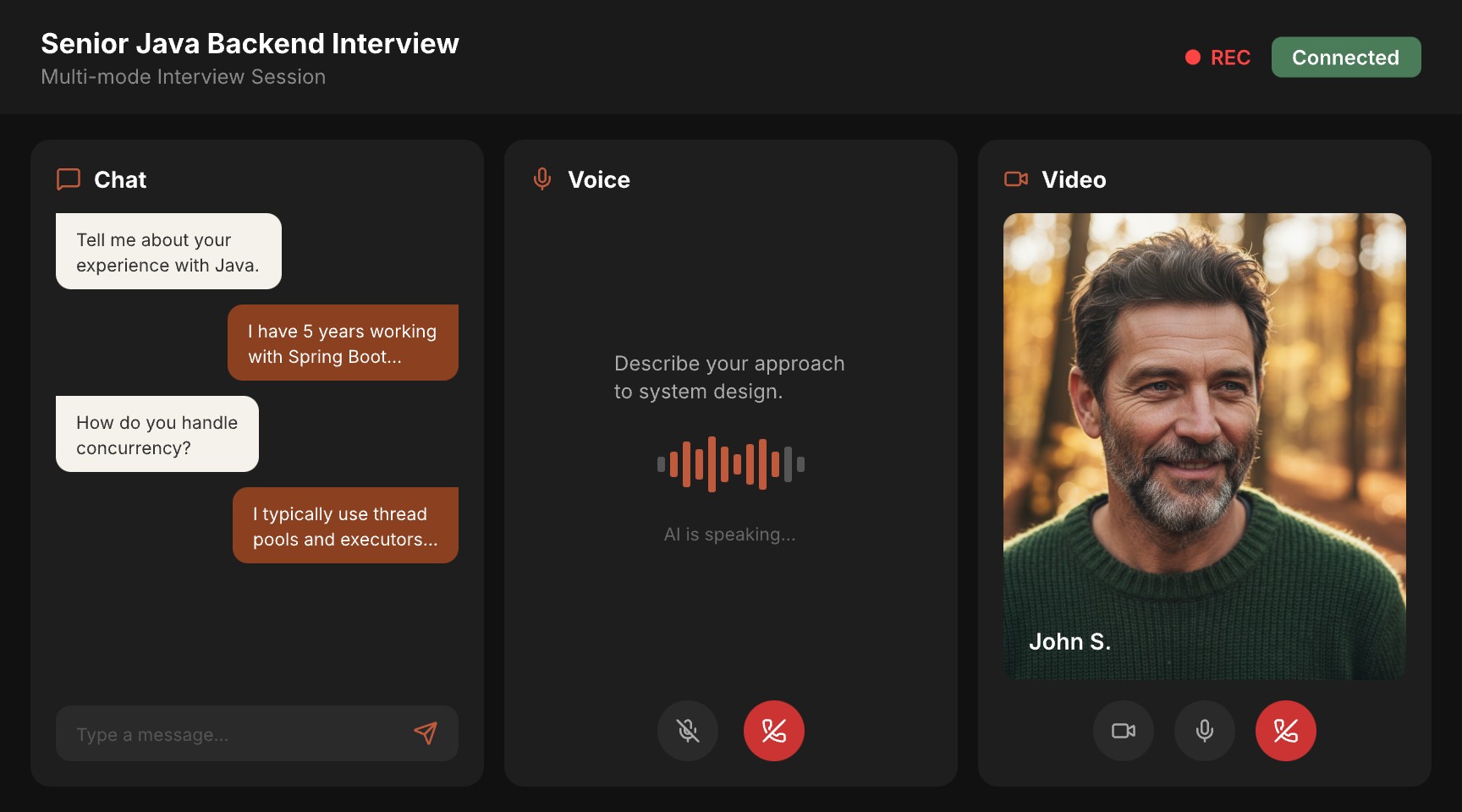
A customer support role? Chat might be more relevant. A senior engineering role? Voice with a code editor. A research interview? Voice with deep follow-ups. So we built all three channels — chat, voice, and video — with the same AI engine underneath.
The AI Interviewer, Not an AI Survey
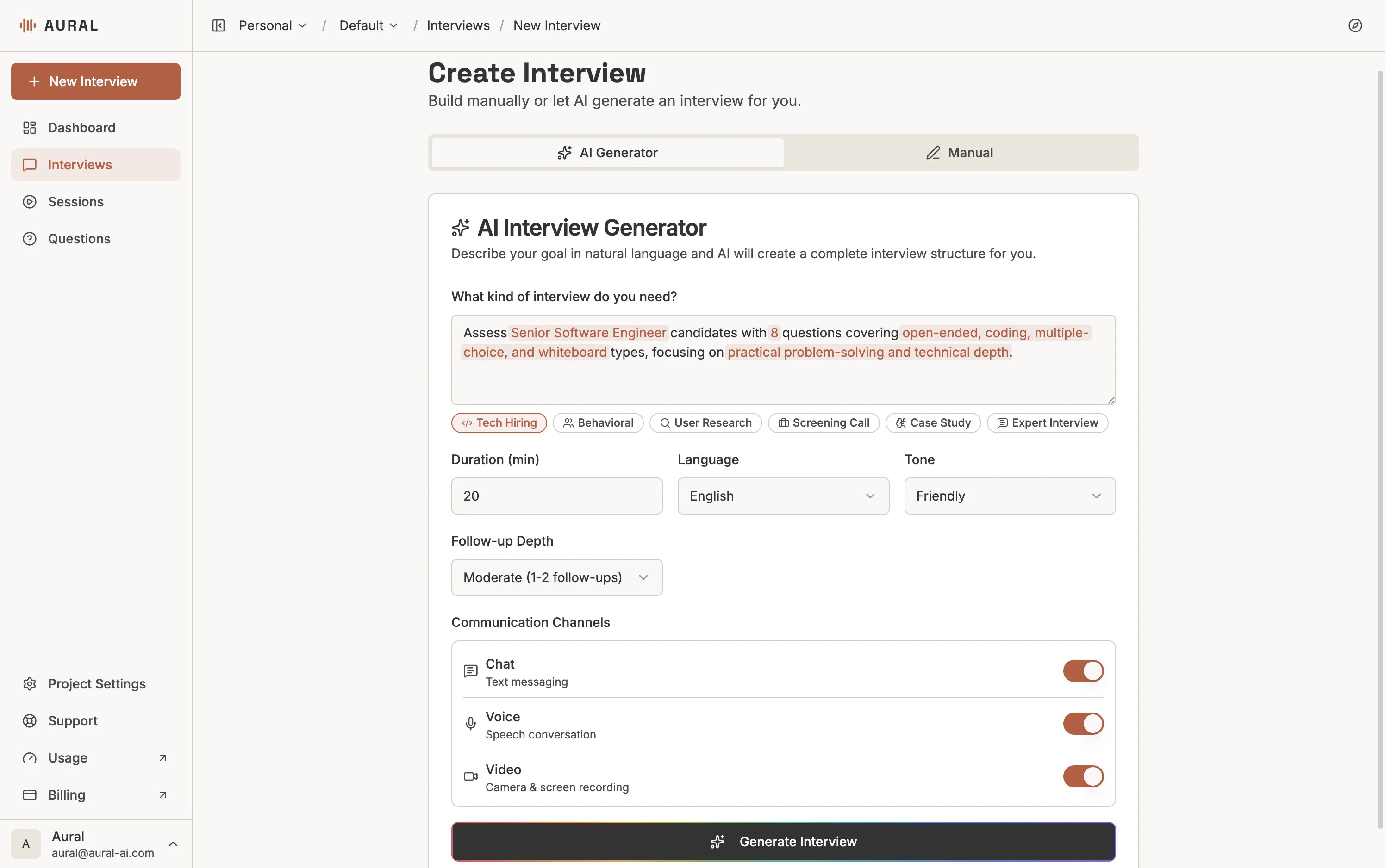
The hardest design challenge was making the AI feel like an interviewer rather than a questionnaire. It starts with interview creation: you describe what you need in plain language — the role, the question types, the focus areas — and the AI generates a complete interview structure. From there, you fine-tune the follow-up depth, tone, language, and communication channels.
We built a configurable follow-up system: light (no follow-ups, quick screening), moderate (1–2 targeted probes, the sweet spot), and deep (3–5 follow-ups, ideal for senior roles and research). The result is an AI interviewer that listens, probes, and adapts — not a questionnaire that reads questions off a list.
Structured Data, Not Just Transcripts
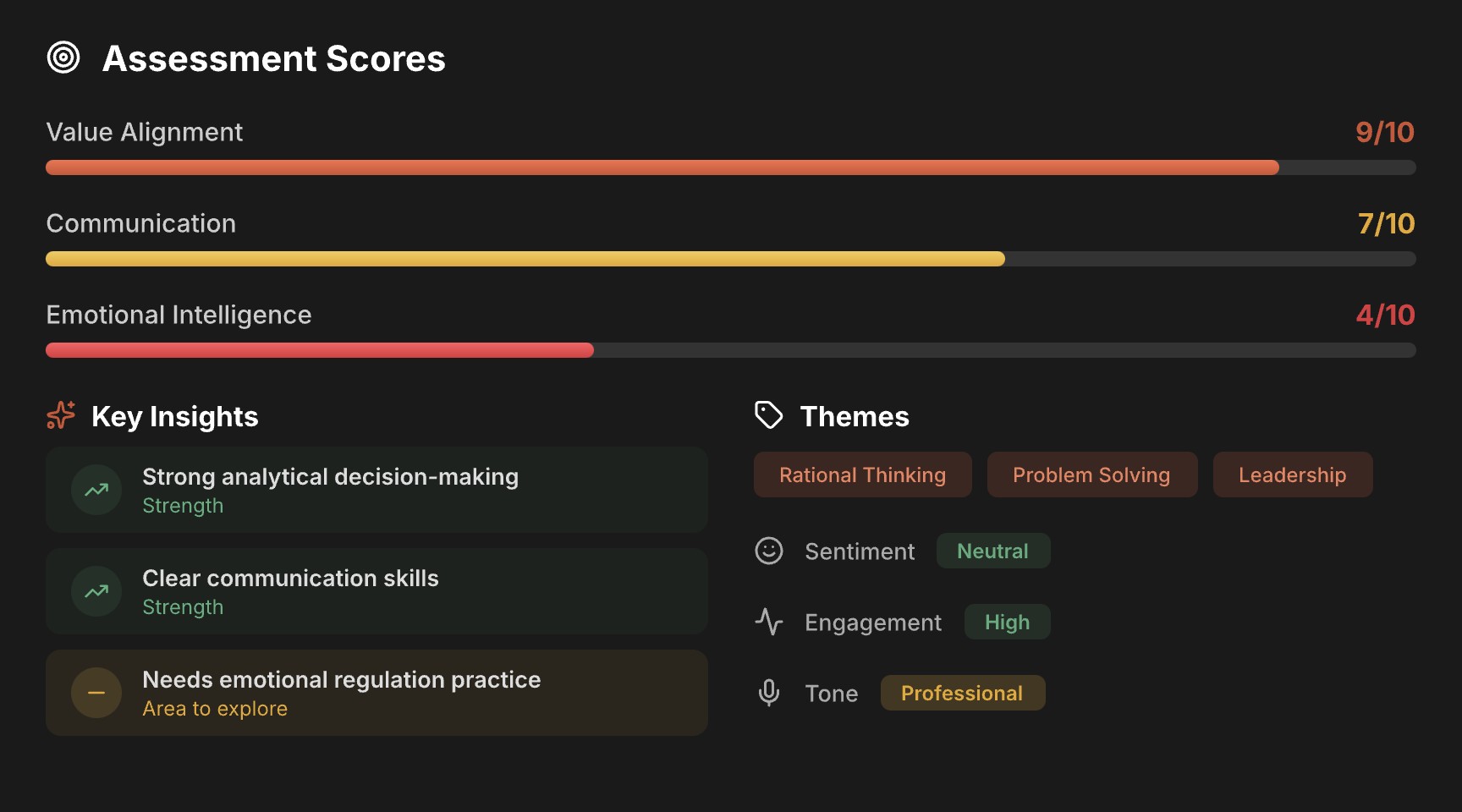
Transcripts are useful, but they're not enough. Hiring managers don't want to read 30-minute transcripts for 50 candidates. They want a clear picture at a glance: how does this candidate score on value alignment? Communication? Emotional intelligence?
So we built a multi-layered assessment system. Each interview produces visual competency scores on a 10-point scale, key insights that surface strengths and areas to explore, and auto-detected themes like rational thinking, problem solving, or leadership. The dashboard also captures sentiment, engagement level, and tone — giving hiring managers a complete candidate profile without ever opening the transcript.
Integrity Without Friction
When we showed early prototypes to hiring managers, the first question was always: “What stops candidates from cheating?” Fair point. An unsupervised interview needs safeguards.
We built anti-cheating mode: a single toggle that enables tab-switch tracking, external paste blocking, multi-monitor detection, and mandatory device permissions. Candidates know the rules upfront (transparency matters), and reviewers see a full integrity log afterward. It adds trust without adding friction.
What We Learned
Building Aural taught me things I didn't expect.
Candidates are more honest with AI. I heard this from early users again and again. Without the social pressure of impressing a human interviewer, candidates give more candid answers. They admit what they don't know. They explain their real thought process instead of performing. This produces better data for hiring decisions.
Structure is the product. The AI is just the delivery mechanism. What actually improves hiring outcomes is the structure: same questions, same criteria, same evaluation framework for every candidate. The AI just makes it possible to deliver that structure at scale without human fatigue.
The biggest competitor isn't other software — it's inertia. Most teams know their interview process has problems. They just haven't felt enough pain to change it. The teams that adopt AI interviews fastest are the ones drowning in volume — 100+ candidates per role, multiple geographies, understaffed recruiting teams.
Where We're Going
Aural is still early. I'm leading a small team with strong opinions about how interviews should work, and we're building toward a future where every candidate gets a fair, structured, and thoughtful interview experience — regardless of the company's recruiting budget or headcount.
We're expanding language support (30+ languages and counting), deepening our analytics, and exploring new modalities that will make AI interviews indistinguishable from a well-prepared human interviewer.
If you're curious about what Aural can do for your team, the best way to understand it is to try it. Design an interview, go through it yourself, and see how it feels. That first session is usually the moment it clicks.