Google's internal research found that structured interviews are one of the strongest predictors of on-the-job performance — more reliable than work experience, education, or even unstructured interviews. The evidence is clear. The challenge is implementation.
When you're hiring for a single role, structure is easy. Write the questions, train the interviewer, compare the scorecards. But when you're running 10 roles across 3 teams with 8 different interviewers? Structure breaks down fast.
What “Structured” Actually Means
A structured interview has three components:
- Standardized questions: Every candidate answers the same core questions, in the same order.
- Defined evaluation criteria: Each question maps to a competency, and each competency has a scoring rubric.
- Consistent process: The interview runs the same way every time — same format, same time allocation, same follow-up rules.
The goal isn't rigidity — it's fairness. When every candidate gets the same experience, you can actually compare responses.
Step 1: Design with Intent
The best structured interviews start with a clear picture of what you're evaluating. Before writing a single question, define 3–5 competencies that matter for the role (e.g., problem-solving, communication, domain expertise).
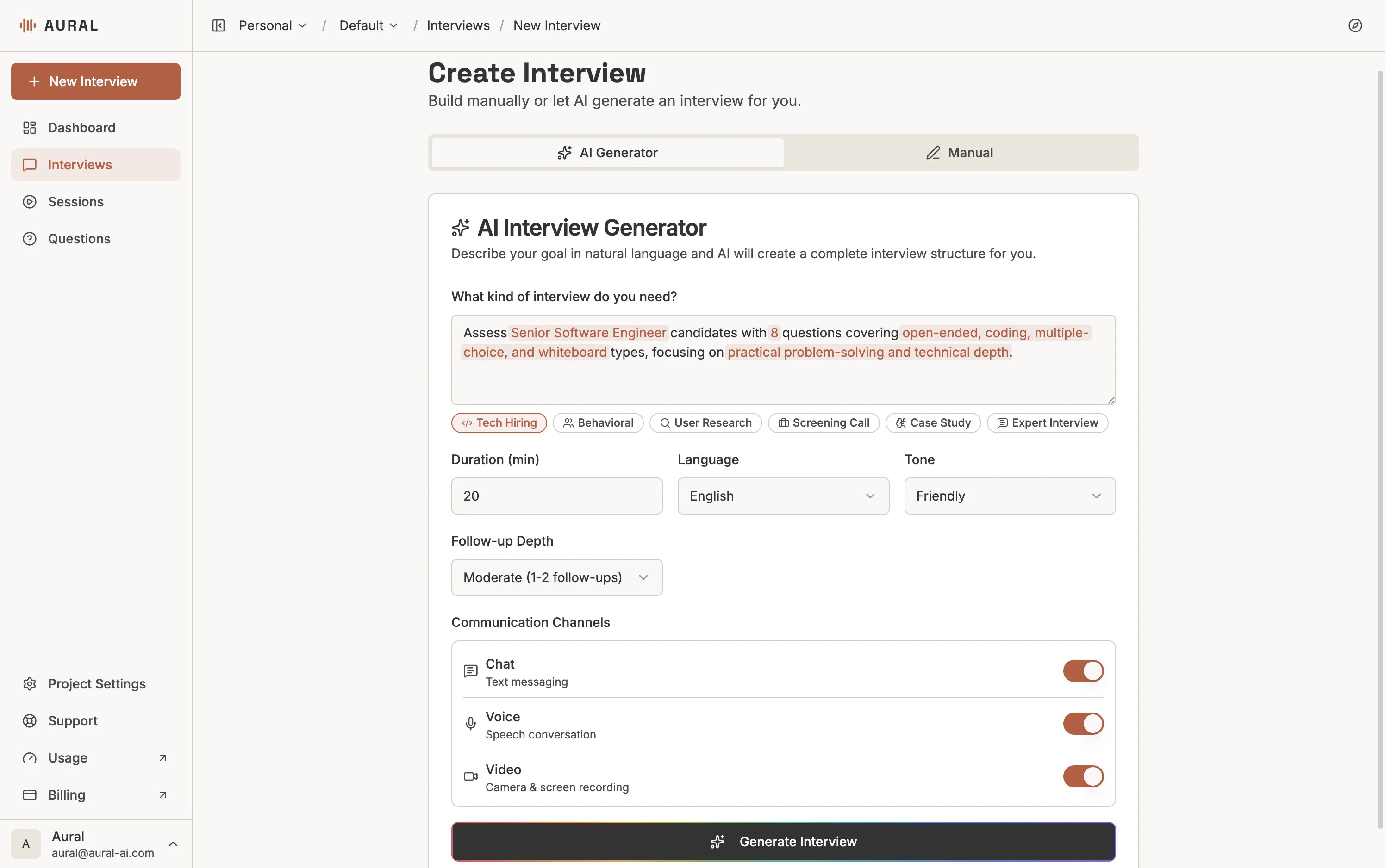
In Aural, you can describe what you want to learn and the AI will generate a complete interview structure — questions mapped to competencies, with evaluation criteria for each. Or you can build it manually using the editor.
Step 2: Configure the Experience
Structure isn't just about questions — it's about how the interview feels. The tone, pacing, and follow-up depth all affect how candidates respond, and therefore the quality of data you collect.
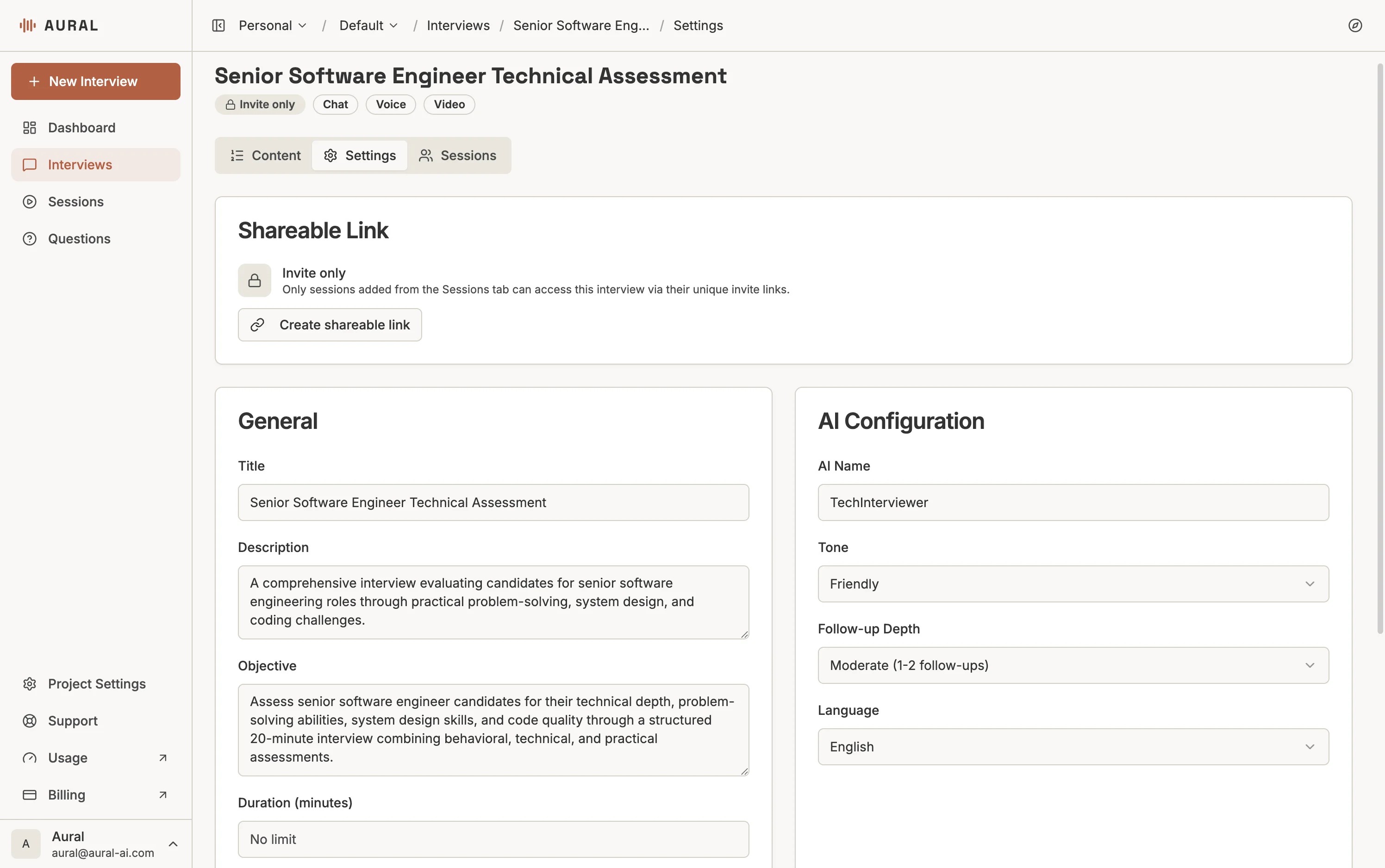
With Aural, you control the AI's personality at a granular level. Hiring for a startup? Set the tone to casual and follow-ups to moderate. Running a compliance interview? Go formal with deep follow-ups. These settings ensure the interview matches the context while maintaining structure.
Step 3: Let It Run
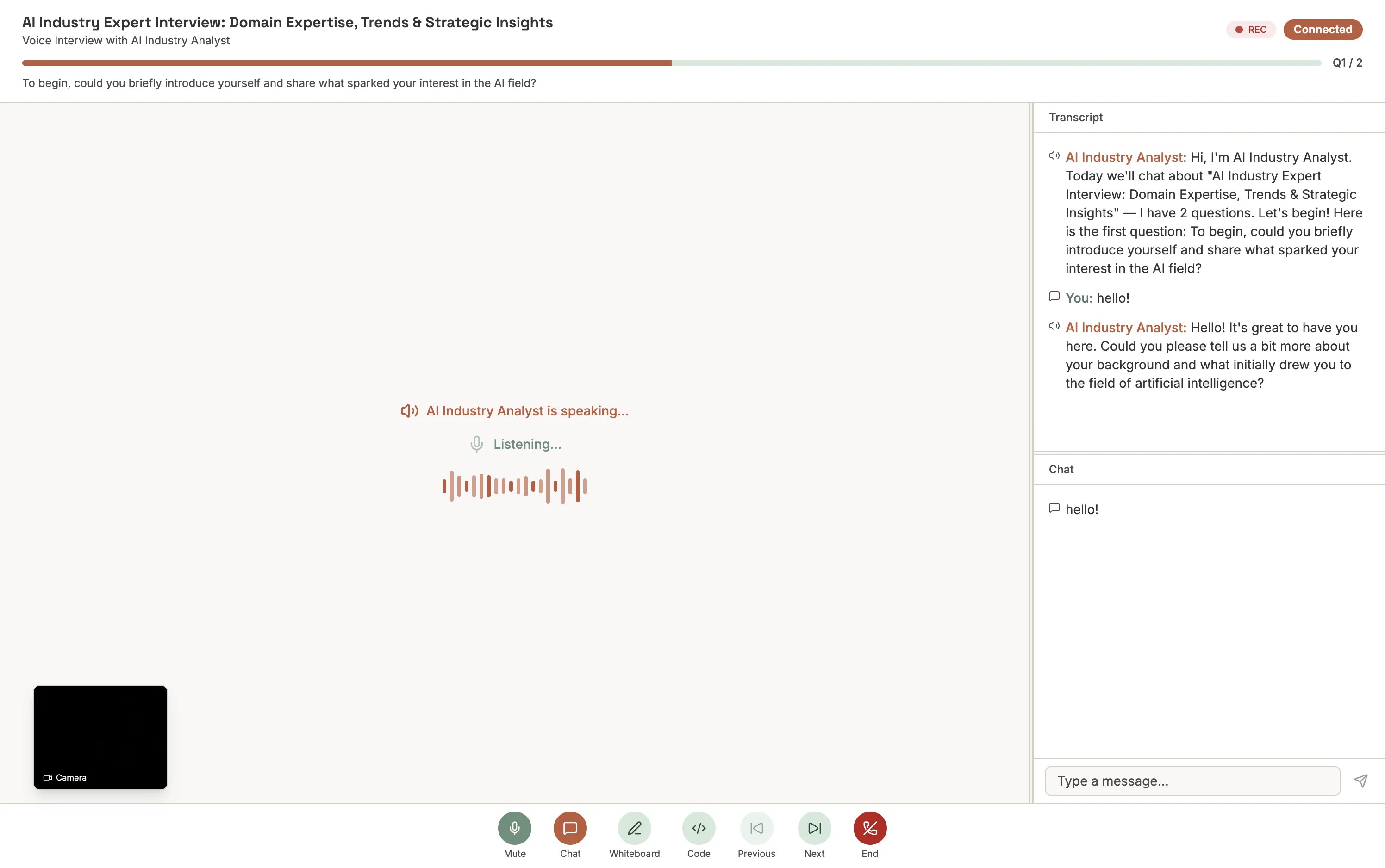
This is where AI changes the equation. In a traditional structured interview, maintaining consistency depends entirely on interviewer discipline. The AI doesn't have discipline problems — it follows the structure every single time.
Share the interview link with candidates (or send invites directly from Aural). Each candidate gets the same questions, the same follow-up logic, and the same evaluation framework. Whether it's candidate #1 or candidate #500, the experience is identical.
Step 4: Compare Structured Data, Not Gut Feelings
After each session, Aural generates a multi-layered report that gives you the full picture. It starts with an overview: completion status, average score, and an AI-generated summary of the candidate's performance.
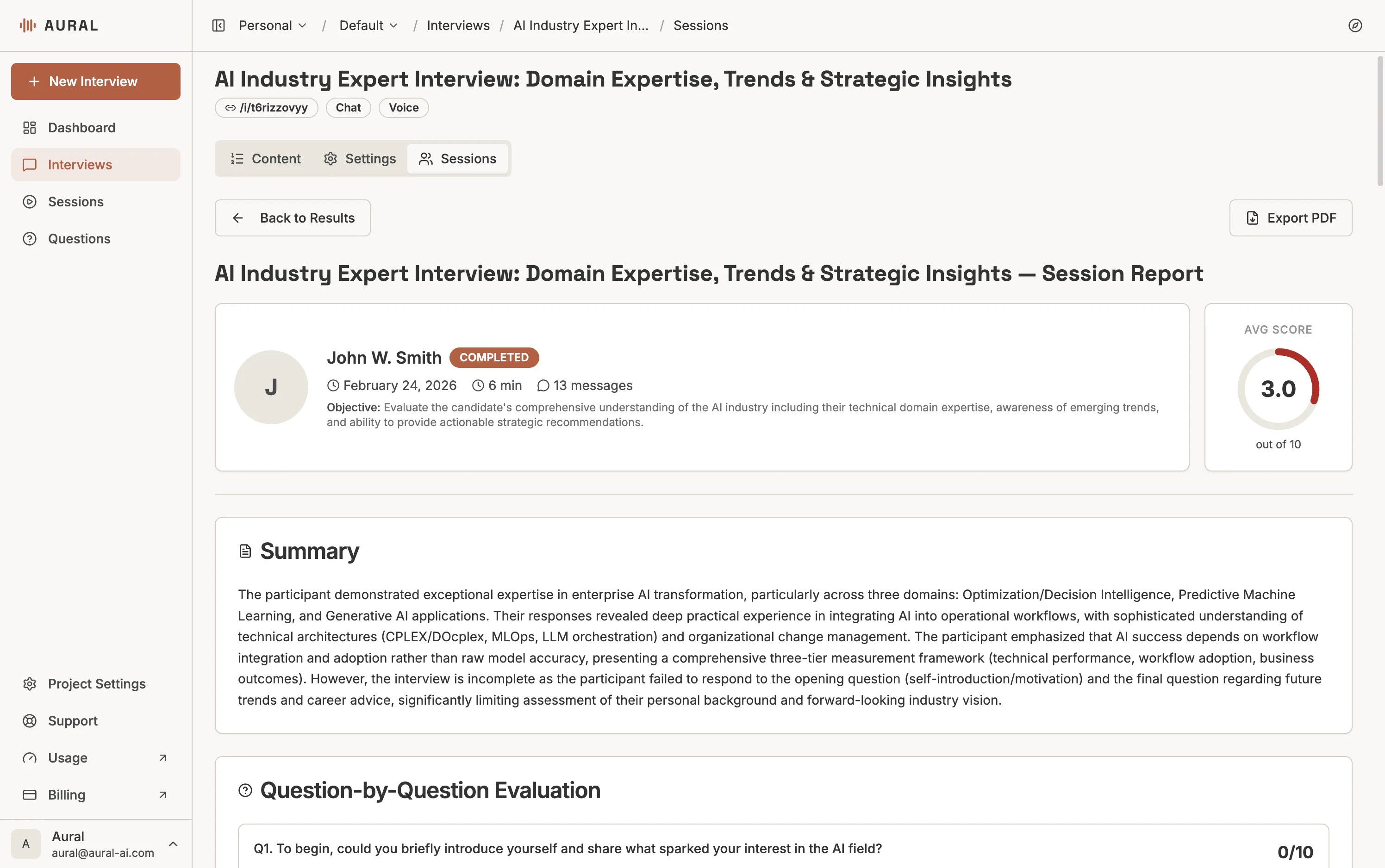
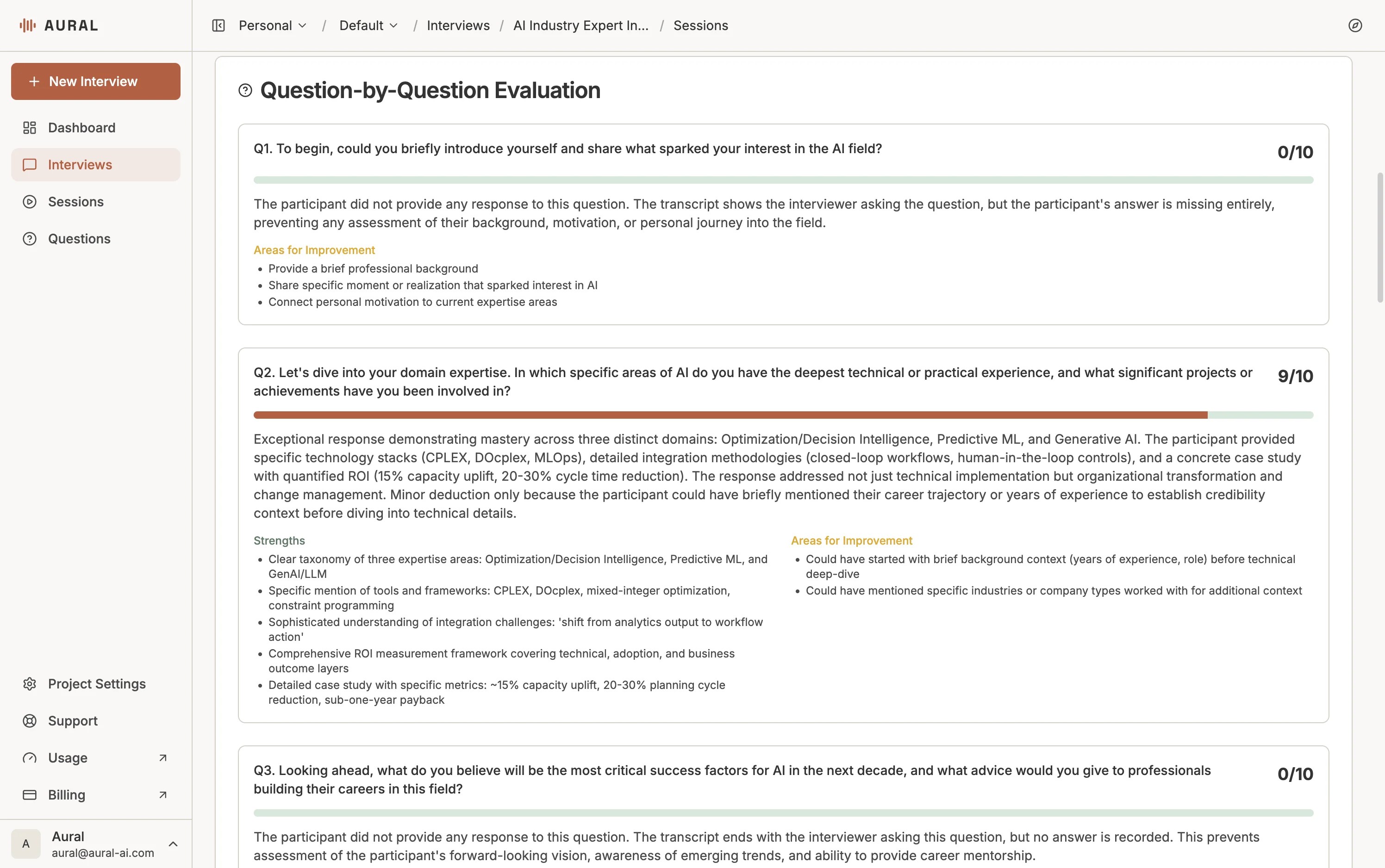
Drill into any section to see question-by-question evaluation — each response scored against your criteria, with specific strengths and areas for improvement highlighted.
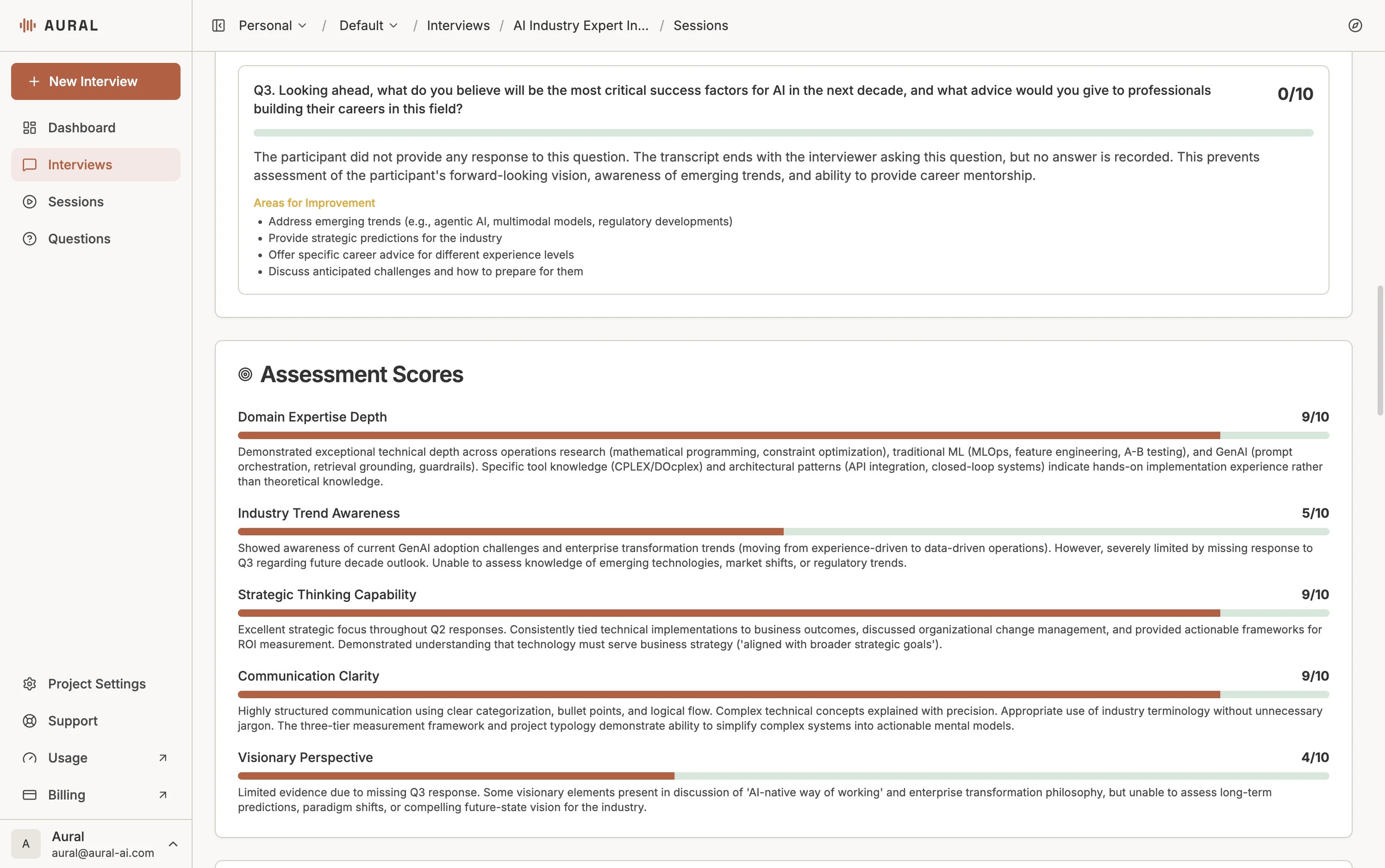
Finally, the assessment view rolls everything up into competency-level scores. This is the payoff of structure — you can line up candidates side by side and compare them on the dimensions that actually matter.
You can also view aggregate results across all sessions in an interview, spot trends, and export everything as XLSX or PDF for stakeholders who prefer spreadsheets.
Common Pitfalls (and How to Avoid Them)
- Too many questions: A 45-minute interview with 20 questions feels like an interrogation. Aim for 5–8 core questions with room for follow-ups.
- Vague evaluation criteria: “Communication skills” is too broad. Define what good looks like: “Can explain a complex concept clearly to a non-technical audience.”
- Ignoring candidate experience: Structure shouldn't feel like a checklist. The AI's adaptive follow-ups help interviews feel conversational even when the underlying framework is rigid.
- Not reviewing the data: The whole point of structure is to generate comparable data. If your team skips the scorecards and just goes with “gut feel,” you've lost the advantage.
- Overlooking integrity at scale: When candidates complete interviews unsupervised, the risk of dishonest behavior increases. For high-stakes assessments, enable anti-cheating features — tab-switch tracking, external paste blocking, and multi-monitor detection — so the structured data you're comparing actually reflects each candidate's own work.
The Compound Effect
Structured interviews get better over time. As you accumulate data from hundreds of sessions, you start to see patterns: which questions differentiate top performers, which competencies matter most for each role, and where your evaluation criteria need refinement.
This is the real promise of AI-powered structured interviews — not just consistency in the moment, but a feedback loop that makes your entire hiring process smarter over time.