If you've ever tried to schedule 50 phone screens in a week, you know the pain. Calendars don't align. Candidates ghost. Half the calls run over because there's no structure. And at the end, you're comparing scribbled notes from different interviewers who asked different questions.
AI-powered interviews solve all of this — not by removing the human element, but by giving it a better foundation. The AI handles the logistics, the consistency, and the documentation. Your team focuses on the decisions.
What's Actually Wrong with Phone Screens
The conventional phone screen has barely changed in 30 years. A recruiter calls a candidate, asks a handful of questions, and forms an impression. The problems are well-documented:
- Scheduling friction: Coordinating availability between recruiters and candidates adds 3–5 days to each stage.
- Inconsistency: Different recruiters ask different questions. Even the same recruiter drifts over the course of a day. Research from the Journal of Applied Psychology shows that unstructured interviews have a validity coefficient of just 0.20, compared to 0.44 for structured ones.
- No audit trail: Notes are subjective and incomplete. There's rarely a transcript, let alone an analysis.
- Doesn't scale: A recruiter can do 6–8 screens a day before quality drops. If you're hiring for 20 roles simultaneously, the math doesn't work.
How AI Interviews Actually Work
An AI interview isn't a chatbot reading questions off a list. Platforms like Aural use large language models to conduct adaptive, natural-sounding conversations that follow your interview structure but respond dynamically to what the candidate says.
Here's the flow: you design your interview (the topics, questions, and evaluation criteria), then share a link. The candidate joins whenever it suits them — no scheduling needed — and has a real-time conversation with the AI via voice, chat, or video. The AI probes deeper when answers are vague, follows up on interesting points, and stays on-topic throughout.
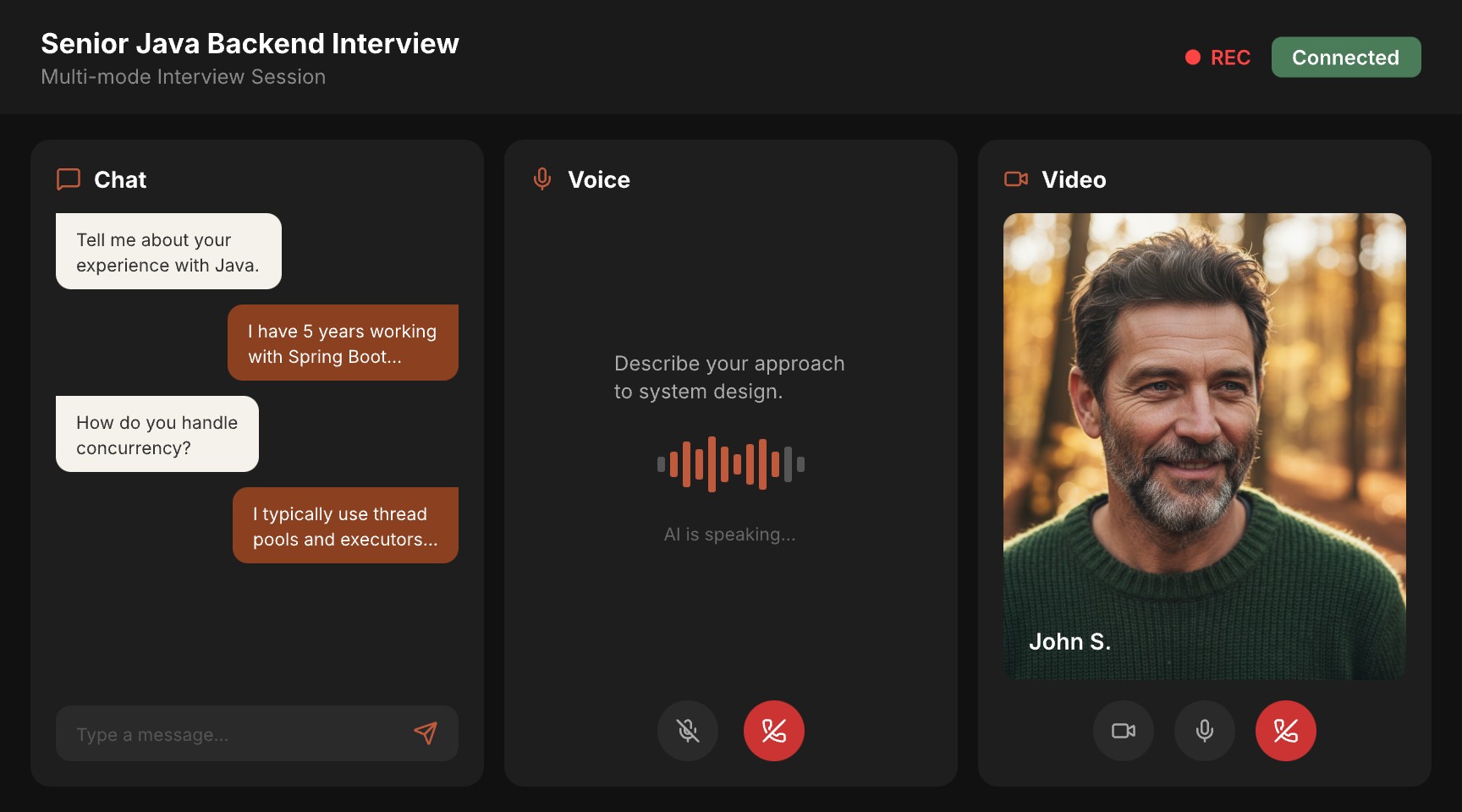
Aural supports three modes: chat (text-based), voice (audio), and video. Candidates pick the format they're most comfortable with, or you can specify which mode each interview uses. The AI engine is the same across all three — adaptive, structured, and consistent.
What the AI Conversation Looks Like
A common misconception is that AI interviews feel robotic. In practice, they're closer to a well-prepared human interviewer — one that never forgets a follow-up and never runs out of time.
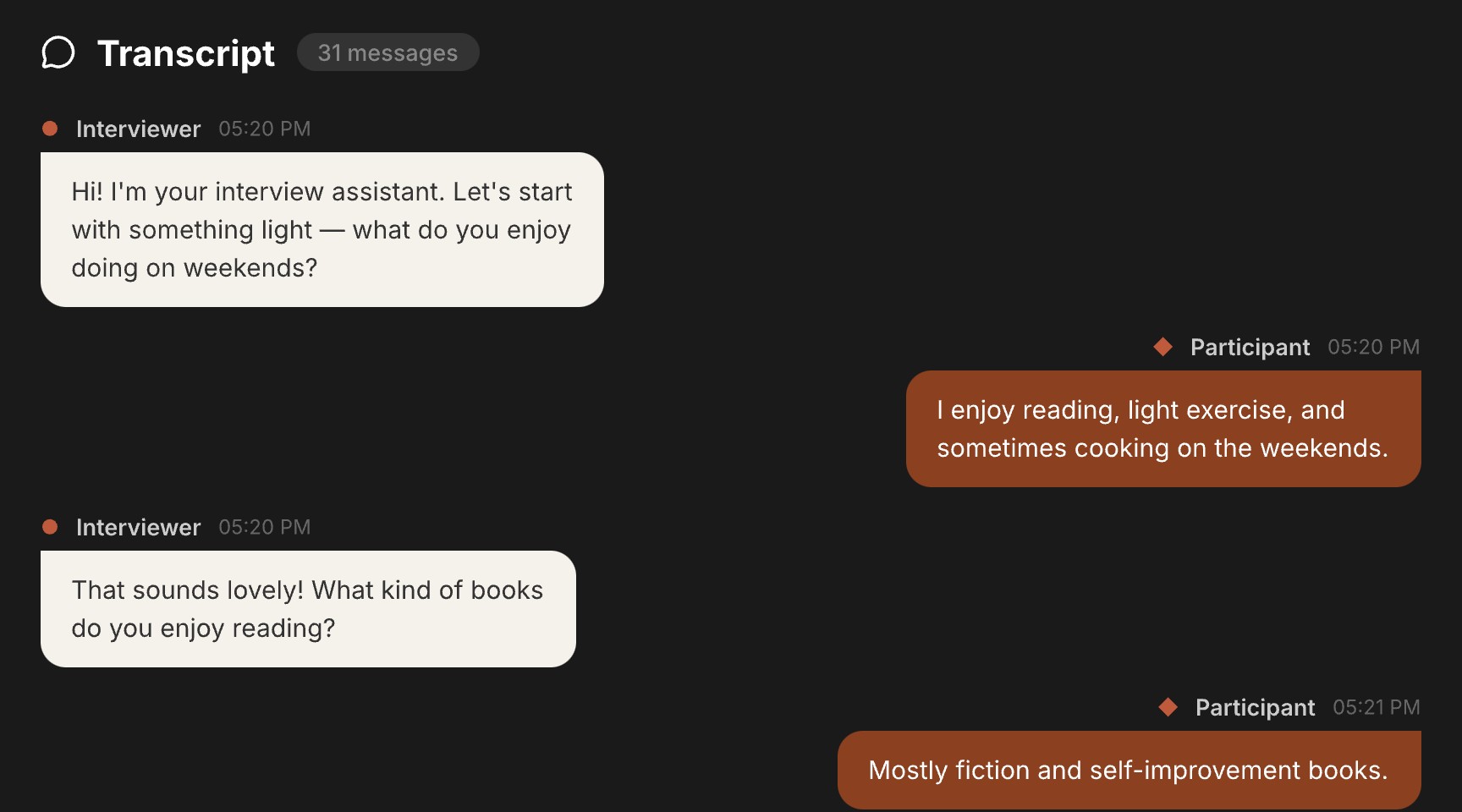
The transcript above shows a typical exchange. The AI opens with the structured question, listens to the response, and then asks a follow-up that's specific to what the candidate just said. You can configure the follow-up depth (light, moderate, or deep) and the tone (casual, professional, or formal) to match your company culture.
From Conversation to Decision: The Analytics Layer
The real value isn't just the interview — it's what happens after. Every session is automatically transcribed and analyzed. Aural generates structured assessment scores, highlights key themes, and produces a summary that hiring managers can review in minutes instead of listening to a 30-minute recording.
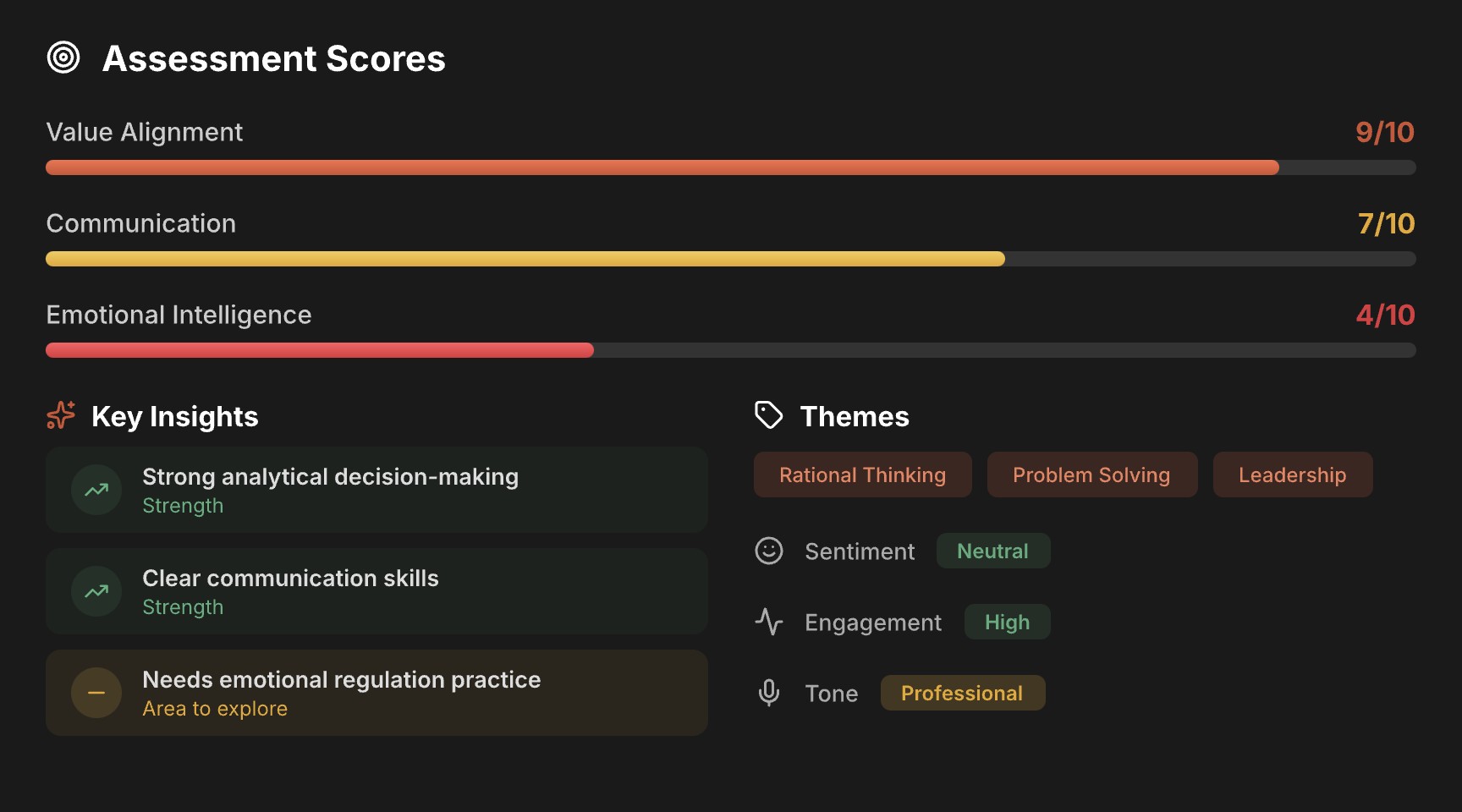
This is where AI interviews fundamentally change the hiring workflow. Instead of comparing subjective notes, your team is comparing structured data: consistent scores across the same evaluation criteria, direct quotes from transcripts, and AI-identified strengths and concerns.
When Does This Make Sense?
AI interviews aren't a replacement for every stage of hiring. They're most impactful as a screening layer — the stage where volume is highest and consistency matters most. Common use cases include:
- High-volume roles: Customer support, sales, retail — anywhere you're screening 100+ candidates per role.
- Technical screening: Aural supports coding interviews with a built-in code editor and whiteboard, so you can assess technical skills before the live round. For added integrity, enable anti-cheating mode to track tab switches, block external paste, and detect multi-monitor setups — ensuring candidates demonstrate their own abilities.
- Global hiring: Candidates in different time zones can interview on their own schedule, in their preferred language (Aural supports 30+ languages).
- Research & feedback: Beyond hiring, teams use AI interviews for user research, customer discovery, and academic interviews — anywhere you need structured conversations at scale.
The Bottom Line
AI interviews don't remove humans from hiring — they remove the bottlenecks that prevent humans from making good decisions. Less time scheduling, less inconsistency, less note-taking. More signal, more structure, more time for the conversations that actually need a human in the room.
If your team is still doing everything over phone screens, it's worth asking: what would your hiring look like if the screening stage ran itself?