Direct answer
Choose Willo when your team wants an easy asynchronous candidate screening platform for collecting, reviewing, rating, and sharing candidate responses. Choose Aural when you want an AI interviewer that can ask adaptive follow-up questions and produce structured transcripts, scores, reports, and API-accessible results.
Source check
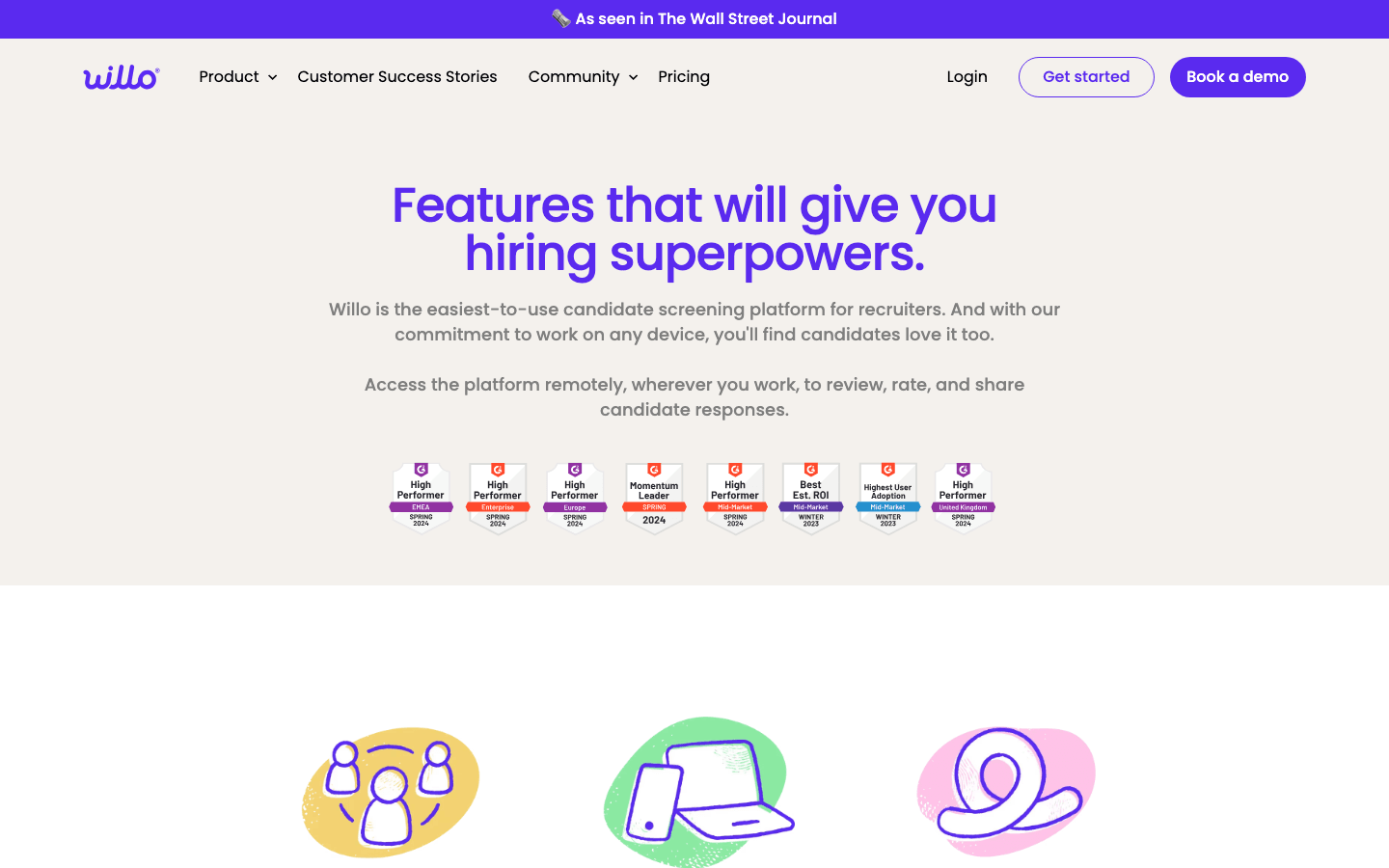
We checked Willo's public features page on May 17, 2026. The page describes Willo as an easy-to-use candidate screening platform for recruiters and highlights reviewing, rating, and sharing candidate responses remotely. See the official page at willo.video/features.
Willo and Aural can both reduce scheduling pressure. The difference is what happens during the interview. Willo is best understood as asynchronous response collection and review. Aural is best understood as an AI-led interview conversation that can probe, clarify, and summarize evidence after the session.
Quick Positioning
| Question | Willo | Aural |
|---|---|---|
| Primary job | Collect candidate responses asynchronously for recruiter review. | Conduct AI-led interviews and generate structured outputs. |
| Candidate experience | Respond remotely to screening prompts. | Have an adaptive chat, voice, video, coding, or whiteboard interview. |
| Reviewer workflow | Review, rate, and share candidate responses. | Review transcript, scores, summaries, themes, and question evidence. |
| Best fit | Simple async screening with lightweight review. | High-volume screening, technical assessment, research, or API-driven workflows. |
Where Willo Is Strong
Willo is a strong fit when the team wants a straightforward way to collect candidate responses without live scheduling. If the hiring process is already built around recruiters and managers reviewing responses, Willo's remote review, rating, and sharing workflow can be a clean operational upgrade from ad hoc screening calls.
Where Aural Is Different
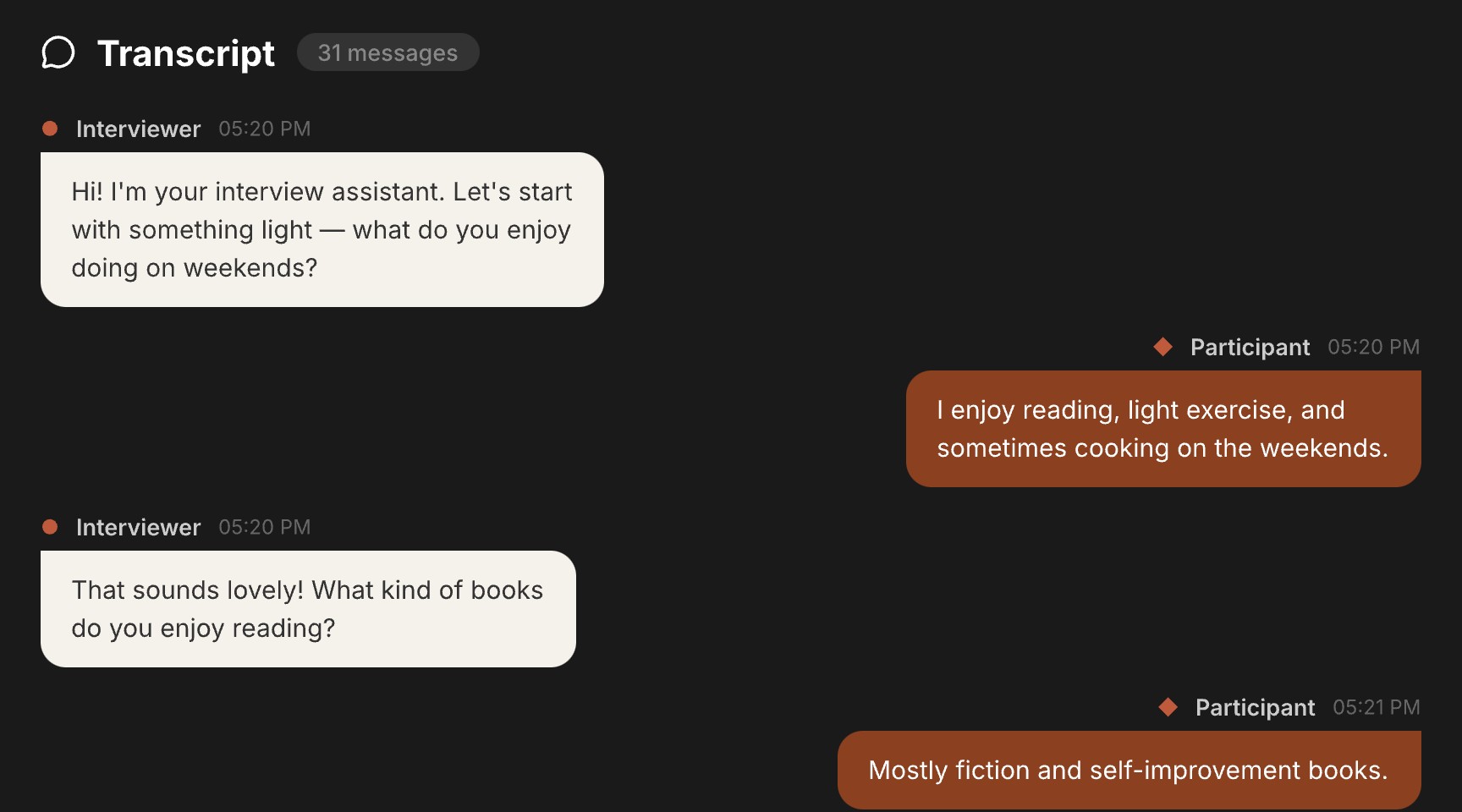
Aural is more useful when a fixed response is not enough. If a candidate gives a thin answer, the AI can ask for an example. If the candidate mentions a technical tradeoff, the AI can probe. If the team needs structured evidence, Aural can produce the transcript, summary, scores, and report automatically.
Feature-by-Feature Comparison
| Capability | Willo | Aural |
|---|---|---|
| Async response collection | Core workflow. | Supported through shareable AI interview links. |
| Adaptive follow-ups | Evaluate during demo if needed. | Core workflow with configurable follow-up depth. |
| Review evidence | Candidate responses, ratings, and sharing. | Transcript-backed scores, summaries, themes, and reports. |
| Technical workflows | Best for screening prompts rather than live technical work. | Coding editor and whiteboard tasks are built into the interview. |
| Automation | Check current integration options during evaluation. | REST API, OpenAPI, llms.txt, and programmatic result retrieval. |
When to Choose Willo
- You mainly need async candidate response collection.
- Your hiring managers want to review, rate, and share recorded responses.
- You prefer a lightweight screening tool over a deeper AI interview system.
- Your questions do not require in-session probing or technical work.
When to Choose Aural
- You need AI follow-up questions when answers are vague or interesting.
- You want transcripts, scoring, summaries, and structured reports by default.
- You need chat, voice, video, coding, and whiteboard modes.
- You want API access or self-hosting options as the workflow matures.
For a broader buying framework, read Best AI Interview Software: A Practical Buying Guide.