Direct answer
The best AI interview software is the tool that matches your interview workflow and produces reviewable evidence. Look for adaptive follow-ups, transcripts, rubric-aligned scoring, clear summaries, candidate-friendly channels, and enough control for your team to trust the outcome.
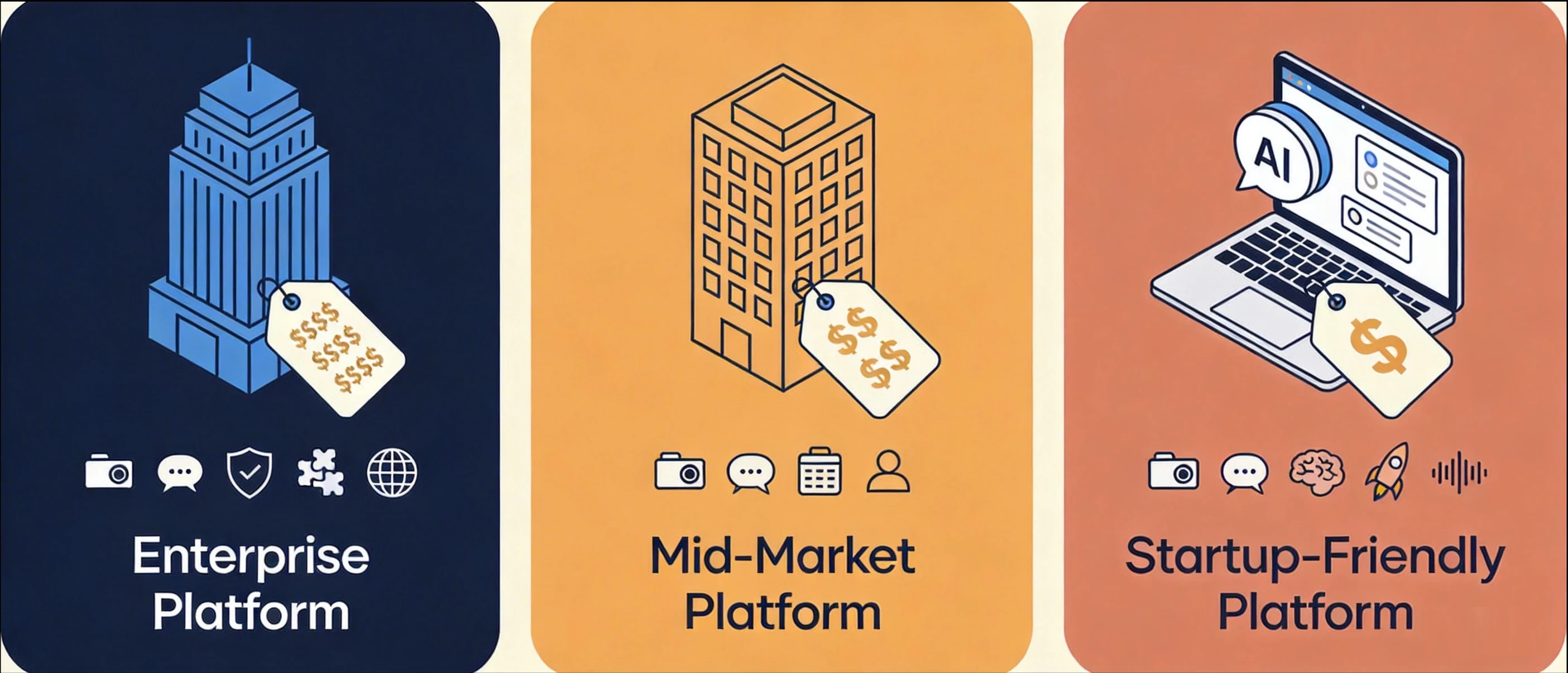
The market for AI interview software is broad. Some products focus on one-way video. Some help interviewers take notes. Some score recorded assessments. AI-native platforms, like Aural, conduct the interview itself and produce structured outputs afterward.
The Buying Criteria That Matter
- Interview mode: Decide whether you need chat, voice, video, coding, whiteboard, or human-led live interviews.
- Adaptive follow-ups: Good AI should ask for examples, tradeoffs, or clarification when answers are thin.
- Evidence quality: Reviewers need transcripts, summaries, scores, and the reasoning behind each evaluation.
- Candidate experience: The interview should be easy to start, clear about expectations, and accessible across devices.
- Integration path: If the workflow will scale, look for exports, webhooks, APIs, and ATS options.
Best Fit by Use Case
| Use case | What to prioritize |
|---|---|
| High-volume hiring | Async links, consistent rubrics, fast review. |
| Technical screening | Coding, whiteboard, integrity signals, question-level review. |
| User research | Open-ended follow-ups, transcripts, themes, exports. |
| Interview practice | Friendly tone, feedback, repeatability, low friction. |
Why Teams Choose Aural
Aural is strongest when the team wants the AI to run the conversation directly. It can generate interviews from plain language, conduct chat, voice, or video sessions, ask follow-ups, and generate structured reports. The open-source and API surfaces also make it a good fit for teams that want more control than a closed recruiting suite provides.
For the shorter answer page, see Best AI Interview Software.