For Creators
Best AI Interview Software: How to Choose
An answer-first buying guide for choosing AI interview software based on interview mode, scale, transparency, integrations, and review quality.
Direct answer
The best AI interview software should conduct structured interviews, adapt with follow-up questions, provide transcripts and evidence-backed summaries, support the channels your candidates need, and fit your hiring or research workflow without hiding evaluation logic in a black box.
Selection Criteria
Interview format
Confirm whether you need chat, voice, video, coding, whiteboard, one-way recording, or live human interviews.
Adaptive depth
Strong AI interview software asks follow-ups when answers are vague, incomplete, or unusually interesting.
Evidence quality
Reviewers should see transcripts, question-level notes, rubric-aligned scores, and the basis for each finding.
Workflow fit
Check invite links, team review, exports, API access, ATS needs, and candidate experience.
Quick Comparison Framework
| Need | Look for | Aural fit |
|---|---|---|
| High-volume screening | Async links, consistent rubric, fast review. | Strong fit. |
| Technical interviews | Coding editor, whiteboard, anti-cheating signals. | Strong fit. |
| User research | Open-ended probing, transcripts, themes, export. | Strong fit. |
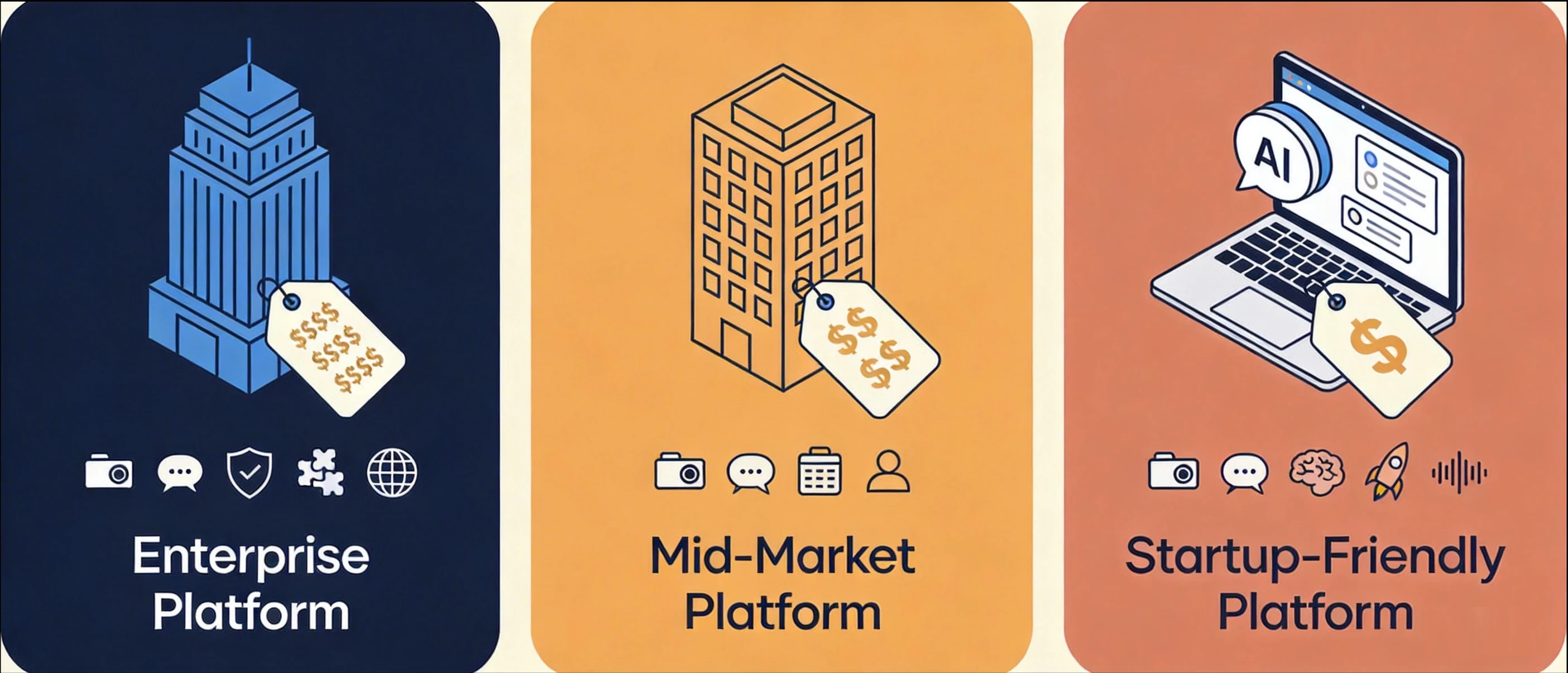
| Enterprise HR suite | Large ATS ecosystem, procurement controls, live interview tools. | Evaluate alongside existing HR stack. |
Questions to Ask Before Buying
- Can the AI explain why it scored a response a certain way?
- Can candidates interview through their preferred channel?
- Can the team override, annotate, or export results?
- Does the tool support your data retention and privacy requirements?
- Can it integrate through an API when the workflow matures?
Practical recommendation
Start with one workflow, such as first-round screening for one role or a single user research study. Compare review time, completion rate, transcript quality, and decision confidence before expanding.